
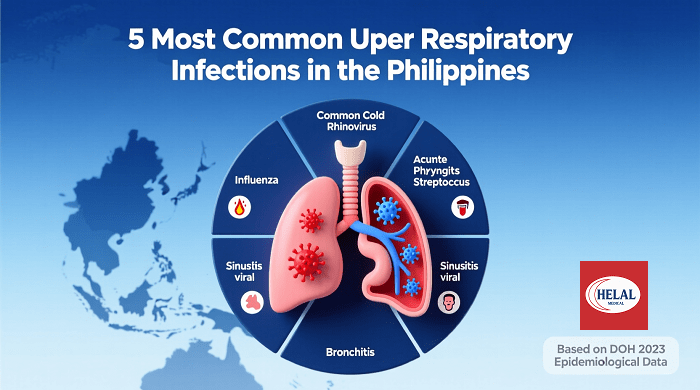
5 Most Common Upper Respiratory Infections in the Philippines
Last Updated on 03/17/2026 by DrHelal
If you’ve ever experienced a runny nose, sore throat, or persistent cough, these are upper respiratory infections (URIs) that are common in the Philippines. These infections are some of the most common illnesses that affect millions of Filipinos every year. Viruses spread more easily during the rainy season.
Upper respiratory infections affect the nose, throat, sinuses, and airways. While most are mild and self-limiting, some can lead to complications like pneumonia or bronchitis if left untreated. Understanding the most common types, symptoms, and prevention can help you protect yourself and your loved ones.
💡 1. Common Cold (Sipon)
The common cold is the most frequent upper respiratory infection in the Philippines. It’s caused by several types of viruses, particularly rhinoviruses and coronaviruses (different from COVID-19).
Symptoms:
- Runny or stuffy nose
- Sneezing
- Sore throat
- Mild fever or headache
- Slight body weakness
How It Spreads:
Colds spread through airborne droplets from coughs or sneezes and through contact with contaminated surfaces.
Prevention Tips:
- Wash your hands regularly with soap and water.
- Avoid touching your face, especially your nose and mouth.
- Stay hydrated and boost your immunity with vitamin C-rich foods like calamansi and oranges.
📖 Learn more: Philippine Department of Health – Respiratory Diseases Overview
😷 2. Influenza (Trangkaso)
Influenza or the flu is another major upper respiratory infection in the Philippines. Outbreaks occur mostly during the rainy months of June to September. They occur again in December to February.
Symptoms:
- High fever and chills
- Body and muscle aches
- Fatigue and weakness
- Headache
- Cough and sore throat
Unlike the common cold, flu symptoms are more severe and come suddenly.
How It Spreads:
Through droplets when an infected person coughs or sneezes. It can also spread by touching contaminated objects.
Prevention Tips:
- Get your annual flu vaccine.
- Cover your mouth and nose when sneezing or coughing.
- Avoid crowded places during flu season.
📖 For more details: World Health Organization – Influenza Facts
🤧 3. Sinusitis (Sinus Infection)
Sinusitis occurs when the sinuses become inflamed or infected, often after a cold or allergy attack. In humid places like the Philippines, sinus problems can persist because of constant exposure to pollution and allergens.
Symptoms:
- Nasal congestion
- Thick yellow or green mucus
- Facial pain or pressure (especially around the eyes and cheeks)
- Headache
- Post-nasal drip
Causes:
- Bacterial or viral infections
- Allergies or nasal polyps
- Prolonged exposure to pollutants
Prevention Tips:
- Keep indoor air clean and well-ventilated.
- Use saline nasal sprays to keep passages moist.
- Treat colds early to prevent sinus complications.
📖 Reference: Mayo Clinic – Sinusitis Overview
🗣️ 4. Pharyngitis (Sore Throat)
Pharyngitis, commonly known as sore throat, is another prevalent upper respiratory infection in the Philippines. It affects the pharynx. This is the back of the throat. It is caused by viruses or bacteria like Streptococcus pyogenes (strep throat).
Symptoms:
- Painful or scratchy throat
- Difficulty swallowing
- Swollen lymph nodes
- Fever and fatigue
Causes:
- Viral infections (common cold, flu)
- Bacterial infections (strep throat)
- Dry air, smoking, or pollution
Prevention Tips:
- Avoid sharing eating utensils or drinking bottles.
- Stay hydrated and rest your voice.
- Gargle with warm salt water to soothe your throat.
Early medical consultation is important to rule out strep throat, which may need antibiotics.
🫁 5. Laryngitis (Voice Box Infection)
Laryngitis occurs when the larynx (voice box) becomes inflamed due to infection or overuse. This condition often follows a cold or flu and can cause temporary loss of voice.
Symptoms:
- Hoarseness or voice loss
- Sore throat
- Dry cough
- Tickling sensation in the throat
Causes:
- Viral infection
- Overuse of voice (yelling, singing)
- Exposure to irritants like smoke or pollution
Prevention Tips:
- Rest your voice.
- Avoid shouting or speaking loudly for long periods.
- Use a humidifier to prevent throat dryness.
🌦️ Why Are Upper Respiratory Infections Common in the Philippines?
The Philippines’ tropical climate, with alternating hot and humid or rainy conditions, provides the perfect environment for viruses to spread. Air pollution, crowded urban areas, and weak immune systems further increase the risk.
Other contributing factors include:
- Poor ventilation in homes and workplaces
- Close contact in schools or public transportation
- Low flu vaccination rates
It’s important to seek medical attention if symptoms last longer than 5 days. Also, see a doctor if symptoms worsen over time. Seek help if they include high fever and difficulty breathing.
🛡️ Prevention: Protect Yourself and Others
Keeping your respiratory system healthy is possible with simple, consistent habits:
✅ Wash your hands frequently – especially after touching shared surfaces.
✅ Wear a mask in crowded or enclosed spaces.
✅ Stay hydrated and eat nutrient-rich foods.
✅ Get enough sleep to strengthen your immune system.
✅ Avoid smoking and exposure to secondhand smoke.
✅ Get vaccinated against flu and other preventable infections.
🧬 When to See a Doctor
Visit your healthcare provider if you experience:
- Persistent high fever (above 38.5°C)
- Difficulty breathing or wheezing
- Severe throat pain or swollen glands
- Mucus with blood or foul odor
Timely treatment can prevent complications. These complications include bronchitis or pneumonia. It is especially important for children, elderly individuals, and those with chronic conditions like asthma or diabetes.
📢 Final Thoughts
Upper respiratory infections in the Philippines are common but preventable. Simple habits like handwashing, mask-wearing, and getting vaccinated can dramatically reduce your risk. Awareness is your best defense—by recognizing early symptoms and practicing good hygiene, you can keep yourself and your community healthy.
💬 Call to Action
Protect your lungs and your loved ones! If you’re experiencing symptoms of an upper respiratory infection, visit your nearest health center. You can also consult a licensed Filipino physician online.
👉 Stay updated with more health tips and local wellness insights—follow our page for weekly Philippine health guides!
Discover more from Helal Medical Manila
Subscribe to get the latest posts sent to your email.


