
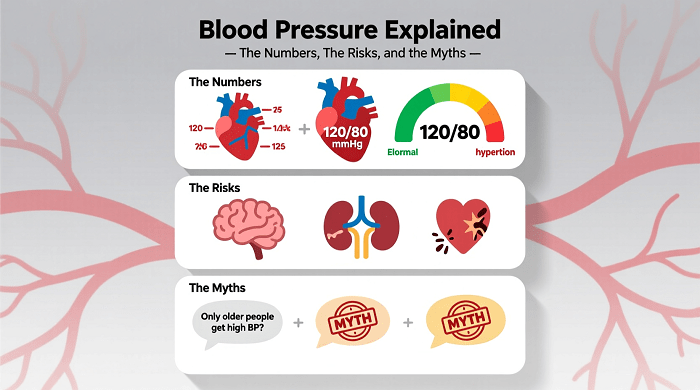
Blood Pressure Explained: The Numbers, the Risks, and the Myths
Last Updated on 03/24/2026 by DrHelal
Blood pressure is a vital health indicator. Understanding blood pressure risks is crucial. High blood pressure often has no symptoms. It silently damages your body. Knowing the numbers empowers you and allows you to take action.
By an easy simple check could reveal a hidden threat! You could add years to your life by understanding your blood pressure. Keep reading to unlock the secrets to cardiovascular health.
In this article, we will explore blood pressure risks, numbers and we will discuss the risks and myths. The goal is to empower you with knowledge.
What Is Blood Pressure?
It is the force of blood pushing against the walls of your arteries as your heart pumps. It’s expressed in two numbers:
- Systolic pressure (top number) is the pressure when your heart contracts.
- Diastolic pressure (bottom number) is the pressure when your heart relaxes.
For example, a reading of 120/80 mmHg means:
- 120 = pressure during heartbeat (systolic)
- 80 = pressure between beats (diastolic)
My patients at Helal Medical Manila, usually, ask: “Doctor, what do these blood pressure numbers mean?” “What are the risks?”. It’s more than just a pair of readings. It’s one of the most important indicators of your heart’s health. You must not ignore the numbers, they are your guide to avoid the risks.
Normal and Abnormal Ranges
| Category | Systolic (mmHg) | Diastolic (mmHg) |
|---|---|---|
| Normal | <120 | <80 |
| Elevated | 120–129 | <80 |
| High BP (Stage 1) | 130–139 | 80–89 |
| High BP (Stage 2) | ≥140 | ≥90 |
| Hypertensive Crisis | ≥180 | ≥120 |
Source: American Heart Association
Consistently high readings indicate that your heart is working harder than it should. This is a major risk factor for stroke, heart attack, and kidney disease.
How to Monitor Blood Pressure at Home
Every Filipino family should own a digital blood pressure monitor. Here’s how to do it correctly:
- Sit quietly for 5 minutes before measuring.
- Keep your arm level with your heart.
- Take 2 readings, one minute apart, and record the average.
- Monitor at the same time each day.
Keeping a BP log helps your doctor assess trends and adjust medications if necessary. (Source: American Heart Association – How to Measure Blood Pressure)
Why High Is Dangerous?
Hypertension) is often called the “silent killer”, because some persons, do not feel symptoms until damage has already occurred.
Untreated hypertension can lead to:
- Heart attack and stroke. Read more about heart attack.
- Heart failure
- Kidney damage
- Vision problems
- Cognitive decline in later years
At Helal Medical, we emphasize regular BP monitoring, even if you feel healthy.
Common Causes of Hypertension
High BP can result from lifestyle, genetics, or medical conditions.
Common factors include:
- Excess salt or fatty food intake
- Lack of exercise
- Obesity
- Stress
- Smoking and alcohol
- Diabetes or kidney disease
- Family history of hypertension
Sometimes, no specific cause is found, this is called essential hypertension.
How to Keep Blood Pressure in Control
Controlling BP doesn’t always require medication — lifestyle changes are powerful tools.
Here are doctor-recommended steps:
- Reduce salt and processed foods.
- Eat more fruits and vegetables.
- Exercise at least 30 minutes daily.
- Quit smoking and limit alcohol.
- Maintain a healthy weight.
- Monitor your blood pressure regularly.
- Take prescribed medications consistently.
Helal Medical offers blood pressure checks and doctor consultations for patients with uncontrolled or fluctuating readings.
Common Myths
Let’s clear up some common misconceptions: You may want to watch the video below!
- ❌ “I feel fine, so my blood pressure must be normal.”
→ High BP often causes no symptoms.
→ Blood pressure is a number, not a feeling. Relying on how you feel is not a reliable indicator of your blood pressure status. Symptoms usually appear when blood pressure is extremely high or when complications like stroke or heart attack have already occurred.
About High Blood Pressure | High Blood Pressure | CDC - ❌ “Only old people get hypertension.”
→ Even young adults can have high BP.
→ Modern lifestyle factors like poor diet, lack of exercise, and chronic stress play significant roles. Genetics also contributes significantly.
While many older adults maintain healthy blood pressure levels, young adults can be hypertensive.
What causes high blood pressure in young adults & teens? | Hola Health - ❌ “I can stop my medication once my BP is normal.”
→ Only stop or adjust meds under medical supervision.
→ Blood pressure medication helps control your hypertension, but it doesn’t cure it. Stopping medication, even if you feel fine, will cause your blood pressure to spike to dangerous levels. You have to consult your doctor.
Medication Management | Penn Medicine
Regular check-up is key; your doctor can adjust your treatment as needed.
When to See a Doctor
Seek medical attention if you experience:
- Persistent headache or dizziness
- Blurred vision
- Chest pain or shortness of breath
- Nosebleeds with high BP readings
A blood pressure check is quick, painless, and available anytime at Helal Medical Manila.
You Have High Blood Pressure: What to Do?
- Consult your doctor regularly.
- Take prescribed medication consistently.
- Avoid self-medicating or stopping treatment abruptly.
- Maintain a healthy weight.
- Stay hydrated and sleep well.
Lifestyle changes — not just medicine — are key to long-term blood pressure control. (Source: Mayo Clinic – Hypertension Treatment)
Summary
Understanding blood pressure risks is essential. Know your numbers and take action. Lifestyle changes can lower blood pressure. Medication is often necessary too. Regular monitoring is crucial. Consult your doctor for guidance. Take control of your health today. Knowledge empowers you to protect your heart.
At Helal Medical, we help patients check, control, and manage their BP through education, lifestyle counseling, and professional care. Remember, it’s easier to prevent hypertension than to treat its complications.
Helpful External Links:
- American Heart Association – Understanding Blood Pressure Readings
- World Health Organization – Hypertension Facts
- Mayo Clinic – High Blood Pressure (Hypertension)
- National Heart, Lung, and Blood Institute (NHLBI): https://www.nhlbi.nih.gov/
- Centers for Disease Control and Prevention (CDC): https://www.cdc.gov/
If you suspect that you may have symptoms, Helal Medical can help, offering quick, private, and convenient testing options. You may contact us here: Facebook page.
Read More About Hypertension:
- Hypertension and Hypotension: Normal Range
- Hypertension: Early Detection and Prevention
- Laboratory Tests for Hypertension: The Most Commonly Requested
- Are Male Enhancement Pills Safe for Men with Hypertension?
This article is for informational purposes only and does not constitute medical advice. Always consult with a qualified healthcare provider for any health concerns.
Discover more from Helal Medical Manila
Subscribe to get the latest posts sent to your email.


