
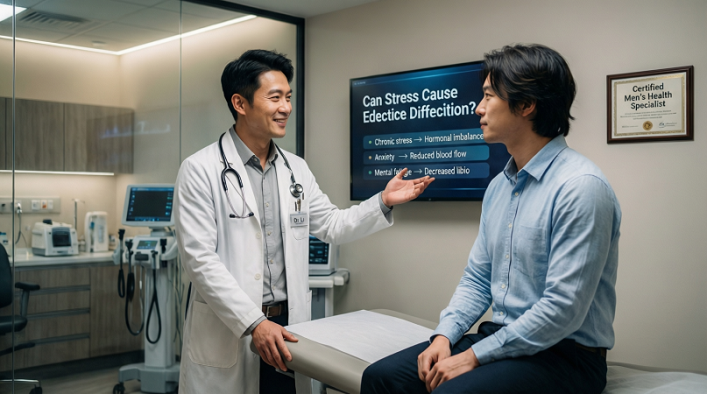
Can Stress Cause Erectile Dysfunction (ED)?
Last Updated on 03/17/2026 by DrHelal
For many men, the topic of erectile dysfunction (ED) is shrouded in silence and frustration. While it is common to assume that ED is strictly a physical failure, the reality is often more complex. The brain is the body’s most important sex organ. When that organ is clouded by stress or anxiety, erectile dysfunction can pop up. The rest of the system can struggle.
Understanding the link between your mental health and your physical performance is the first step toward reclaiming your confidence. This guide examines the role of stress and anxiety in contributing to ED. By the end of the article, you will be able to recognize the signs and what you can do.
In this article, I will explore how stress and anxiety can cause ED. I will discuss signs of ED caused by stress. I’ll also cover how to manage your stress and anxiety levels. Furthermore, I will explain how to prevent ED and how to treat this type of ED.
How Stress Cause Erectile Dysfunction
To understand how stress impacts erections, we have to look at the nervous system. An erection requires a shift into the parasympathetic nervous system—often called the “rest and digest” state. This state allows blood vessels to relax and blood flow to increase.
When you are stressed or anxious, your body enters the sympathetic nervous system (the “fight or flight” mode). In this state, the body releases a surge of hormones like cortisol and adrenaline. These hormones are designed to prioritize survival. They constrict blood vessels. They keep energy away from “non-essential” functions like digestion and reproduction.
Psychological factors typically fall into three categories:
- General Stress:
Work pressure, financial worries, or family conflicts. - Performance Anxiety:
The fear of not being able to “perform,” which creates a self-fulfilling prophecy. - Relationship Issues:
Unresolved tension or lack of communication with a partner. You may want to read this: Valentine’s Day: Revive Your Mood, Fight Stress
Signs That Your Erectile Dysfunction is Caused by Stress
How can you tell if the issue is in your head or your body? A doctor, after checkup, can provide a formal diagnosis. Still, here are some signs that indicate a psychological cause:
Signs That Stress Might Be the Cause:
- It started suddenly: Unlike physical problems that develop slowly, stress-related ED often appears quickly during a stressful time.
- Morning erections: If you wake up with an erection, your body is likely working fine physically. Stress is the more likely cause.
- Inconsistent erections: If you can get an erection sometimes but not others, stress could be the reason. For instance, this might happen with one partner but not another.
- Feeling like you’re watching yourself: You may be too focused on your performance. Being worried about losing your erection is a sign of stress.
Other Common Causes of ED
While stress is a major factor, it is important to rule out other underlying medical conditions. Other health problems ca n be heart issues, diabetes, or lifestyle factors like smoking.:
| Cause Category | Examples |
| Cardiovascular | Heart disease, atherosclerosis (clogged arteries), high blood pressure. |
| Endocrine | Diabetes, low testosterone, thyroid issues. |
| Lifestyle | Smoking, excessive alcohol consumption, obesity, sedentary lifestyle. |
| Medications | Antidepressants, blood pressure meds, or appetite suppressants. |
How to Manage and Prevent Stress-Related ED
Prevention and management go hand-in-hand. By lowering your overall “baseline” of anxiety, you make it easier for your body to respond to arousal.
1. Active Relaxation
It is not just sitting still; it’s about lowering cortisol. Try box breathing. Inhale for 4 seconds, hold for 4, exhale for 4, and hold again for 4. Do this before intimacy to give your nervous system a signal that you are safe.
2. Physical Exercise
Is one of the most effective ways to remove excess adrenaline effects. And also improves over all blood flow (including sex organs) and boosts mood-regulating chemicals like endorphins.
3. Communicate with Your Partner
The “secret” of ED often makes your anxiety worse. Openly discuss your stress with your partner, that will take the pressure off. It shifts the focus to intimacy and connection, not on just the end result (which is erection).
4. Improve Sleep Hygiene
Sleep deprivation is a massive stress factor, affecting the body. Why? Lack of sleep lowers testosterone hormone and increases irritability.
How to Treat Stress-Induced ED
If lifestyle changes do not work, professional consultation can help break the cycle of anxiety.
- Cognitive Behavioral Therapy (CBT):
A therapist can help you identify and reframe negative thought patterns that lead to performance anxiety. - Sex Therapy:
This is specifically designed to help couples explore and understand intimacy issues. It focuses on “sensate focus,” which involves touching without the goal of intercourse. The aim is to reduce pressure. - Short-term Medication:
Sometimes, doctors prescribe PDE5 inhibitors (like Viagra or Cialis) temporarily. These can provide a “confidence boost”, which helps break the mental cycle of fearing failure. - Mindfulness Meditation:
Practicing being “in the moment” helps you stay focused. It prevents the “spectator effect.” This effect occurs when you drift out of the experience to worry about your performance.
Summary
Stress-induced ED is incredibly common and, fortunately, very treatable. It is not a reflection of your masculinity or your attraction to your partner. It is a physiological response to a psychological issue. Manage your stress levels, communicate openly and seek professional help if needed. By doing these three things, you can restore both your sexual health and your peace of mind.
Trusted Resources for Further Reading
- Mayo Clinic: Erectile Dysfunction Overview
- Harvard Health: The Mind-Body Connection in Men’s Health
- Cleveland Clinic: Psychological Causes of ED
Read More:
Erectile Dysfunction: Causes, Myths, and When to See a doctor
Hypogonadism: Symptoms, Causes, and Treatment Options
Priapism: Causes, Symptoms, and Treatments
Discover more from Helal Medical Manila
Subscribe to get the latest posts sent to your email.


