
Composition of Urine and its Significance
Last Updated on 03/17/2026 by DrHelal
The composition of urine reveals much about health. It reflects kidney function and body balance. Analyzing urine helps diagnose many conditions. Understanding its components is very important.
Your urine holds secrets to your health. Analyzing its composition can provide early warnings about potential problems. Keep reading to unlock the hidden messages in your urine.
In this article, we will explore the main components of urine and their significance. We will also cover how changes in urine can indicate potential health issues.This will help you understand your health better.
Introduction: The Hidden Language of Urine
Every day, your kidneys filter waste products from your blood, producing urine. This fluid, primarily water, contains dissolved substances that reflect your body’s metabolic processes, diet, and overall health status.
Understanding the composition of urine and its significance can empower you to monitor your health proactively. You may want to read our article about: Full Urine Analysis (FUA) And Its indications
The Basic Composition of Urine
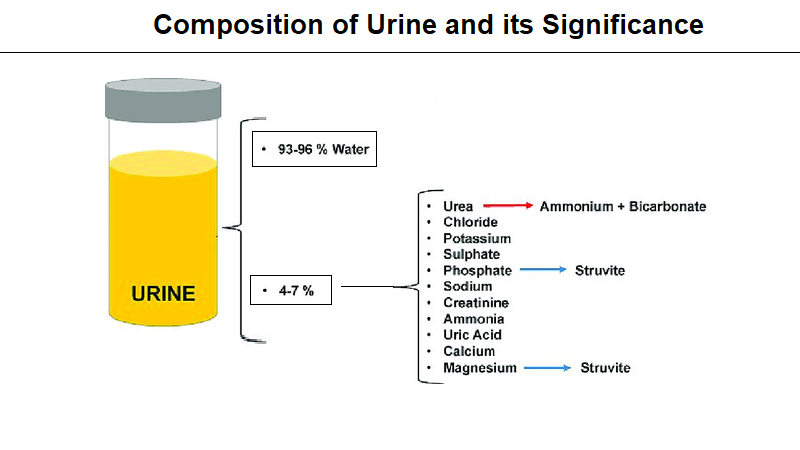
Urine is about 95% water. The remaining 5% consists of dissolved solutes. These solutes are waste products and other substances filtered by the kidneys.
Key Solutes in Urine
- Urea: The most abundant solute. It’s a byproduct of protein metabolism.
- Creatinine: A waste product from muscle metabolism. Its level indicates kidney function.
- Uric Acid: A byproduct of nucleic acid breakdown.
- Electrolytes: Sodium, potassium, chloride, calcium, and magnesium ions.
- Trace amounts of other substances: Ammonia, phosphates, sulfates, hormones, and metabolites.
Reasons for Urine Tests
A urine test can be recommended for several reasons. These include routine health maintenance, hospital admission, or suspicion of a medical condition. It is also used for monitoring ongoing ailments. The following are some of the symptoms that warrant a urine test:
- Pain or discomfort during urination (dysuria)
- Red, pink, or brown urine color (hematuria)
- Foul odor in urine
- Cloudy urine
- Abdominal pain
- Back pain
A urine test is also recommended to screen for medical cases. These may include urinary tract infections, kidney disease, liver disease, diabetes, hypertension, dehydration, and gout. There are more conditions it can help detect. Other urine tests include pregnancy tests, toxicology screens, STI screening, and pregnancy health monitoring.
Frequency of Urine Excretion
On average, an adult excretes urine about 8 times a day. This frequency can be influenced by the amount of fluid consumed, the overall diet, and other factors. Pregnant women and the elderly often excrete urine more frequently than others.
However, excessive and frequent urination can also indicate the presence of medical conditions. These include urinary tract infections, kidney disease, enlarged prostate, vaginitis, and interstitial cystitis. These conditions require a visit to a primary care physician.
Liver Problems and Urine Color
Liver problems can cause increased levels of direct bilirubin in the bloodstream, which is then excreted via urine. A high bilirubin concentration in urine can change its color, making it a darker brown or tea-colored.
Smelly Urine
Foul-smelling urine can indicate a variety of issues. These include dehydration, multivitamin intake, and urinary tract infections. It may also signify kidney disease or uncontrolled blood sugar in diabetics. Consumption of certain foods, such as asparagus, can also contribute to the odor.
Key points for urine components and their significance:
| Urine Component | Symbolic Key Point | Significance |
|---|---|---|
| Water | Hydration Base | Indicates hydration level. |
| Urea | Protein Waste | Reflects protein metabolism & kidney filtration. |
| Creatinine | Muscle Waste | Key indicator of kidney function. |
| Uric Acid | Purine Waste | Reflects purine metabolism; potential gout/kidney link. |
| Electrolytes | Body’s Balance | Fluid balance, nerve/muscle function. |
| Color (Pale Yellow) | Hydrated | Good hydration. |
| Color (Dark Yellow) | Dehydrated | Body conserving water. |
| Color (Red/Pink) | Blood Alert | Possible infection, stones, kidney/cancer issues. |
| Clarity (Clear) | Normal | Healthy, hydrated. |
| Clarity (Cloudy) | Possible Issue | May signal infection, stones, crystals. |
| Odor (Ammonia) | Normal Waste | Typical smell from urea. |
| Odor (Sweet/Fruity) | Diabetes Alert | Suggests high blood sugar/ketones. |
| pH (Acidic/Alkaline) | Body’s Balance | Reflects diet & kidney’s acid-base regulation. |
| Specific Gravity | Urine Concentration | High = concentrated (dehydration); Low = dilute (kidney issues). |
| Glucose | Blood Sugar Check | Presence indicates high blood sugar (diabetes). |
| Ketones | Fat Burning/Diabetes Sign | Suggests uncontrolled diabetes, starvation, or fasting. |
| Protein | Kidney Health Check | Presence often signals kidney damage. |
| Blood (Hematuria) | Internal Bleeding Sign | Can indicate infection, stones, kidney disease, cancer. |
| White Blood Cells | Infection/Inflammation Sign | Suggests infection (often UTI). |
| Bacteria/Nitrites | Bacterial Infection Sign | Strong indicator of UTI. |
Conclusion
It is important to maintain regular health visits with a healthcare provider to ensure good health. If you notice any changes in your urine, pay attention to the color, odor, or frequency. It is essential to seek medical advice. Your healthcare provider may perform a urine test to better understand your health and determine if further testing is needed. Early detection and treatment of any medical conditions can help prevent complications and promote a healthy, active lifestyle.
SOURCES
- https://www.ncbi.nlm.nih.gov/pmc/articles/PMC6934465/
- https://labpedia.net/
- https://www.mayoclinic.org/tests-procedures/urinalysis/about/pac-20384907
Discover more from Helal Medical Manila
Subscribe to get the latest posts sent to your email.


