
HPV Vaccine Long Protection: At Least 3 Years
Last Updated on 02/09/2026 by Helal Medical
HPV vaccine can protect you against infection for at Least 3 Years, according to recent studies. The Human Papillomavirus (HPV) is a sexually transmitted infection that can lead to various health complications, including cervical cancer. The HPV vaccine has been a significant success in preventing HPV-related diseases. In this article, we examine the significant efficacy of a single dose of the HPV vaccine. It provides long-lasting protection against infection for a minimum of three years. And we will discuss the science behind this game-changing vaccine and its impact on public health.
Are you curious about how long the HPV vaccine protects you? Many believe protection fades quickly. But what if it lasts much longer? Keep reading to discover the facts.
In this article, we will explore the 3 types of human papillomavirus (HPV) vaccine. We will discuss strength, the science behind the single dose vaccine and its impact on public health. At the end, I will suggest some important related article for further reading.
Understanding HPV And Its Vaccines
HPV is a common virus spreads through skin contact. While some types of the virus cause cancer, others are not dangerous, they only cause genital warts. The HPV vaccine protects against all these types.
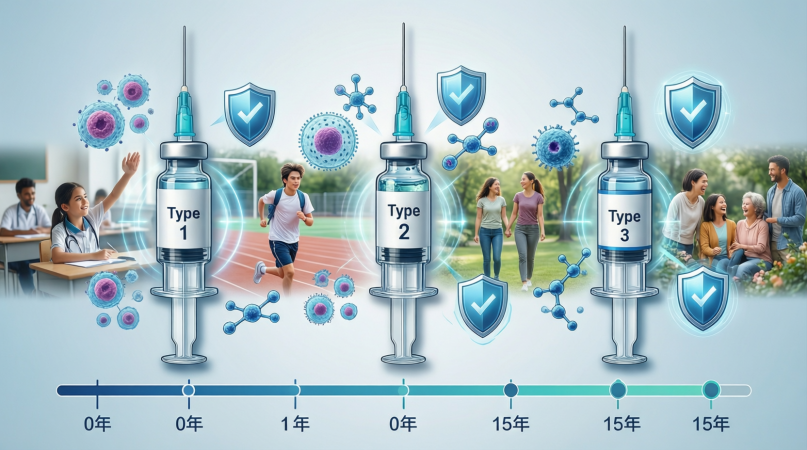
The Three Types of HPV Vaccines
There are three main HPV vaccines. These are Cervarix, Gardasil, and Gardasil 9. Cervarix vaccine protects against HPV types 16 and 18 that cause about 70% of cervical cancers (Cervarix vaccine).
Gardasil, that protects against HPV types 6, 11, 16, and 18, prevents genital warts and cervical cancer. Gardasil 9 protects against nine HPV types; 6, 11, 16, 18, 31, 33, 45, 52, and 58. It offers the broadest protection. It protects against about 90% of cervical cancers.
Recommended HPV Vaccine Dosage
The HPV vaccine is typically administered as a two- or three-dose series, depending on the age at initial vaccination, as following
- Ages 9-14:
A two-dose series is recommended, with the second dose given 6-12 months after the first. (Source: CDC) - Ages 15-45:
A three-dose series is recommended. The second dose is given 2 months after the first. The third dose is given 6 months after the first12.
| Age at Initial Vaccination | Dosage Schedule |
|---|---|
| Ages 9-14 | Two-dose series: The second dose is given 6-12 months after the first. |
| Ages 15-45 | Three-dose series. The second dose is given 2 months after the first. The third dose is given 6 months after the first. |
Vaccine Information
Vaccine is Intramuscular injection It is vital to complete the entire recommended series to ensure optimal protection against HPV-related diseases. It is not recommended for pregnant women, and those with severe allergic reactions to vaccine components.
How Long Does HPV Vaccine Protection Last?
The HPV vaccine provides long-lasting protection. Studies show protection lasts at least 10 years. Some studies suggest it may last a lifetime. More research is ongoing confirming the duration of protection.
Several studies support long-term protection. A study in The Lancet showed sustained protection. It lasted up to 10 years after vaccination [The Lancet]. The protection remained high. There was no need for booster shots.
Another study followed women for 12 years. It found continued protection. The vaccine prevented HPV infections. It also prevented cervical abnormalities [National Cancer Institute]. These findings are very encouraging.
Factors Affecting Protection Duration
Several factors can affect protection duration including the type of vaccine and the individual’s immune system. Overall health also plays a role.
People with weakened immune systems may have shorter protection like those with HIV and those on immunosuppressant drugs. More research is needed to determine the exact duration.
The Single Dose Vaccine
The HPV vaccine can be effective with a single dose, offering comparable protection to a two-dose series under certain conditions. Organizations like the World Health Organization (WHO) have endorsed this approach. They recognize its potential to improve vaccine uptake and reduce cervical cancer rates globally. (JNCI Monograph on Single-Dose HPV Vaccine Protection – NCI)
Benefits of a Single-Dose Schedule
- Improved Public Health Impact: Mathematical models suggest that adopting a single-dose schedule can enhance progress toward cervical cancer elimination, especially in resource-constrained settings
- Increased Vaccine Uptake: Reducing the number of required doses can overcome barriers such as cost. It can also address logistical challenges. These changes lead to higher vaccination rates5.
- Cost Savings: Implementing a single-dose schedule can result in significant cost savings for immunization programs, making it a resource-efficient approach2.
SUMMARY
HPV Vaccine long protection is vital. It prevents HPV-related diseases. The vaccine is safe and effective. It offers long-lasting immunity. Get vaccinated to protect your health.
A single dose of the HPV vaccine can prevent infection for at least three years. This power is a testament to the remarkable advancements in medical science. By understanding the strength of this vaccine, we can enhance public health initiatives. We can work towards a world free from the devastating consequences of HPV-related diseases. Let’s continue to advocate for vaccination, spread awareness, and empower individuals to protect themselves and future generations.
If you suspect that you may have symptoms, Helal Medical can help, offering quick, private, and convenient testing options. You may contact us here: Facebook page.
Do you have a question? please drop it down in the comments, or
Click here for (FREE ONLINE CONSULTATION)
Read More About HPV:
Human papillomavirus (HPV)
HPV tests: A Guide to Screening and Prevention
How the HPV Vaccine long protection Against Infection: at Least 3 Years
Discover more from Helal Medical Manila
Subscribe to get the latest posts sent to your email.

