
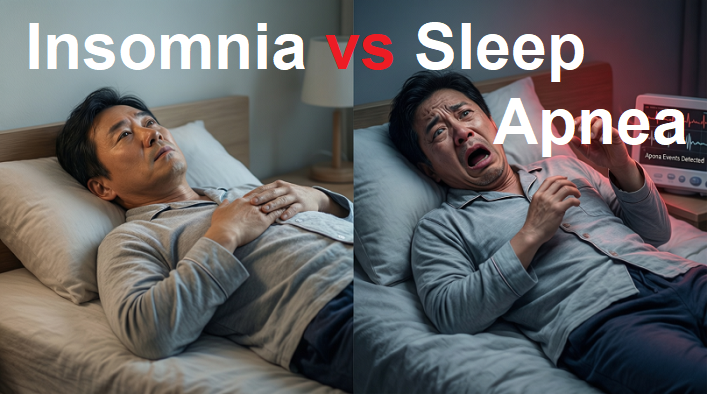
Insomnia vs Sleep Apnea: How to Tell the Difference
Last Updated on 02/05/2026 by Helal Medical
Sleep problems are becoming increasingly common in modern life. Many people complain of poor sleep, frequent awakenings, or constant fatigue. Still, not all sleep disorders are the same. Two of the most common disorders are Insomnia and Sleep Apnea. They may share some symptoms, but they are two different medical problems.
At Helal Medical Manila, after the Feast of the Black Nazarene, I saw many patients mistaking sleep apnea for insomnia. Stress and disrupted routines during the Feast exacerbate sleep issues, leading to self-diagnosis and delayed treatment. One of my patients, Mrs. A, like many, attributed her fatigue to “insomnia,” despite loud snoring. Questioning revealed morning headaches and gasping, suggesting sleep apnea. A sleep study, done by a specialist center, confirmed it. We discussed that while both cause fatigue, sleep apnea needs different treatment. At Helal Medical, we educate patients to recognize the distinct symptoms, especially during stressful times like the Feast. Understanding the difference ensures proper care and long-term health.
In this article, I will explore both conditions, key differences, common symptoms and health risks. I will explain how to diagnose each of them, and what are the available treatment options.
What Is Insomnia?
It is a sleep disorder characterized by difficulty falling asleep. It may also involve staying asleep, or waking up too early, despite having enough time and opportunity to sleep. People experiencing insomnia are usually aware that they are not sleeping well.
Insomnia may be one of two types:
- Short-term (acute); related to stress or life events and Chronic; that is lasting for at least 3 months
What Is Sleep Apnea?
It is a disorder in which the person repeatedly stops breathing and starts during sleep. This can lead to reduced oxygen levels and frequent sleep interruptions.
The most common type is obstructive sleep apnea (OSA), caused by airway collapse during sleep. Unlike insomnia, people with sleep apnea often do not realize their sleeping is disrupted.
Key Differences
Sleep Pattern Awareness
- Insomnia: Patient knows they are awake and struggling to sleep
- Sleep Apnea: Patient often believes they slept normally
Breathing During Sleep
- Insomnia: Breathing remains normal
- Sleep Apnea: Repeated breathing pauses occur
Daytime Symptoms
- Insomnia: Fatigue, irritability, difficulty concentrating
- Sleep Apnea: Excessive daytime sleepiness, morning headaches, poor memory
Understanding Insomnia vs Sleep Apnea helps guide the correct diagnosis and treatment.
| Feature | Insomnia | Sleep Apnea |
|---|---|---|
| Sleep Pattern Awareness | Knows they’re awake, struggling to sleep | Believes they slept normally |
| Breathing During Sleep | Normal breathing | Repeated breathing pauses occur |
| Daytime Symptoms | Fatigue, irritability, difficulty concentrating | Excessive sleepiness, headaches, poor memory |
Common Symptoms Compared
Insomnia Symptoms
- Difficulty falling asleep
- Frequent nighttime awakenings
- Early morning awakening
- Anxiety about sleep
- Light or unrefreshing sleep
Sleep Apnea Symptoms
- Loud chronic snoring
- Gasping or choking during sleep
- Witnessed breathing pauses
- Dry mouth upon waking
- Severe daytime sleepiness
Health Risks
Insomnia Complications
- Anxiety and depression
- Reduced work performance
- Increased accident risk
- Weakened immune system
Sleep Apnea Complications
- High blood pressure
- Heart disease and stroke
- Diabetes
- Irregular heart rhythms
While both affect quality of life, sleep apnea carries higher cardiovascular risk.
Diagnosis: How Doctors Tell the Difference
Medical History and Evaluation
Doctors assess:
- Sleep habits
- Daytime symptoms
- Medical conditions
- Lifestyle factors
Sleep Testing
- Insomnia: Usually diagnosed clinically
- Sleep Apnea: Requires a sleep study (polysomnography)
Correct diagnosis is essential because treatments for the two conditions are very different.
Treatment Options
Treating Insomnia
- Cognitive Behavioral Therapy for Insomnia (CBT-I)
- Sleep hygiene improvement
- Stress management
- Short-term medication when appropriate
Treating Sleep Apnea
- CPAP therapy
- Oral appliances
- Weight loss
- Lifestyle changes
- Surgery in selected cases
Treating insomnia alone will not fix sleep apnea.
Lifestyle Changes That Help Both Conditions
- Maintain a regular sleep schedule
- Avoid caffeine late in the day
- Reduce alcohol intake
- Exercise regularly
- Manage stress
- Create a sleep-friendly environment
These measures support better sleep but do not replace medical treatment when needed.
When Should You See a Doctor?
Seek medical advice if you experience:
- Persistent sleep problems
- Loud snoring with daytime sleepiness
- Morning headaches
- Poor concentration
- Unrefreshing sleep despite enough hours
At Helal Medical Manila, we provide proper evaluation to distinguish between Insomnia vs Sleep Apnea and guide appropriate care.
Simplified Summary (For Ordinary People)
Insomnia means trouble falling or staying asleep, while sleep apnea means breathing stops during sleep. Insomnia causes tiredness but sleep apnea can harm the heart and brain. Knowing the difference helps you get the right treatment.
Read More from Helal Medical:
https://helalmedical.com/sleep-health-why-quality-sleep-is-essential-for-your-body-and-mind
Discover more from Helal Medical Manila
Subscribe to get the latest posts sent to your email.

