
Semen Analysis Guide: Preparation, Results & Male Fertility
Last Updated on 03/12/2026 by DrHelal
For couples facing challenges in conceiving, understanding male fertility is just as crucial as understanding female fertility. A semen analysis is a cornerstone diagnostic test that provides valuable insights into a man’s reproductive health. It assesses various parameters of semen and sperm.
If you’re dealing with infertility complexities, a semen analysis can unlock answers. It guides the path to parenthood.
What if I, as a doctor, told you sperm test can reveal the secrets of your fertility. Understanding your sperm count, and quality will help you to control your reproductive health. Keep reading to uncover your potential.
This comprehensive guide will walk you through everything you need to know about semen analysis. It covers topics from preparation to interpreting results.
What is Male Fertility?
It refers to a man’s ability to cause pregnancy in a fertile female. involves several factors as sperm quality and quantity, as well as the ability to effectively deliver sperm. Here are the key Factors in male fertility. You may want to read about Causes of Male Infertility
1. Sperm Production
- Or spermatogenesis, occurs in the seminiferous tubules of the testes. This process is intricately regulated by hormones, primarily testosterone and follicle-stimulating hormone (FSH).
- The entire process of spermatogenesis takes approximately 72 days.
- Disruptions in hormone levels due to endocrine disorders, anabolic steroid use, or certain medications can impair sperm production. {1]
2. Sperm Motility
- It refers to the ability of sperm to swim effectively towards the egg. It’s crucial for penetrating the cervical mucus and reaching the oocyte in the fallopian tube.
- According to the World Health Organization (WHO), a minimum of 40% of sperm should be motile. At least 32% should show progressive motility [3].
- Factors affecting motility include oxidative stress, infection, and antisperm antibodies.
3. Sperm Morphology
It refers to the size and shape of sperm. Normal morphology is essential for the sperm’s ability to bind to and penetrate the egg.
4. Semen Volume
- It refers to the amount of fluid ejaculated during orgasm.
- Adequate volume is necessary to transport sperm effectively through the female reproductive tract.
5. Semen Liquefaction
It is the process where semen changes from a thick to a liquid state after ejaculation. This is necessary to release sperm from the seminal fluid, allowing them to move freely.
What are the Common Causes of Male Infertility
It is due to issues like low sperm count, poor sperm motility, or abnormal sperm shape. Hormonal imbalances and genetic factors and infections are also potential contributors. Lifestyle choices, smoking and excessive alcohol consumption, can affect the condition as well.
You may read our corner stone article (Men’s Health After 40: A Guide to Thriving in Your Prime).
- Varicocele
- Infections
- Hormone Imbalances
- Ejaculation Issues
- Antibodies
- Lifestyle Factors
What is Semen Analysis (sperm count)?
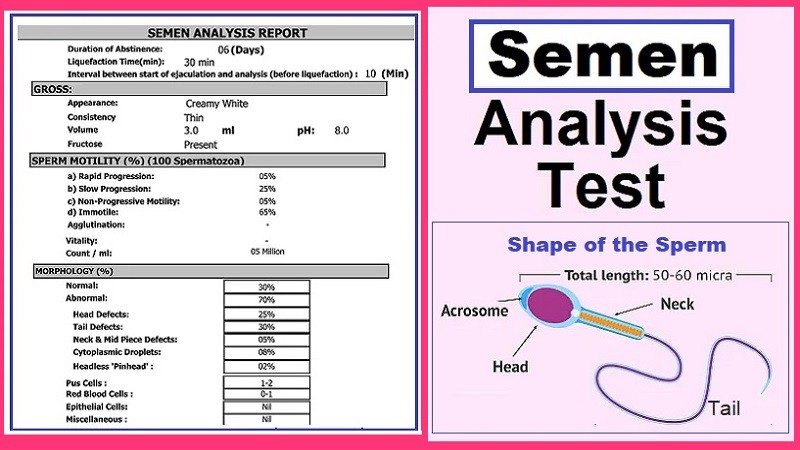
It is a laboratory test that examines the quantity, quality, and motility of sperm. The test measures the number of sperm present in one ml of semen, evaluates their shape, size, and movement. It providea valuable insight into a man’s reproductive health.
What is the Purpose of Semen Analysis?
Its purpose is to evaluate male fertility and investigate potential issues when a couple is facing difficulties conceiving. In cases of infertility, male factors account for about 40-50%.
Beyond fertility concerns, a semen analysis can also be used to check for the effectiveness of vasectomy procedures or to diagnose certain underlying medical conditions that can affect reproductive health
What Does a Semen Analysis Involve?
The test evolves evaluation of semen and sperm characteristics. It typically involves both macroscopic (physical) and microscopic examinations. The test involves the following steps:
- Abstinence
- Sample Collection
- Sample Analysis
How to Prepare for the Test?
Proper preparation is crucial for accurate semen analysis results. Here are key guidelines to follow:
- Abstinence.
Refrain from ejaculating for 2-7 days before the test. This period allows for optimal sperm production and concentration. - Avoid Alcohol and Drugs.
Limit alcohol consumption in the days leading up to the test. Avoid recreational drugs during this time as well. These substances can affect sperm quality. - Inform Your Doctor.
Disclose any medications or supplements you’re taking, as some may interfere with the results. - Collect the Sample Properly.
Follow your doctor’s instructions for collecting the semen sample. This usually involves masturbation into a sterile container provided by the lab. - Maintain Hygiene.
Wash your hands and penis thoroughly before collecting the sample. - Deliver Promptly.
Transport the sample to the lab within one hour of collection, keeping it at room temperature.
What information you get when Analyzing Semen?
Semen analysis can tell many parameters including seen volume, sperm count, motility and morphology. Here are the most important parameters include:
- Semen volume:
The amount of semen produced is from 1.5 to 5 milliliters per ejaculate. - Sperm count:
The number of sperm is 15 million or more per milliliter. - Sperm motility:
The ability of sperm to move and swim in a forward direction which is 40% more. - Sperm morphology:
Normal sperm morphology, (shape and size) is 4% or more. - pH; the acidity or alkalinity of the semen.
- Liquefaction: the time it takes for semen to change from a thick gel to a liquid.
In addition to these primary parameters, other characteristics of semen include pH and viscosity. The presence of white blood cells or other substances may indicate infection. For more information, please read our article (Semen Analysis Report Explained: How to Read).
Table for Semen Parameters: Normal Range
| Parameter | Normal Range |
|---|---|
| Volume | 1.5 mL or more |
| Sperm Concentration | 15 million sperm/mL or more |
| Total Sperm Number | 39 million sperm per ejaculate or more |
| Motility | 40% or more (total motility) |
| Morphology | 4% or more with normal forms |
| pH | 7.2-8.0 |
| Liquefaction Time | Within 60 minutes |
| White Blood Cells | Less than 1 million cells/mL |
Abnormal Semen Analysis Results
Abnormal results indicate potential issues, and further evaluation is often needed.
- Oligospermia: Low sperm count.
- Asthenozoospermia: Poor sperm motility.
- Teratozoospermia: Abnormal sperm morphology.
- Azoospermia: Absence of sperm in semen.
- Pyospermia: High white blood cell count.
Clinical Importance of Semen Analysis
Semen analysis plays a crucial role in:
- Evaluating Male Fertility.
It helps identify potential causes of male infertility. These include low sperm count, poor motility, or abnormal morphology. - Diagnosing Reproductive Health Disorders.
It can detect infections, inflammation, or other abnormalities in the reproductive tract. - Monitoring Treatment Effectiveness.
Checking the response to fertility treatments, such as medication or surgery. - Post-Vasectomy Confirmation.
To confirm the success of a vasectomy by verifying the absence of sperm in the semen.
Semen Analysis in Infertility Cases
Infertility is a complex issue that affects both men and women. Semen analysis is an essential first step in evaluating male fertility in couples struggling to conceive. If the results are abnormal, more tests might be needed. These tests help find the underlying cause and develop an appropriate treatment plan.
Poor semen quality can lower the chances of achieving pregnancy. Read the Semen Quality and Fertility details article.
Low Semen Volume (Hypospermia)
Low semen volume often indicates underlying issues affecting seminal fluid transport or production. Key causes include: (learn the Medical Causes of Low Semen Volume Hypospermia in our article)
- Retrograde ejaculation (semen entering the bladder),
- Ejaculatory duct obstruction (blockage preventing fluid mixing),
- Hormonal imbalances (low testosterone affecting gland function).
- Infections
- Congenital issues like CBAVD.
Treatment for Semen issues
Lifestyle & Diet Tips for Healthy Semen
- Oysters (or Pumpkin Seeds).
Rich in Zinc (testosterone production and sperm development). Higher zinc intake can increase sperm count. - Walnuts.
Rich in Omega-3 Fatty Acids that are vital for sperm membranes, sperm motility and overall quality. - Dark Chocolate.
L-Arginine HCL rich (blood flow throughout the body, including reproductive organs) - Bananas.
Key Nutrients are Vitamin B (energy and sperm production), Vitamin C (anti-oxdant), and Bromelain (regulates sex hormones). - Garlic.
Rich in Allicin (improves blood flow to reproductive organs) and Selenium (protects sperm from damage). This leads to healthier sperm and increased semen volume. - Spinach (and other Folate-Rich Greens).
Rich in Folic Acid (Folate/Vitamin B9) that are critical for the healthy development of sperm. help prevent abnormalities. Folate may also potentially increase overall sperm concentration. They help prevent abnormalities and increase overall sperm concentration.
Learn more about foods that may support semen volume in our detailed guide.
Medical Treatments
- Medications:
- Antibiotics: Prescribed to treat infections affecting sperm quality12.
- Hormonal Treatments like Clomiphene citrate, letrozole, or aromatase inhibitors. These treatments adjust hormone levels. They also improve semen parameters123.
- Surgery:
- Microsurgical Sperm Aspiration.
Techniques are used to collect sperm from the testes. These techniques are necessary when there are few or no sperm in the ejaculate. This situation occurs due to blockages or other issues1. - Varicocele Repair.
Surgery corrects varicoceles, which are enlarged veins around the testicles. This procedure can improve sperm production by reducing heat exposure to the testicles34. - Transurethral Resection of the Ejaculatory Ducts (TURED).
This procedure can address low ejaculate volumes caused by blocked ejaculatory ducts3.
- Microsurgical Sperm Aspiration.
Assisted Reproductive Techniques
- Intracytoplasmic Sperm Injection (ICSI).
A single sperm is injected directly into an egg. - Intrauterine Insemination (IUI).
Sperm is directly inserted into the uterus. This procedure requires adequate sperm quality. Additionally, the woman should be under 40 for favorable outcomes. - In Vitro Fertilization (IVF).
Eggs are fertilized with sperm in a laboratory, and the resulting embryos are implanted in the uterus.
When to See a doctor:
See a doctor if the semen analysis results show low sperm count, abnormal shape, or morphology. A medical professional can provide further evaluation and treatment. Additional testing may be required to determine the underlying cause of infertility.
Also, you can discuss with your doctor various fertility treatments or other options for making a baby. And you can discuss intrauterine insemination (IUI) or in vitro fertilization (IVF).
SUMMARY
Semen analysis is an important diagnostic tool used to evaluate male fertility and reproductive health. It works by analyzing key parameters: semen volume, sperm count, motility, and morphology. If abnormalities are detected, further testing and evaluation may be necessary.
Sperm test can be an important step in the diagnosis and treatment of male infertility. It is recommended for men who are having difficulty conceiving with their partners. It is also suggested for men with a history of testicular, prostate, or other reproductive health issues.
FAQ Section
- Q: How accurate is semen analysis?
A: This test is generally accurate when performed correctly and interpreted by a qualified professional. However, it’s important to remember that sperm parameters can vary from day to day, so repeat testing may be necessary. - Q: What if my semen analysis results are abnormal?
A: Abnormal results don’t necessarily mean you’re infertile. Your doctor will evaluate your results along with your medical history. They will consider other factors to determine the significance. Then, they will recommend appropriate next steps. - Q: Can I improve my sperm quality?
A: Yes, lifestyle changes can improve sperm quality. Such changes include adopting a healthy diet, exercising regularly, managing stress, and avoiding smoking and excessive alcohol consumption.
SOURCES
- https://my.clevelandclinic.org/health/diagnostics/
- https://www.ncbi.nlm.nih.gov/books/NBK564369/
- https://www.naturalfertilityclinic.com.au/blog/
- https://risefertility.com/how-to-make-sense-of-the-semen-analysis/
- https://medlineplus.gov/lab-tests/semen-analysis
If you suspect that you may have symptoms, Helal Medical can help, offering quick, private, and convenient testing options. You may contact us here: Facebook page
Related Articles on Semen & Male Fertility
- Importance of Semen Analysis: An Overview
- Tips Before Undergoing Semen Analysis
- Causes of Low Semen Volume Explained (Hypospermia)
- Transparent Semen: Main Causes?
- Semen Quality and Fertility: What Every Man Should Know
Discover more from Helal Medical Manila
Subscribe to get the latest posts sent to your email.


