
Protein Needs: Should You Limit Meat Consumption as You Age?
Last Updated on 03/17/2026 by DrHelal
As we journey through life, our bodies undergo remarkable transformations. While youth often bring boundless energy and rapid recovery, the later years present different physiological changes. Among these changes is the shift in our nutritional requirements, particularly when it comes to protein.
You might be wondering, “Do my protein needs increase with age?” The answer is a resounding yes. Understanding this is key to maintaining vitality, strength, and overall well-being as the years go by.
Is it true that Protein Needs Increase with Age? I’m Dr. Helal, 71-year-old man. At the end of this article, I will share my personal experience. And will discuss the best easy protein-rich foods that I included in my meals. Please continue reading! Read this article till the end to know and understand.
Why Protein is Important: The Crucial Role
Protein is the fundamental building block of life. It’s essential for everything from muscle repair and immune function to hormone production and nutrient transport. Think of it as the construction materials for your body, constantly used to maintain, repair, and build new tissues.

Why Do Protein Needs Increase with Age?
Several factors contribute to the heightened protein requirements as we age:
- Muscle Loss (Sarcopenia).
After the age of 30, we naturally begin to lose muscle mass, a condition known as sarcopenia. This loss accelerates with age and can lead to decreased strength, mobility issues, and an increased risk of falls. Adequate protein intake, combined with resistance exercise, is vital to combat this decline. - Reduced Protein Synthesis ability.
The body’s ability to synthesize protein, to build new proteins, becomes less efficient with age. This means that the amount of protein consumed as a younger person, your body cannot utilize it effectively. - Increased Protein Catabolism.
In some older adults, the rate of protein broken down (catabolism) may increase, further increasing muscle loss. - Chronic Diseases and Inflammation.
Many age-related chronic diseases are associated with increased inflammation, which can elevate protein breakdown and demand. Conditions like arthritis, heart disease, and diabetes can all impact protein metabolism. - Digestive Changes.
Some individuals experience changes in digestion as they age, potentially affecting nutrient absorption, including protein.
Protein Needs Increase with Age
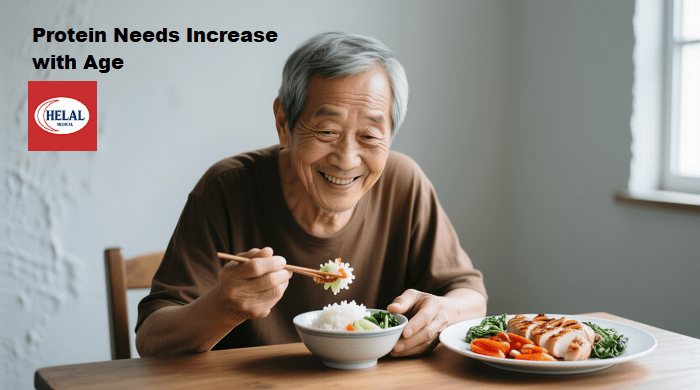
It is a widespread misconception that our nutritional requirements decrease as we age. The opposite is true, particularly when talking about protein. After the age of 55 or 60, protein needs increase to approximately 20 to 30%. This is an essential point, as most experts agree.
Why does this happen?
As I explained above: the primary reason is a phenomenon called anabolic resistance. As we age, our bodies become less efficient at using the protein we consume and there is also sarcopenia.
To overcome this resistance, adults need a greater quantity of protein per day with aging. Many experts now recommend an intake of 1.0 to 1.2 grams of protein per kilogram of body weight to preserve muscle functions and strength. The Recommended Dietary Allowance (RDA) for protein is 0.8 grams per kilogram, but higher recommendations are suggested for athletes and older adults to prevent muscle loss.
The Role of Meat in Diets for the elderly
Meat, particularly lean poultry, fish, and red meat in moderation, provides a source of high-quality protein. It has all the essential amino acids necessary for muscle maintenance. Furthermore, meat is a rich source of key micronutrients. These include Vitamin B12 and iron, which are often lacking in plant-only diets.
However, the warnings about high consumption of red and processed meats are still valid. These foods contain saturated fats and compounds that are linked to an increased risk of heart disease and certain cancers.
The goal is to balance, not remove meat entirely; the elderly should focus on lean cuts and moderate sizes. They should focus on protein-rich foods at every meal to maximize muscle protein synthesis throughout the day.
The Protein Paradox: Limiting Meat Consumption
The question of whether to limit meat consumption as we age is complex and often debated. Meat is a rich source of high-quality protein. However, it also has potential drawbacks for some individuals. These drawbacks particularly concern saturated fat and cholesterol content.
Arguments for Limiting Meat
- Heart Health:
High intake of red and processed meats increases the risk of heart disease. This is due to saturated fat and cholesterol content. As cardiovascular health becomes a greater concern with age, moderating meat intake may be beneficial. - Kidney Health:
For individuals with pre-existing kidney conditions, a very high protein intake might be concerning. This is especially true for protein from animal sources. However, for healthy kidneys, the evidence is less clear. Moderate to high protein intake is generally considered safe. It is beneficial for muscle health. - Environmental Impact:
Beyond personal health, the environmental impact of meat production is a growing consideration for many.
Arguments Against Limiting Meat (or for Strategic Consumption)
- Bioavailability of Nutrients:
Animal proteins, like those in meat, poultry, and fish, are considered “complete” proteins. They contain all nine essential amino acids that the body cannot produce on its own. These are crucial for muscle protein synthesis. - Other Nutrients:
Meat is also a good source of essential micronutrients like iron, zinc, and vitamin B12. Obtaining these in sufficient quantities from plant-based sources alone can be harder. - Satiety:
Protein is highly satiating, meaning it helps you feel fuller for longer. This can be beneficial for weight management and preventing overeating.
The Importance of a Balanced Approach
A healthy senior diet must be well-rounded. It should include a variety of protein sources, not just meat. Incorporate eggs, dairy, and a mix of plant-based proteins like legumes, beans, and nuts. This variety ensures an adequate intake of all vitamins and minerals.
Ultimately, a balanced approach provides the necessary protein while managing the risks linked to excessive consumption of red meat. You can find more nutritional guidelines for older persons from the American Academy of Nutrition and Dietetics.
My Personal Experience
Here are some easy-to-digest, nutrient-rich protein sources I includes in my my food. They are perfect old age persons:
- Eggs.
Soft-boiled, scrambled, or in omelets. They are light gentle on the stomach and packed with nutrients - Lean poultry.
Chicken breast (baked, grilled, or stewed) 🍗 - Fatty fish.
Salmon, mackerel, or tuna (steamed, baked, or poached) 🐟 - Dairy.
Greek yogurt (plain, low-fat), cottage cheese, or lactose-free milk 🥛 - Legumes (cooked well).
Lentils, chickpeas, or black beans (soups or mashed are easier to digest) 🥣 - Tofu: Soft tofu works great in soups or stir-fries 🥘
- Nut butters.
Smooth peanut (in small amounts, spread on toast or mixed into oatmeal) 🥜 - Creamy protein shakes.
Made with milk/yogurt and soft fruits.
Summary
The notion that protein needs increase with age is well-supported by scientific evidence. Understand these changing requirements. Adopt strategic dietary habits. By doing this, you can actively support your muscle health, energy levels, and overall vitality. You can choose to include lean meats.
You might embrace plant-based proteins. You might also opt for a combination of both. The key is to ensure consistent, adequate protein intake distributed throughout the day. Combine this with regular physical activity.
Was this “health tip” helpful? Share! And subscribe to our website so you never miss a new health article! Any concerns? Contact us on our Facebook page: Helal Medical.
For More Reading:
- Find more nutritional guidelines from the American Academy of Nutrition and Dietetics.
- Learn more about the link between sarcopenia and protein intake.
- Protein and Older Adults – NIH News in Health
- How Much Protein Do You Need? – Harvard Health
- Sarcopenia – Mayo Clinic
Discover more from Helal Medical Manila
Subscribe to get the latest posts sent to your email.


