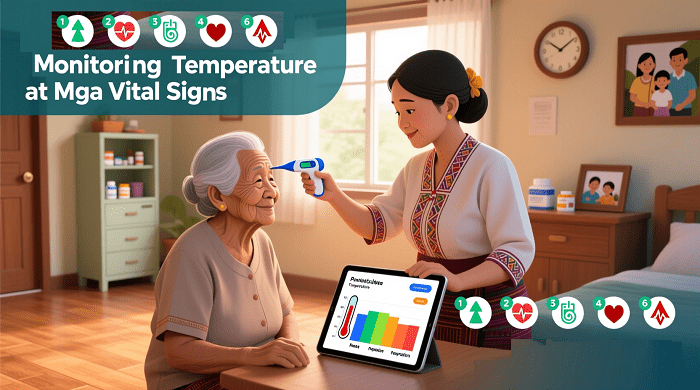
Temperature and Vital Signs Monitoring: A Complete Guide for Filipino Caregivers
Proper temperature and vital signs monitoring is one of the most essential simple procedures for Filipino caregivers, nurses, and healthcare students. Whether you’re working in a clinic, hospital, or caring for a patient at home, knowing how to correctly measure temperature, pulse rate, respiration, and oxygen saturation ensures early detection of health problems and supports timely medical decisions.
In this guide, you’ll learn the basics of how to perform temperature and vital signs monitoring, why they matter, and how they fit into the primary keyword: temperature and vital signs monitoring as a core caregiving skill in the Philippines.
For more basic caregiving skills, check out our master article here: https://helalmedical.com/most-common-simple-procedures-for-filipino-caregivers-nurses-and-healthcare-students/
What Are Vital Signs?
Vital signs are key measurements that show how well the body is functioning. According to global healthcare standards, these measurements include:
- Body temperature
- Pulse rate (heart rate)
- Respiration rate (breathing rate)
- Oxygen saturation (SpO₂)
These indicators are routinely used to assess health status and detect early signs of illness. The importance of correct vital signs monitoring is supported by international health authorities such as the World Health Organization (WHO), the Centers for Disease Control and Prevention (CDC), and the Cleveland Clinic.
1. Temperature Monitoring
Measuring body temperature helps identify fever, infection, or hypothermia.
Common methods include:
- Oral thermometer
- Ear (tympanic) thermometer
- Axillary (underarm) reading
Normal temperature range:
36.5°C to 37.5°C
High temperature or chills should be reported immediately.
2. Pulse Rate Monitoring
Pulse rate measures how many times the heart beats per minute. It can be taken from the wrist (radial pulse) or neck (carotid pulse).
Normal resting pulse rate:
- Adults: 60–100 bpm
- Children: Higher than adults
A pulse that is too fast, too slow, or irregular may indicate underlying health issues and must be documented and reported.
🫁 3. Respiration Rate Monitoring
Respiration rate measures how many breaths a person takes per minute. It helps identify respiratory problems such as asthma, infection, or fatigue.
Normal range for adults:
12–20 breaths per minute
Count silently to avoid influencing the patient’s breathing pattern.
🫀 4. Oxygen Saturation Monitoring (Pulse Oximeter)
A pulse oximeter measures the oxygen levels in the blood. This is especially useful for patients with:
- Asthma
- Pneumonia
- COVID-19
- Heart and lung conditions
Normal SpO₂ range:
95%–100%
Anything below 94% should be evaluated promptly.
Proper Documentation
Caregivers must record:
- Date and time of assessment
- Actual values (temperature, pulse, respiration, SpO₂)
- Patient symptoms (e.g., fever, shortness of breath)
- Actions taken (e.g., medication given, doctor notified)
Accurate documentation helps healthcare providers make informed decisions about ongoing treatment.
Reliable Sources Supporting Vital Signs Monitoring
Here are three trusted resources that reinforce proper vital sign procedures:
- World Health Organization (WHO) – Global guidelines on temperature and infection monitoring.
https://www.who.int/ - Centers for Disease Control and Prevention (CDC) – Best practices for temperature and symptom tracking.
https://www.cdc.gov/ - Cleveland Clinic – Comprehensive medical explanations on vital signs and normal ranges.
https://my.clevelandclinic.org/
🧭 Summary
Mastering temperature and vital signs monitoring is essential for Filipino caregivers, nurses, and healthcare students. These skills allow you to detect early symptoms, prevent complications, and provide safe, reliable care. As highlighted, temperature and vital signs monitoring is not just a basic procedure—it’s a life-saving responsibility that every caregiver must confidently perform.
To learn more about other core caregiving and nursing skills, visit our master guide here:
👉 https://helalmedical.com/most-common-simple-procedures-for-filipino-caregivers-nurses-and-healthcare-students/
💬 Chat with Us:
You can easily reach Helal Medical via WhatsApp (+63 966 974 1609), Facebook Messenger, or by clicking the chat icon at the lower right corner of our website HelalMedical.com.
We respond quickly to inquiries, appointment bookings, and medical consultations.