
Viral Hepatitis C: Complete Guide
Last Updated on 02/15/2026 by Helal Medical
Viral Hepatitis C is a major global health concern, affecting millions of people worldwide. The good news: there are now medications that can remove the virus from the body. HCV targets the liver, leading to its damage. If left untreated, it can lead to chronic liver disease, cirrhosis, and even liver cancer. Unlike other forms of hepatitis, HCV often remains silent for years. This comprehensive guide provides insights into Viral Hepatitis C and explains causes and transmission. It also covers diagnosis, treatment, and prevention.
“Read more about: Viral Hepatitis, including detail about Liver damages!”
🦠 What is Viral Hepatitis C?
Viral Hepatitis C is a blood-borne infection that primarily targets the liver. HCV belongs to the Flaviviridae family. It has several genotypes. Genotypes 1, 2, and 3 are the most common worldwide. The disease can be acute (short-term) or chronic (long-term).
- Acute Hepatitis C:
Occurs within the first 6 months after infection. Some individuals may clear the virus spontaneously without treatment. - Chronic Hepatitis C:
If the virus persists beyond 6 months, it becomes chronic. Chronic infection can silently damage the liver over years or decades.
🌍 Epidemiology and Global Burden
An estimated 50 million people globally live with chronic HCV infection, according to the World Health Organization (WHO). About 1 million new infections occur every year. HCV-related complications account for hundreds of thousands of deaths annually due to liver cirrhosis and hepatocellular carcinoma (HCC).
HCV prevalence has declined in some high-income countries. This is due to improved screening and safer medical practices. However, it remains a significant challenge in low- and middle-income nations. In these regions, access to diagnosis and treatment are limited.
🧬 Causes and Modes of Transmission
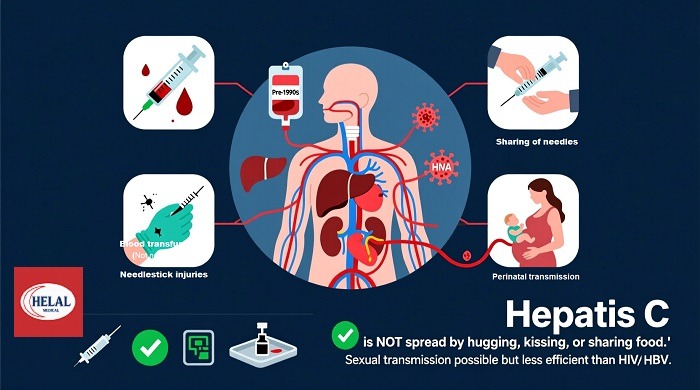
Hepatitis C is primarily transmitted through blood-to-blood contact. Common modes of transmission include:
- Unsafe injection practices (e.g., reuse of needles or syringes)
- Blood transfusions or organ transplants (before widespread screening began in the early 1990s)
- Sharing of needles among people who inject drugs
- Needlestick injuries in healthcare settings
- Unsterilized tattoo or piercing equipment
- Perinatal transmission, from mother to child during childbirth (less common)
Casual contact as hugging, kissing, or sharing food, does not spread HCV. Sexual transmission is possible but generally less efficient than for Hepatitis B or HIV.
⚠️ Symptoms and Clinical Presentation
One of the most challenging aspects of Viral Hepatitis C is the lack of early symptoms in most people. One of the most challenging aspects of Viral Hepatitis C is that most people do not show symptoms early on. The early stages are mostly asymptomatic. When symptoms do occur, they include:
- Fatigue
- Loss of appetite
- Nausea and vomiting
- Abdominal discomfort (especially in the upper right side)
- Dark urine and pale stools
- Jaundice (yellowing of the skin and eyes)
In chronic infection, symptoms can be mild or absent for years. Eventually, progressive liver damage can lead to:
- Fibrosis and Cirrhosis
- Portal hypertension and related complications
- Liver failure
- Liver cancer (HCC)
🧪 Diagnosis
Early diagnosis is key to preventing complications. Common diagnostic steps include:
- Serologic Testing
- Anti-HCV antibody test: Detects exposure to the virus.
- A positive result indicates either past or current infection.
- Molecular Testing (HCV RNA)
- PCR testing confirms active infection by detecting viral RNA in the blood.
- Determines if the infection is current and needs treatment.
- Genotyping
- Identifies the specific HCV phenotype. This helps tailor the treatment regimen.
- Liver Assessment
- Blood tests (ALT, AST, bilirubin) evaluate liver function.
- Imaging or liver elastography checks for fibrosis or cirrhosis.
- In some cases, a liver biopsy is done for detailed assessment.
💊 Treatment
The treatment landscape for Hepatitis C has transformed dramatically over the past decade. In the past, therapy involved interferon injections and ribavirin, which had limited effectiveness and significant side effects.
Today, Direct-Acting Antivirals (DAAs) are the standard of care. These are oral medications that:
- Target specific steps in the HCV lifecycle
- Achieve cure rates above 95%
- Are well-tolerated, with minimal side effects
- Usually require 8–12 weeks of therapy
Treatment depends on factors like HCV genotype, viral load, liver disease stage, and co-existing conditions. Modern guidelines recommend treating all patients with chronic Hepatitis C. The exception is for those with very limited life expectancy. This exception applies if the limited life expectancy is unrelated to liver disease.
🛡️ Prevention
Currently, no vaccine is available for Hepatitis C. Prevention focuses on reducing transmission risk:
- Screening blood products for sure safety
- Using sterile injection equipment and avoiding needle sharing
- Implementing infection control practices in healthcare settings
- Safe sex practices, especially among high-risk populations
- Routine screening for high-risk individuals, as people who inject drugs or received blood transfusions before 1990.
For healthcare workers, adherence to standard precautions and post-exposure protocols is essential.
👩⚕️ Screening and Public Health Strategies
WHO recommends one-time testing for all adults, with regular screening for those at ongoing risk. Early detection allows:
- Timely treatment to prevent disease progression
- Breaking the chain of transmission
- Reducing healthcare costs linked to late-stage liver disease
Global elimination goals aim to reduce new HCV infections by 90%. They also aim to reduce HCV-related deaths by 65% by 2030. This will be achieved through expanded testing, treatment access, and harm-reduction strategies.
📝 Living with Hepatitis C
With modern treatments, Hepatitis C is now curable for most people. However, individuals with advanced liver disease need ongoing medical care. Lifestyle modifications can help protect the liver:
- Avoid alcohol and unnecessary medications that can harm the liver
- keep a healthy weight and diet
- Regular monitoring through blood tests and imaging
Even after successful treatment, people with cirrhosis should continue liver cancer surveillance every 6 months.
📌 Key Takeaways and Summary
Viral Hepatitis C is a serious but curable liver infection. Caused by the HCV virus, it spreads mainly through blood exposure. The disease often remains asymptomatic for years, making screening and early diagnosis essential.
Modern direct-acting antivirals have revolutionized treatment, offering high cure rates with short, easy-to-take regimens. While there is no vaccine, effective prevention and control strategies can drastically reduce transmission.
Eliminating Hepatitis C as a public health threat is achievable through universal testing, accessible treatment, and strong public health policies.
✅ Summary:
Viral Hepatitis C is a blood-borne liver infection that can cause chronic liver disease if untreated. With modern antiviral drugs, cure rates exceed 95%. Early detection, prevention, and public health action are essential to control and remove this global health challenge.
For further reading:
Viral Hepatitis Types A, B, C, D & E: Latest Diagnosis & Treatment (2026 Update)viral-hepatitis-types-a-b-c-d-e-latest-diagnosis-treatment-2025. May 4, 2025
Liver Diseases: A Comprehensive Guide with an In-Depth Look at Viral Hepatitisliver-diseases-a-comprehensive-guideHepatitis. Feb 7, 2026
Who Should Get the Hepatitis A Vaccine?who-should-get-the-hepatitis-a-vaccine. Explore travel health advisories. Jan 27, 2026
Understanding Hepatitis B: A Comprehensive Guide for HepaB Virus infectionunderstanding-hepatitis-b-a-comprehensive-guide-for-hepab-virus. Sep 15, 2024
Liver Functions: Over 500 Reasons to Keep it Healthyliver-functions-over-500-reasons-to-keep-it-healthy. Feb 7, 2026
Understanding Hepatitis A: Prevention & Symptoms understanding-hepatitis-a-prevention-symptoms. Jan 24, 2026
Hepatitis C Virus Infection: Symptoms, Diagnosis, and Treatmenthepatitis-c-virus-infection-symptoms-diagnosis-and-treatment. Feb 19, 2023
Discover more from Helal Medical Manila
Subscribe to get the latest posts sent to your email.


