
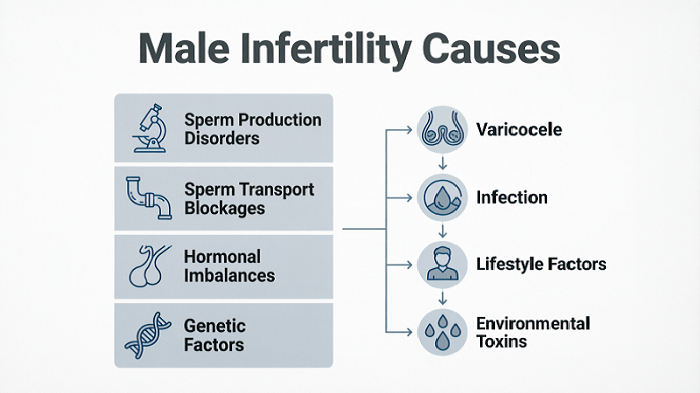
Causes of Male Infertility: An overview
Last Updated on 03/17/2026 by DrHelal
Infertility affects many couples worldwide. Understanding causes of Male infertility is crucial for men to take proactive steps. They can improve their reproductive health. Addressing male infertility causes is key to conception.
Many causes can lead to male infertility. But many of these causes are treatable. Knowledge and action can significantly improve your chances of conceiving. Keep reading to discover the key factors behind male infertility.
In this article, we will explore medical and lifestyle causes, genetic conditions, varicocele, infections, hormonal and others. The goal is to help understand infertility. Read more in our cornerstone article Semen Analysis Guide, and Men’s Health.
Male Infertility
Infertility is defined as the failure to achieve pregnancy after 12 months or more of regular unprotected sexual intercourse.
According to various sources: between 48 million and 186 million individuals globally are affected by infertility. Male factors contribute to 50% of fertility issues.
Key Factors in Male Fertility
- Sperm Count which is the number of sperm per milliliter of semen.
- Sperm Motility. the ability to move effectively.
- Sperm Morphology: The shape and structure.
- Semen Volume.
Male Infertility Causes and Risk Factors
It is essential to understand the various causes that can impact male reproductive health. Male infertility causes include problems in the ejection of semen, the absence or low levels of sperm. Additionally, the abnormal shape and movement of sperm can cause infertility.
“In about 50% of cases, the causes of male infertility cannot be determined. A complete lack of sperm occurs in about 10% to 15% of men who are infertile. A hormone imbalance or blockage of sperm movement can cause a lack of sperm.”
Sources: https://www.nichd.nih.gov/health/topics/menshealth/conditioninfo/infertility
Genetic Conditions
Some genetic conditions can have a significant impact on male fertility. For example, Klinefelter syndrome, Y chromosome deletions, and cystic fibrosis can cause abnormalities in the testes. These abnormalities lead to a decrease in sperm production and quality.
These conditions can be diagnosed through genetic testing, which involves analyzing a person’s DNA to look for any genetic abnormalities.
Varicocele
The veins in the scrotum become enlarged in this condition. This leads to decreased blood flow and increased temperature in the testicles. This can lead to a decrease in sperm production and quality.
The good news is that varicocele is treatable and can be corrected with surgery or other minimally invasive procedures.
Infections
Such as sexually transmitted infections (STIs) and other bacterial infections can cause male fertility. These infections can cause inflammation and scarring in the reproductive tract, leading to a decrease in sperm production and quality.
Hormonal Imbalances
Hormonal imbalances, such as hypogonadism and thyroid disorders, can cause a decrease in testosterone levels. This leads to a decrease in sperm production and quality. They can be treated with hormone replacement therapy or other medications.
Medications
Certain medical treatments, such as chemotherapy and radiation therapy, can damage sperm-producing cells in the testes. This damage leads to a decrease in sperm production and quality.
Lifestyle Factors
These factors include smoking, excessive alcohol consumption, poor diet, Stress and exposure to environmental toxins. Smoking can lead to a decrease in sperm count and motility. Excessive alcohol consumption can reduce testosterone levels and sperm quality.
Stress also can negatively impact male fertility, and exposure to environmental toxins can cause sperm damage. Making simple lifestyle changes can improve overall reproductive health.
| Cause Category | Specific Causes |
|---|---|
| Medical Conditions | Varicocele, Infections, Hormonal Imbalances, Medications |
| Lifestyle Factors | Smoking, Alcohol, Drug Use, Poor diet, Stress |
| Environmental Factors | Exposure to Toxins, Radiation |
| Genetic Factors | Chromosomal Abnormalities, Genetic Disorders |
| Physical Issues | Blockages, Ejaculation Problems |
| Other Causes | Age, Obesity |
Azoospermia
It is a complete lack of sperm that is the cause of infertility in about 15% of male’s infertility. Azoospermia can be caused by a hormone imbalance or a blockage of sperm movement. In some cases of infertility, a man produces less sperm than normal, which is called oligospermia. (SOURCE)
The Link Between ED and Infertility
ED and infertility often coexist; both are linked to lifestyle and medical issues. Addressing Erectile Dysfunction improves overall health and can improve fertility.
Addressing Erectile Dysfunction
- Identify the underlying cause of ED.
- Manage stress and anxiety effectively.
- Consider medical treatments if needed.
The Importance of Mental Health
It is crucial for fertility. Mental health including Stress and anxiety can affect sperm production. Therapy and support groups help. Mindfulness and relaxation reduce stress.
SOURCES:
- “Specific causes include Industrial chemicals. Extended exposure to certain chemicals, pesticides, herbicides, organic solvents, and painting materials may contribute to low sperm counts. Heavy metal exposure. Exposure to lead or other heavy metals also may cause infertility. Radiation or X-rays.” URL: https://www.mayoclinic.org/diseases-conditions/male-infertility/symptoms-causes/syc-20374773
- “What causes male infertility? Many biological and environmental factors can impact your fertility. Possibilities include: Azoospermia: Your infertility can be related to your inability to produce sperm cells. Oligospermia: The production of low or poor quality sperm.” URL: https://my.clevelandclinic.org/health/diseases/17201-male-infertility
- “Idiopathic male infertility can be attributed to endocrine disruption due to environmental pollution, reactive oxygen species, or genetic abnormalities. 3 Medications and Lifestyle Factors Numerous substances have been implicated as causes of infertility.” URL: https://www.uspharmacist.com/article/male-infertility-an-overview-of-the-causes-and-treatments
- “Causes of male infertility include Abnormal sperm production or function due to undescended testicles, genetic defects, health problems such as diabetes, or infections such as chlamydia, gonorrhea, mumps or HIV. Enlarged veins in the testes (varicocele) also can affect the quality of sperm.” URL: https://www.mayoclinic.org/diseases-conditions/infertility/symptoms-causes/syc-20354317
SUMMARY
In conclusion, various factors can cause male infertility including genetic conditions, varicocele, infections, and hormonal imbalances. Medical treatments and lifestyle factors can also play a role. It is essential to identify any underlying medical conditions and genetic factors that may impact fertility.
Simple lifestyle changes can significantly improve overall reproductive health. Quitting smoking, limiting alcohol consumption, and following a healthy diet are beneficial steps. Managing stress levels and reducing exposure to environmental toxins can also increase the chances of conceiving.
If you suspect that you may have symptoms, Helal Medical can help, offering quick, private, and convenient testing options. You may contact us here: Facebook page
Read More About Male health:
- Boosting Male Fertility: How to Increase Sperm Count
- Prostate Health
- Semen Quality and Fertility: What Every Man Should Know
- 5 Foods That Increase Your Semen Volume and Your Health!
- What is Normal Sperm Count?
Discover more from Helal Medical Manila
Subscribe to get the latest posts sent to your email.


