
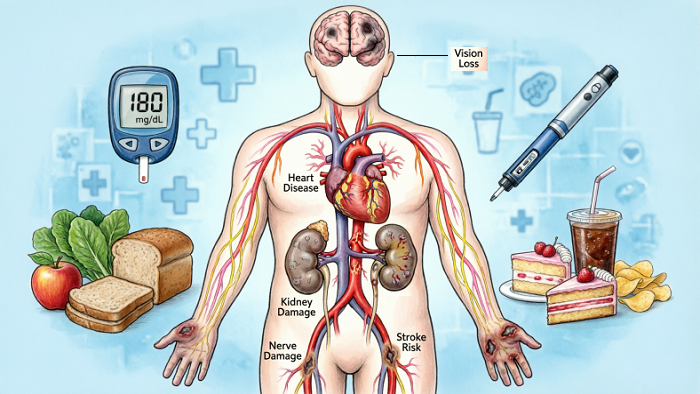
Diabetic Complications: What You Need to Know
Diabetes is a serious health issue that affects millions worldwide. But, managing it well is very important for overall health. Failure to manage diabetes leads to serious health problems, called diabetic complications. Knowing about them can help. You can take steps to prevent them.
What if you could live a long, healthy life? Even with diabetes, it is possible. Understanding the risks is the first step. Are you ready to learn more?
In this article, we will explore diabetic complications. We will discuss their causes. We will also cover prevention.
Understanding Diabetes and its Types
Diabetes affects blood sugar levels. The body does not make enough insulin. Or, it cannot use insulin well. Insulin helps sugar enter cells. Without it, sugar stays in the blood. High blood sugar damages the body.
Types of Diabetes
- Type 1: The body does not make insulin.
- Type 2: The body does not use insulin well.
- Gestational: Occurs during pregnancy.
Common Diabetic Complications
High blood sugar harms organs leading to diabetic complications. These problems can be very serious affecting many parts of the body. Over time, diabetes can damage nerves, leading to neuropathy, increasing the risk of heart disease, stroke, and kidney damage (nephropathy). Eye damage, foot problems are also common due to nerve and blood vessel damage.
1. Cardiovascular Disease
High blood sugar damages blood vessels and increases heart disease risk. This leads to blockages and clots causing heart attacks and strokes can occur.
2. Nerve Damage (Neuropathy)
High blood sugar damages nerves (called diabetic neuropathy). It causes pain and numbness, often affecting the feet and legs.
3. Kidney Damage (Nephropathy)
The kidneys filter waste from blood. High blood sugar damages them. This leads to kidney disease. Kidney failure may require dialysis.
4. Eye Damage (Retinopathy)
High blood sugar damages blood vessels in the eyes. This is called diabetic retinopathy. It can cause blindness. Regular eye exams are vital.
5. Foot Problems
Nerve damage and poor blood flow affect the feet. This makes it hard to heal. Infections and ulcers can occur. Amputation may be needed.
6. Skin Conditions
Diabetes increases the risk of skin infections. These include bacterial and fungal infections. Dry, itchy skin is also common.
7. Hearing Loss
Studies show a link between diabetes and hearing loss. High blood sugar may damage nerves in the ears.
8. Alzheimer’s Disease
Diabetes may increase the risk of Alzheimer’s. High blood sugar affects brain function.
Preventing Diabetic Complications
Managing diabetes well is key. This helps prevent diabetic complications. Lifestyle changes are very important.
Control Blood Sugar
Monitor blood sugar levels regularly. Take medications as prescribed. Work with your doctor to set goals.
Healthy Diet
Eat a balanced diet. Focus on fruits, vegetables, and whole grains. Limit sugary foods and drinks.
Regular Exercise
Aim for at least 30 minutes of exercise daily. This helps control blood sugar. It also improves heart health.
Maintain a Healthy Weight
Losing weight can improve blood sugar control. It also reduces the risk of other problems.
Quit Smoking
Smoking worsens diabetic complications. Quitting improves overall health.
Regular Checkups
See your doctor regularly. Get your eyes, kidneys, and feet checked. Early detection is very important.
Foot Care
Check your feet daily for sores or cuts. Wear comfortable shoes. See a podiatrist regularly.
Manage Stress
Stress affects blood sugar levels. Find healthy ways to manage stress. Try yoga or meditation. As the article from helalmedical.com, stress can cause erectile dysfunction, which can be related to diabetes.
The Importance of Early Detection
Detecting diabetic complications early is vital. This allows for timely treatment. It can prevent serious problems. Regular checkups are very important.
Conclusion:
Diabetic complications are a serious concern. Managing diabetes well is very important. Lifestyle changes can help prevent them. Regular checkups are also vital. Take control of your health today.
At Helal Medical Manila, we encourage all diabetic patients to include annual retinal screening as part of their regular care. Early detection means brighter, clearer vision and a better quality of life.
Visit us today or message Helal Medical page on Facebook to schedule your diabetic screening.
Read More:
Thrush (Yeast infection): Causes and Treatmentthrush-yeast-infection-causes-and-treatment
Diabetes Types and Diagnosisdiabetes-diagnosis-and-types Feb 21, 2025
How to Diagnose Diabetes? how-to-diagnose-diabetes Mar 22, 2025
World Diabetes Day November 14, 2022world-diabetes-day Nov 3, 2022
Diabetes Types, symptoms, complications and managementdiabetes-types-symptoms-complications-and-management Sep 4, 2022
Diabetes Symptoms You Should Never Ignorediabetes-symptoms-you-should-never-ignore
Feb 10, 2026
Diabetes Diagnosis, Which Blood Tests to be done? diabetes-diagnosis-which-blood-tests-to-be-done Aug 10, 2021
How to Manage Diabetes During the Holidayshow-to-manage-diabetes-during-the-holidays Nov 9, 2025
Stem Cell Therapy: The New Frontier in Diabetes Treatment (2024 Update)stem-cell-therapy-the-new-frontier-in-diabetes-treatment-2024-update Sep 19, 2024
Diabetic Eye Diseases: Causes, Symptoms, and Preventiondiabetic-eye-diseases-in-the-philippines-causes-symptoms-and- Feb 11, 2026
World Obesity Day 2023world-obesity-day Mar 18, 2023
HBA1c Test: A Measure of Long-Term Blood Sugar Controlhba1c-test-a-measure-of-long-term-blood-sugar-control Aug 28, 2024
What Is Insulin Resistance and Why It Matterswhat-is-insulin-resistance-and-why-it-matters Feb 7, 2026
Discover more from Helal Medical Manila
Subscribe to get the latest posts sent to your email.


