
Understanding Chest Pain — When to Worry and When It’s Just Stress
Last Updated on 08/28/2026 by Helal Medical, MD Medical Doctor with 50+ Years of Clinical Practice • [Read Full Author Bio & Credentials →]
Chest pain can be a really scary experience. Therefore, it’s completely normal to feel anxious when you feel that tightness or discomfort in your chest. But here’s the thing: not all chest pain is a sign of a heart attack. Sometimes, it’s just your body’s way of telling you it’s stressed out.
In this article, we’ll help you understand the different types of chest pain. We’ll explore what might be causing them. Most importantly, we’ll explain when you should seek medical attention.
What is Chest Pain?
Chest pain is any discomfort felt anywhere along the front of your body between your neck and your upper abdomen. It can range from a sharp, sudden pain to a dull ache. You may feel it in a small area or across a broad region of your chest.
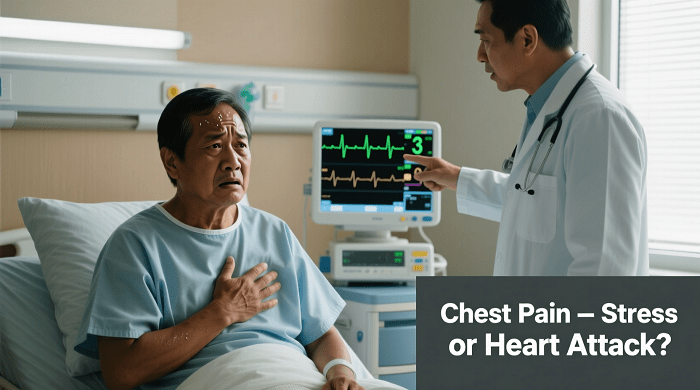
At Helal Medical Manila, old-age patients often ask: “Doctor, is this chest pain from my heart or just stress?” One of them, came reporting his chest pain due heart problem. But it was not the heart, only stress.
The truth is not all chest pain means a heart attack; but some causes can be life-threatening. This article explains how to recognize the difference, when to seek urgent help, and what to do next.
Common Causes of Chest Pain
Chest pain can result from heart, lungs, muscles, nerves, or even digestive issues. Here are the main categories:
1. Heart-related (Cardiac) Causes
- Angina:
temporary chest pain from reduced blood flow to the heart. - Heart attack (Myocardial infarction):
sudden blockage of heart arteries causing severe, pressure-like pain. - Pericarditis:
inflammation around the heart causing sharp pain that worsens when lying down.
🩸 Warning signs of a heart attack:
- Heavy, squeezing chest pain
- Pain radiating to arm, neck, or jaw
- Shortness of breath, sweating, nausea
- Lasting more than 10 minutes
If these occur — call for emergency help promptly.
2. Lung-related Causes
- Pulmonary embolism: blood clot in the lung; causes sudden, sharp pain and breathlessness.
- Pneumonia or pleurisy: infection or inflammation of lung lining.
3. Digestive Causes
- Acid reflux (GERD): burning chest pain after meals, often mistaken for heart pain.
- Hiatal hernia: stomach pushes through diaphragm, causing discomfort.
4. Muscle or Rib Causes
- Muscle strain: pain triggered by movement or pressure.
- Costochondritis: inflammation where ribs join the chest bone.
5. Stress or Anxiety
Emotional stress can cause chest tightness, fast heartbeat, and breathlessness — mimicking heart symptoms. This is called “non-cardiac chest pain.”
| Cause | Key Characteristics | When to Seek Help |
|---|---|---|
| Heart Attack | Crushing chest pain, radiating pain, shortness of breath | Immediate emergency services |
| Acid Reflux | Burning sensation, worse after eating, lying down | Consult doctor if frequent or severe |
| Muscle Strain | Pain with movement, tenderness to touch | Rest, ice, pain relievers; see doctor if severe or persistent |
| Costochondritis | Sharp pain, tender to touch on chest wall | See doctor for diagnosis and pain management |
| Panic Attack | Intense anxiety, racing heart, chest pain, dizziness | Seek medical attention to rule out other causes; therapy/medication for anxiety |
| Pleurisy | Sharp pain with breathing, coughing | Consult doctor for diagnosis and treatment |
| Pulmonary Embolism | Sudden sharp chest pain, sudden shortness of breath | Immediate emergency services |
⚠️ When Chest Pain Is an Emergency
Go to the nearest hospital immediately if you experience:
- Sudden, severe, or crushing chest pain
- Pain radiating to arm, back, neck, or jaw
- Cold sweats, dizziness, or fainting
- Shortness of breath or nausea
- Pain lasting longer than 10–15 minutes
Even if symptoms seem mild, it’s safer to get checked.
Early ECG and blood tests can confirm or rule out a heart attack.
🩺 Diagnosis
At Helal Medical, we evaluate chest pain using:
- ECG (Electrocardiogram) – checks for heart rhythm or ischemia
- Blood tests – detect heart muscle damage
- Chest X-ray – rules out lung or rib problems
- Physical exam – identifies muscle tenderness or anxiety patterns
The doctor will then determine if it’s heart-related or due to another cause.
💊 Treatment Depends on the Cause
- Heart-related pain: medications like aspirin, nitrates, or emergency procedures.
- Reflux-related pain: acid-reducing drugs, dietary changes.
- Muscle or stress pain: rest, gentle stretching, or relaxation techniques.
🧠 How to Prevent Chest Pain
- Maintain a heart-healthy diet – low salt, less fatty food.
- Exercise regularly – walking or light aerobic activity.
- Quit smoking and limit alcohol.
- Manage stress – practice breathing exercises or mindfulness.
- Monitor blood pressure and cholesterol regularly.
- Have routine heart check-ups — early detection saves lives.
Summary
Not all chest pain comes from the heart — but when it does, it can be life-threatening.
Learning to recognize warning signs can make the difference between safety and danger.
At Helal Medical Manila, we provide accurate evaluation, ECG testing, and prompt care for all cases of chest discomfort. Don’t ignore chest pain — let a doctor find the real cause and guide you to safe recovery.
🔗 Sources:
- American Heart Association – Chest Pain Causes and When to Call 911
- Mayo Clinic – Chest Pain Causes
- National Institutes of Health – Noncardiac Chest Pain
If you suspect that you may have symptoms, Helal Medical can help, offering quick, private, and convenient testing options. You may contact us here: Facebook page
Read More About ECG:
- ECG: Top 5 Reasons Your Doctor May Recommend It
- ECG Test in Manila: What to Expect, Cost, and Benefits
- ECG vs. Echocardiogram: Which Test Do You Need?
- Electrocardiogram (ECG): It’s Indications, and How to Read the Report
This article provides general information. Always consult with a healthcare professional for personalized medical advice.
Discover more from Helal Medical Manila
Subscribe to get the latest posts sent to your email.


