
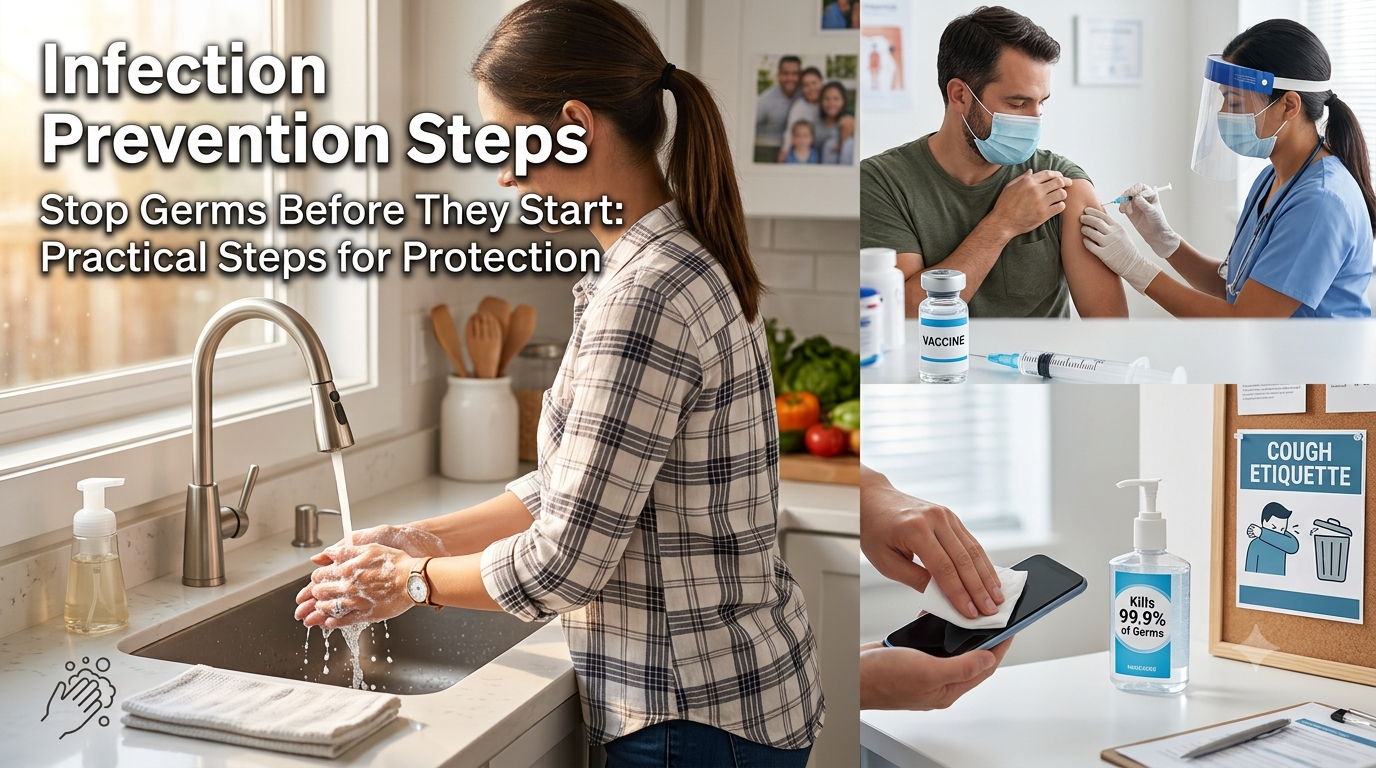
Stop Germs Before They Start: Infection Prevention Steps
Last Updated on 09/12/2026 by DrHelal, MD Medical Doctor with 50+ Years of Clinical Practice • [Read Full Author Bio & Credentials →]
Did you know that many common infections can be avoided entirely? It’s true. Most germs enter your body through everyday actions you might not even notice. Learning and following infection prevention steps is the most affordable way to protect yourself, your children, and your whole community.
Prevention is always better than cure. No matter how good treatments are, avoiding illness in the first place saves you from pain and expenses. Prevention steps work by breaking the chain of how germs travel from one person or place to another.
In this article, we explain everything about Infection Prevention Steps and hoe to apply at home, work, or in public. We also discuss how it works! Keep reading to discover small habits that make a huge difference.
How Prevention Works: Breaking the Chain of Infection
To stop an infection, you only need to interrupt one link in its spread. The chain follows this path: Germ Source → Route of Spread → Entry Point → New Host. Every prevention method targets one of these links to stop germs from reaching you.
1. Personal Hygiene: Your First Line of Defense
Good hygiene stops germs from getting on your hands and into your body. It is the simplest yet most powerful infection prevention step.
- Wash hands the right way:
Use soap and clean running water for at least 20 seconds — about the time it takes to sing “Happy Birthday” twice.
✅ Do this: Before eating, after using the toilet, after touching garbage or animals, after coughing or sneezing, and after being in public places.
✅ If no water: Use alcohol‑based hand sanitizer with at least 60% alcohol. - Cover coughs and sneezes:
Use a tissue or the inside of your elbow — never your bare hands. Throw tissues away immediately and wash hands afterward. - Keep hands away from your face:
Germs enter easily through eyes, nose, and mouth. Try to avoid touching these areas unless your hands are clean. - Bathe regularly:
Keep skin, nails, and hair clean to remove germs that stick to your body.
2. Safe Food and Water Practices
Many infections — like typhoid, cholera, hepatitis A, and food poisoning — come from what you eat and drink. Follow these rules:
- Drink safe water:
Use boiled, filtered, or bottled water. If boiling, let it boil for at least 1–2 minutes. - Wash produce well:
Rinse fruits and vegetables thoroughly under running water, especially if eaten raw. - Cook food thoroughly:
Meat, poultry, eggs, and seafood should be cooked until no pink remains and juices run clear. - Separate raw and cooked food:
Never use the same plate or knife for raw meat and ready‑to‑eat food without washing first. - Store food properly:
Keep leftovers in the refrigerator within 2 hours and reheat them until steaming hot before eating. Throw away food that smells or looks spoiled.
3. Keep Your Surroundings Clean
Germs can survive on surfaces for hours or even days. Regular cleaning lowers their numbers greatly:
- Clean high‑touch areas:
Doorknobs, light switches, phone screens, tables, toys, and bathroom fixtures. Use soap and water, or a mild disinfectant. - Let fresh air in:
Open windows and doors whenever possible. Good airflow clears out airborne germs and reduces moisture where mold and bacteria grow. - Manage waste properly:
Cover trash bins tightly, and dispose of garbage regularly to avoid attracting flies, cockroaches, and rats — all of which carry germs. - Control mosquitoes and pests:
In tropical areas like the Philippines, this is critical. Remove stagnant water in buckets, flowerpots, tires, and gutters — these are breeding spots for mosquitoes that spread dengue, malaria, and Zika.
4. Boost Your Body’s Natural Defense
Your immune system is your internal shield. Strong defenses make it much harder for germs to cause illness:
- Eat a balanced diet:
Include plenty of fruits, vegetables, whole grains, and lean proteins. Vitamins A, C, D, and zinc are especially important for immunity. - Get enough sleep:
Adults need 7–8 hours, children 9–12 hours. Lack of sleep weakens your body’s ability to fight off invaders. - Stay active:
Regular exercise improves blood flow and helps immune cells work better. Even 30 minutes of walking daily helps. - Avoid harmful habits:
Smoking damages the lungs and airways; too much alcohol lowers immunity. - Manage stress: Long‑term stress releases chemicals that slow down your body’s defense system.
5. Vaccination: Protection Before Exposure
Vaccines are one of the most successful infection prevention steps ever developed. They train your immune system to recognize and fight specific germs before you ever catch them.
- How they work:
A vaccine contains a harmless part of a germ. Your body learns to make antibodies against it, so if you meet the real germ later, your body destroys it quickly. - Common vaccines:
Flu, measles, polio, hepatitis B, typhoid, and COVID‑19 vaccines. - Community benefit:
When most people are vaccinated, germs cannot spread easily — this is called “herd immunity,” which protects those who cannot get vaccines, like babies or people with weak health.
Table: Prevention Steps by Category
| Area of Focus | Key Actions | Germs Stopped |
|---|---|---|
| Personal Hygiene | Handwashing, covering coughs, clean nails/skin | Flu, colds, hepatitis, skin infections |
| Food & Water | Boil water, cook well, separate raw/cooked | Typhoid, cholera, food poisoning, worms |
| Home & Environment | Clean surfaces, airflow, remove stagnant water | Dengue, malaria, mold, respiratory germs |
| Immunity | Good diet, sleep, exercise, no smoking | All types of infections |
| Vaccination | Follow recommended schedule | Measles, flu, hepatitis, COVID‑19, etc. |
Summary
Following simple infection prevention steps is the best way to stay healthy and protect your family. By practicing good hygiene, handling food and water safely, keeping your home clean, strengthening your immune system, and getting vaccinated, you create strong barriers against germs.
These habits do not cost much time or money, but they reduce your risk of illness significantly. Remember: stopping the spread of infection starts with you — every small action adds up to a healthier community.
Trusted Sources for More Information
- World Health Organization (WHO): Infection Prevention and Control
- Centers for Disease Control and Prevention (CDC): Everyday Healthy Habits
- Department of Health Philippines: Disease Prevention & Control
🔗 Connect with Helal Medical:
If you suspect that you may have symptoms, Helal Medical can help, offering quick, private, and convenient testing options. You may contact us here: Facebook page, Get Free medical consultation!
This article provides general information. Always consult with a healthcare professional for personalized medical advice.
Discover more from Helal Medical Manila
Subscribe to get the latest posts sent to your email.


