
Beyond the Rain, Why Stagnant Water Fuels Dengue Season: Common Myths Filipinos Need to Stop Believing
Last Updated on 09/12/2026 by DrHelal, MD Medical Doctor with 50+ Years of Clinical Practice • [Read Full Author Bio & Credentials →]
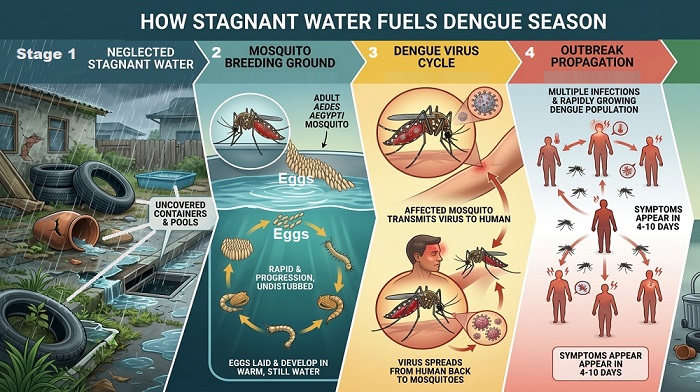
Rain itself does not cause dengue, and feeling safe after the rain stops is a common but dangerous mistake. Rain creates pools of still water, and that stagnant water is where mosquitoes breed and multiply fast.
According to the World Health Organization, mosquito-borne diseases including dengue cases rise by up to 40% during rainy months. Everywhere rain settles—puddles, containers, gutters—becomes a nursery for mosquitoes. That is why dengue season always closely follows the rains.
During my practice in Helal Medical Manila, I noticed that some people wrongly believe rain alone brings the illness and let their guard down too soon. Knowing the real link—stagnant water—is key. My advice to patients was to clear away standing water around their homes, to stop mosquitoes from breeding. This can help protect every Filipino from dengue.
Announcement: MANILA, Philippines — Classes on Saturday, Aug. 29, were suspended due to inclement weather brought by the southwest monsoon, or habagat.
Why Rainy Weather Creates Perfect Conditions for Dengue
Many people think mosquitoes breed in dirty, flowing floodwater, but the opposite is true. The Aedes aegypti mosquito — the one that spreads dengue — prefers to lay its eggs in clean, stagnant water. When rain falls and collects in flower pots, old tires, cans and roof gutters, it sits still for two or three days. That is enough time for mosquito eggs to hatch and grow into adults. The hot Philippine sun speeds the growth cycle from egg to biting mosquito in 7 days.
This is why dengue season in the Philippines typically runs from June through November. But please understand this point: dengue risk is not limited to the rainy months. Even in dry weather, water left anywhere can breed mosquitoes.
The Department of Health in the Philippines (DOH) repeatedly warns that dengue can happen year-round because it is not the rain itself — it is the stagnant water left behind.
Dangerous Myths About Dengue — and the Truth Behind Them
One of the most harmful myths is the belief that dengue mosquitoes bite only at night, this is completely false. The Aedes mosquito bites mostly during daylight hours. Wearing a mosquito net at night helps, but it will not protect you from most dengue bites, you need protection during the day as well.
Another common myth is that mosquitoes breed only in dirty or foul-smelling water. In truth, they actually favor clean, still water. This myth makes people to ignore clean containers around their homes. Please do not make this mistake. Any container that holds water for more than three days — clean or dirty — can produce hundreds of mosquitoes.
A third dangerous myth is that once you have had dengue, you are safe forever, this is not true. There are four different types of dengue virus. If you recover from one type, you gain lifelong protection against only that one type. Second infection is often more severe and carries a higher risk of life-threatening complications.
How to Tell Dengue Apart from Ordinary Flu
Dengue is often mistaken for regular flu because both start with fever, headache, and body aches — but they are different:
1. Dengue brings very high fever up to 40°C, pain behind the eyes when moving them, and severe muscle and joint pain.
2. Red spots on the skin that stay red even when pressed.When the fever drops, many people think they are getting better, but that is when dengue can turn dangerous.
3. Watch for warning signs: severe stomach pain, repeated vomiting, nose or gum bleeding, cold damp skin, extreme weakness, or trouble breathing. If any of these happen, go to a hospital right away.
The 4S Strategy — Your Complete Protection Plan
The Department of Health (DOH) recommends a clear, proven plan known as the 4S Strategy:
1. Search and Destroy: once every week, walk around your home, inside and out, empty all standing water anywhere. Clean containers to remove mosquito eggs, then keep them dry or covered.
2, Self-Protection: Wear long-sleeved shirts and long pants, especially during early morning and late afternoon hours. Apply insect repellent registered by the FDA to exposed skin. Use window screens and mosquito nets where possible, but remember that nets protect mostly at night.
3. Seek Early Consultation: If you or anyone in your home has a fever that lasts two or more days, please visit a clinic or doctor. At Helal Medical, we offer rapid dengue testing that shows results quickly so you do not have to guess and wait. Early diagnosis greatly improves outcomes and lowers risk.
4. Support Fogging Only in Outbreak Areas: Spraying chemicals does not solve the problem long-term and should not be done everywhere. It works best when targeted during confirmed outbreaks in specific neighborhoods. The real solution always remains removing the places mosquitoes breed.
Summary
Dengue season starts when it rains in the Philippines, but rain itself doesn’t cause Debgue. The real risk is still water left behind. Aedes mosquitoes lay eggs in clean, standing water in pots, or anywhere around homes. Some people believe wrong ideas, like mosquitoes only bite at night, breed in dirty water, or that past dengue keeps you safe forever. These false myths put you in danger.
Stick to the 4S steps: find and remove places where mosquitoes breed, protect yourself from bites, see a doctor early if you feel sick, and only use fogging when it’s truly needed. If you get a fever, visit Helal Medical right away. Getting checked early and watching your symptoms closely are still the best ways to stay safe from dengue.
References
- World Health Organization. (2026). Update on the Dengue Situation in the Western Pacific Region. WHO. Retrieved from https://cdn.who.int
- Department of Health. (2026). DOH Intensifies Dengue Warning as Rainy Season Raises Nationwide Risk. Philippine Information Agency. Retrieved from https://pia.gov.ph
- Department of Health. (2024). Reiteration on the Nationwide Implementation of the Enhanced 4S Strategy Against Dengue. DOH Philippines. Retrieved from https://doh.gov.ph
- Centers for Disease Control and Prevention. (2024). Dengue Transmission, Symptoms, and Prevention Guidelines. CDC. Retrieved from https://cdc.gov
- Department of Health Central Visayas CHD. (2026). DOH Underscores the Significance of 4S in Dengue Mitigation. DOH Philippines. Retrieved from https://ro7.doh.gov.ph
Published by Dr. Helal, Helal Medical Manila — Unit 105 Vareb Mansion, 1679 Mabini Street, Malate, Manila.
Walk-in consultations and rapid dengue testing available. Protect your family — seek care early.
Read More About Dengue:
Dengue Fever: Causes, Symptoms, Treatment, and Prevention
Dengue Fever Disease: Complete Medical Guide
Dengue Fever During the Rainy Season: Protecting Your Family in the Philippines
Read mor from helalmedical.com:
Rainy Season Food & Water Safety: How to Beat Cholera, Typhoid, and Diarrhea
Dengue Fever During the Rainy Season: Protecting Your Family in the Philippines
Stay Safe from 5 com
mon Infections During Rainy Season in the Philippines
Health Risks During Floods in the Philippines: How to Stay Safe This Rainy Season
Leptospirosis Cases Rise During Floods in the Philippines: Symptoms and Prevention
Respiratory Virus Season in the Philippines: What Is the Best Way to Deal with it
Waterborne Diseases After Floods: Cholera, Typhoid, and Diarrhea in the Philippines
Mosquito-borne diseases Common Types
Discover more from Helal Medical Manila
Subscribe to get the latest posts sent to your email.


