
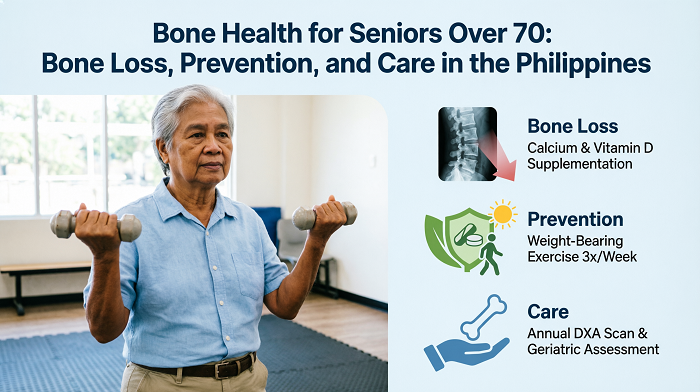
Bone Health for Seniors Over 70: Bone Loss, Prevention, and Care in the Philippines – part 2
Bone health for seniors is about much more than just avoiding pain. Strong bones support your body, protect your internal organs, and allow you to move freely. When bones weaken, simple tasks become difficult, and a minor fall can lead to severe injury. Good care helps you maintain bone strength and lowers these risks effectively.
My name is Dr. Helal, from Helal Medical in Manila. I have prepared this guide using easy language so that any senior or family caregiver can follow it easily. You do not need medical training to understand how to protect your bones and enjoy an active lifestyle as you age.
How Bones Change After Age 70
Bones are living tissue that constantly renew themselves. At younger ages, your body builds new bone faster than it breaks down old bone. For seniors, after age 70, this balance shifts affecting bone health. Your body removes old bone more quickly than it creates new one, so bones become lighter, thinner, and more likely to fracture even from minor falls.
This natural process is called osteoporosis when bone density drops below healthy levels. This condition often has no warning signs. You may feel perfectly fine until you have a fracture in the hip, spine, or wrist.
Several factors speed up bone loss. Genetics play a role, low calcium or vitamin D intake. Also, Lifestyle factors: smoking, heavy alcohol use, and staying still for long periods. This affects both genders: women lose bone faster after menopause, but men experience significant loss too as they grow older.
Detecting Bone Loss Early
What Is a DEXA Scan?
A DEXA scan is a simple, painless test that measures your bone density; it uses very low levels of radiation to compare your bones to those of a healthy young adult. The test shows how much mineral, especially calcium, is present in your bones. Results tell whether your bones are normal or osteoporotic.
The test usually focuses on the lower spine and hip; you lie still on a padded table while a scanner passes gently over your body. There is no injection or special preparation. The results are ready quickly and help guide what care you may need.
Who Should Get Tested and When?
All seniors aged 70 and above should have a bone density test at least once and if results are normal, retesting every two years is recommended.
In the Philippines, DEXA scans are available in major hospitals and diagnostic centers. Costs vary, but PhilHealth provides partial coverage for eligible seniors. Ask your doctor if you qualify for coverage so you can plan your visit without unnecessary financial worry.
Nutrition and Lifestyle for Strong Bones
Your bones need two key nutrients to stay strong: calcium and vitamin D. Calcium builds hard bone tissue, while vitamin D helps your body absorb calcium from food. Good sources of calcium in the Philippines include milk, yogurt, cheese, small fish eaten with bones, and dark green leafy vegetables such as malunggay leaves.
Vitamin D comes from sunlight and certain foods like fatty fish, egg yolk, and fortified products. In Manila the weather is partly cloudy, many seniors do not get enough sun required for bone health. A simple blood test can check vitamin D level; if it is low, proper supplements can help, they are safe, effective, and affordable.
Daily physical activity also builds stronger bones: weight-bearing exercise and walking helps preserve bone density. Aim for twenty to thirty minutes of walking daily, unless your doctor advises otherwise. Avoid heavy lifting or high-impact movements that could strain your spine or hips unnecessarily.
Preventing Falls and Fractures
Even strong bones can break in a bad fall. Simple changes in the surroundings can make your home much safer: Remove loose rugs, install grab bars near toilets and baths, keep walkways free of clutter, and ensure every room has enough light.
Wear well-fitting shoes both inside and outside the house and avoid walking in socks or smooth slippers that slide easily. Have your eyesight checked every year, since poor vision is a major cause of falls. Also, review all your medicines with your doctor as some can cause dizziness or weakness that increases risk.
Summary
Bone health for seniors depends on early detection, good nutrition, daily movement, and home safety. You do not need expensive treatments or complicated diets to protect your bones. Regular checkups, enough calcium and vitamin D, safe walking, and removing fall hazards make a real difference to your long-term health.
Taking action now protects your mobility and independence. A DEXA scan, a balanced diet, and simple home changes are all you need to keep bones strong. If you are aged 70 or above, ask your doctor about bone density testing during your next visit. Early action is always easier and safer than waiting for an injury to happen.
At Helal Medical in Manila, we provide DEXA scanning and bone health advice for elderly Filipinos. Bring your Senior Citizen ID and PhilHealth card so we can help you claim all discounts and benefits you deserve. Strong bones support every part of your life — they are worth protecting.
References
- PREVENTION AND MANAGEMENT OF OSTEOPOROSIS
- osteoporosis | DOH CAR
- Republic Act No. 10868 – The Law Phil Project. Republic Act No. 10868. Centenarians Act of 2016 (including expanded health benefits and preventive care for all seniors). Congress of the Philippines, Manila.
- Ageing Poor Filipinos Suffer from Unequal Health Coverage
Discover more from Helal Medical Manila
Subscribe to get the latest posts sent to your email.


