
Does a Low Testosterone Blood Test Always Mean You Need Treatment?
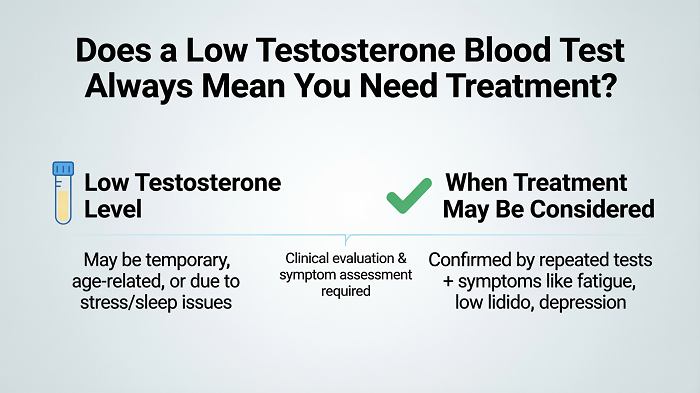
I noticed, while practicing in Helal medical- Manila, that many men see a low testosterone on their blood test report and feel worried or alarmed. They ask for treatment right away. But the truth is, a single low testosterone reading is not enough on its own to decide you need medicine. The number tells only part of the story. I used to tell I must look at your symptoms, repeat the test, and rule out other causes before making any decision.
In this article I will discuss what testosterone blood levels mean and is the number alone Is enough? I will also discuss the common reversible causes of low levels, the important symptoms and when treatment is required.
Testosterone Blood Levels:
These levels naturally go up and down during the day: highest in the early morning and drop later. A test taken in the afternoon can easily show a lower number that is not truly your normal level. This is why we always request testing in the morning and repeat the test on a different day to confirm as one result can be misleading.
Your age, body weight, sleep quality, and overall health all affect testosterone levels. Being overweight, having diabetes, or not sleeping well can lower the number temporarily. These are not permanent conditions, and testosterone often improves when these issues are addressed. Treatment is not always the first step — finding and fixing the cause often works best.
Why the Number Alone Is Not Enough
Doctors do not treat a number; they treat a person. As per International guidelines: testosterone deficiency is diagnosed only when you have both consistently low levels and clear symptoms. If your levels are low but you feel fine, treatment is usually not recommended. Many healthy men have levels slightly below the average range without any problem at all. There is no one perfect number that applies to every man of every age.
The total testosterone results include hormone attached to proteins that your body cannot actually use. Sometimes total testosterone looks low, but the active, usable part; called free testosterone, is perfectly normal. Measuring free testosterone gives a clearer picture.
Common Reversible Causes of Low Levels
Before starting treatment, I recommend checking for conditions that can lower testosterone temporarily:
1. Extra body weight, especially around the belly. Poor sleep – especially less than six hours nightly – chronic stress, heavy alcohol use, and certain medicines can also lower levels.
2. Underlying health issues: diabetes, thyroid problems, vitamin D deficiency, and high blood pressure — affect hormone levels.
Treating the above conditions often restores testosterone naturally. In these cases, giving testosterone medicine without fixing the root cause does not solve the real problem.
Symptoms That Matter — And Which Are Not Related
Feeling tired or low on energy does not automatically mean low testosterone, these are very common signs that can come from stress, poor sleep, depression, or other illnesses.
True testosterone deficiency has specific patterns: Reduced sexual interest, difficulty maintaining an erection, loss of strength or muscle mass, and increased body fat around the waist. Hot flashes, reduced beard or body hair, and low mood that does not improve are also signs.
Many people symptoms blame on low testosterone are actually part of normal aging or caused by something else, everyone slows down a little after 40. Not every change means you need hormone medicine. If your symptoms improve with lifestyle changes alone, that confirms testosterone was not the main problem.
When Treatment Is Recommended — And When It Is Not
Treatment is recommended only when three things are true:
1. you have clear, consistent symptoms;
2. your morning testosterone is low on two separate tests;
3. and other causes have been ruled out.
The goal is to restore your levels to the mid-normal range, not to push them to the highest possible number. Higher is not better — too much testosterone carries real risks.
Treatment is not recommended if you have prostate cancer, breast cancer, severe untreated sleep apnea, or poorly controlled heart failure. Even if levels are low, these conditions make hormone replacement unsafe. Regular monitoring is needed throughout treatment to keep you safe.
What You Can Do First: Lifestyle Before Medicine
You have great power to improve your hormone levels naturally. Lose excess weight slowly — aim for steady, sustainable progress rather than quick drops. Sleep seven to eight hours nightly; deep sleep is when your body produces the most testosterone. Exercise regularly, especially strength training, which signals your body to make more hormone. Limit alcohol, manage stress, and eat balanced meals with enough protein and healthy fats.
These steps take time — usually three to six months — but they improve your whole body, not just one number. If levels improve and symptoms fade, you may never need medication. If after six months you still feel unwell and levels remain low, then discussing treatment with your doctor is the right next step.
Summary
A low testosterone blood test does not always mean you need treatment. One test is not enough — levels must be confirmed on two separate morning tests. You must also have clear symptoms, and other causes must be ruled out. Many factors — weight, sleep, stress, diet, and other health conditions — can lower levels temporarily and improve on their own.
Treatment is only for confirmed deficiency with real symptoms. It is not a shortcut for aging, not a performance booster, and not something to take just because a number looks low. Always get a second opinion if a clinic offers treatment without checking your overall health or repeating your test. Your body is more than one number — treat the whole person, not just the result.
References
- Endocrine Society — Clinical Practice Guideline: Testosterone Therapy in Men
- Testosterone Deficiency Guideline – American Urological Association
- Mayo Clinic — Low Testosterone: When to Treat and When Not To
- National Institute of Diabetes and Digestive and Kidney Diseases
- Department of Health Philippines
Read More about Testosterone:
Boost Testosterone Naturally: Top 10 Proven Ways
Testosterone replacement therapy (TRT): Benefits and Risks
Best Testosterone Natural Booster – Testosil
Low Testosterone: Symptoms, Causes, and Treatment Options
Discover more from Helal Medical Manila
Subscribe to get the latest posts sent to your email.


