
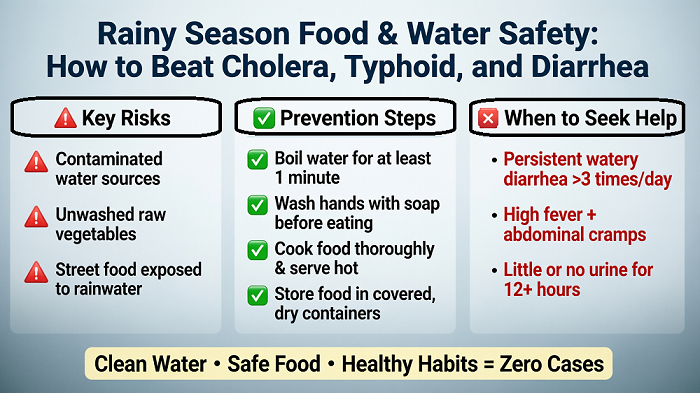
Rainy Season Food & Water Safety: How to Beat Cholera, Typhoid, and Diarrhea
Last Updated on 09/12/2026 by DrHelal, MD Medical Doctor with 50+ Years of Clinical Practice • [Read Full Author Bio & Credentials →]
When heavy rains fall in the Philippines, clean water and safe food become harder to find. Floodwater mixes with soil, sewage, and waste, and this dirty water can easily enter our drinking water pipes, wells, and food supply. Many people suffer from stomach pain, diarrhea, and fever every rainy season simply because they do not know how to keep their food and water safe.
As a doctor at Helal Medical Manila, I see dozens of cases every month where families could have avoided illness with very simple habits. In this article, I will explain exactly how food and water become unsafe, diseases to watch for, and what you can do to keep your loved ones protected.
How Rain and Floodwater Cause Gut Infections
When heavy rains come, drains overflow and water pipes often break or leak. Dirty floodwater gets into our drinking and household water, making it unsafe. Even water that looks clean may carry harmful germs. Wells and shared water tanks are especially easy to contaminate. You cannot tell if water is safe just by looking, so always be extra careful and protect your water supply whenever flooding happens nearby.
Rain also spreads germs onto food. Floodwater carries waste and sewage across farmland and vegetable crops, where germs stick to produce and are hard to wash off. At home, warm, damp weather makes food spoil quickly. Cooked rice, meat, and seafood go bad fast. Bacteria grow quickly at room temperature—food left out even a few hours may already be unsafe, even if it still looks and tastes fine.
The Three Most Common Rainy Season Gut Diseases
1. Cholera comes from drinking water or eating food with harmful bacteria, it spreads easily through floodwater. It causes severe watery diarrhea and vomiting causing dehydration. It is risky for children, elders, and during pregnancy. Without help, it can turn deadly fast, but with early care and plenty of fluids, most people recover fully.
2. Typhoid Fever develops slowly, usually 1–2 weeks after exposure. With signs like a fever that keeps rising and won’t go down easily. You feel weak, stomach pain, headache, or lose your appetite. Some get constipation instead of diarrhea, making it harder to spot. Typhoid needs antibiotics from a doctor. Left untreated, it can last months and cause serious problems like bleeding in the gut.
3. Diarrhea is the most common stomach illness in rainy weather, caused by many types of germs. You may have loose stools, stomach cramps, nausea, and sometimes fever. Most get better in a few days with rest and safe fluids. Danger signs include dry mouth, dark urine, weakness, or very little pee—this means dehydration.
Read more about Gut infections during rainy season in the Philippines.
Safe Water Habits Every Filipino Family Must Follow
The safest drinking water is boiled water—boil it strongly for at least two minutes. This kills almost all germs that cause sickness. Let it cool naturally and keep it in a clean, covered container. If you cannot boil water, use cheap purification tablets or chlorine drops from any pharmacy, and follow the directions carefully.
Never use tap water directly during or after floods, even if it looks clear. Wash food and make ice only with boiled or purified water. Keep water in covered containers with small openings and scoop it with a clean ladle. Clean and scrub your water containers every week to remove dirt and germs.
Food Safety Rules That Prevent Sickness
Buy food from trusted sources only. Avoid fresh roadside vegetables during heavy rains unless you can wash them very well at home. Rinse all produce at least three times with safe water. Soak leafy greens briefly in salted or vinegar water, then rinse again. Cook all food until steaming hot throughout. Fish, shellfish, and pork especially must be fully cooked—never eat raw or partly cooked meat in the rainy season.
Eat food right after cooking. Warm food left at room temperature lets bacteria multiply quickly. If you must save food for later, cool it fast and store it in a clean, covered container in the fridge or a cool place. When reheating, make it boiling or steaming hot all through. Throw away food that smells or looks strange. Avoid street food during and after heavy rains—vendors may use contaminated water.
When to Seek Medical Help
Many people try to treat stomach problems at home with herbal tea or leftover medicine. This approach can be dangerous during rainy season because cholera and typhoid need specific medical treatment. You must visit a clinic or hospital if you have severe diarrhea or vomiting that does not stop, fever lasting more than two days, blood in your stool, or severe stomach pain. Dehydration signs such as extreme thirst, dry mouth, little urine, and weakness mean you need medical attention right away. Children and elderly persons should be brought in even sooner.
At Helal Medical, we offer laboratory testing that identifies cholera, typhoid, and other infections quickly. Early diagnosis means we can prescribe the correct treatment sooner, shorten your sickness, and help prevent spread to your family. We also provide safe oral rehydration salts and medical advice to help you recover fully. Do not guess—get tested so you receive the right care.
Summary
Food and water safety is your strongest protection against cholera, typhoid, and diarrhea during the rainy season. Floodwater damages pipes and contaminates sources we usually trust, so always boil or purify your drinking water. Wash food carefully, cook it completely, eat it hot, and store leftovers safely. Avoid street food during floods and keep your hands clean. If fever or severe stomach symptoms appear, do not wait—come to Helal Medical for proper testing and treatment. Safe water and clean food are simple defenses that keep your family healthy through every storm.
References
- World Health Organization. (2025). Guidelines on Drinking Water Quality and Rainy Season Safety. WHO Western Pacific Region. Retrieved from https://who.int
- Department of Health. (2026). Advisory on Water and Food Safety During Rainy Season and Floods. DOH Philippines. Retrieved from https://doh.gov.ph
- Centers for Disease Control and Prevention. (2024). Cholera, Typhoid, and Diarrheal Disease Prevention Guide. CDC. Retrieved from https://cdc.gov
- Department of Health. (2025). Typhoid Fever Clinical Guidelines and Laboratory Diagnosis. DOH Philippines. Retrieved from https://doh.gov.ph
- Food and Agriculture Organization. (2024). Safe Food Handling During Flood and Rain Events in Southeast Asia. FAO. Retrieved from https://fao.org
Published by Dr. Helal, Helal Medical Manila — Unit 105 Vareb Mansion, 1679 Mabini Street, Malate, Manila.
Laboratory testing for typhoid, cholera, and waterborne illnesses available. Walk-ins welcome.
🔗 Connect with Helal Medical:
If you suspect that you may have symptoms, Helal Medical can help, offering quick, private, and convenient testing options. You may contact us here: Facebook page, Get Free medical consultation!
This article provides general information. Always consult with a healthcare professional for personalized medical advice.
Read mor from helalmedical.com:
Dengue Fever During the Rainy Season: Protecting Your Family in the Philippines
Stay Safe from 5 com
mon Infections During Rainy Season in the Philippines
Health Risks During Floods in the Philippines: How to Stay Safe This Rainy Season
Leptospirosis Cases Rise During Floods in the Philippines: Symptoms and Prevention
Respiratory Virus Season in the Philippines: What Is the Best Way to Deal with it
Waterborne Diseases After Floods: Cholera, Typhoid, and Diarrhea in the Philippines
Mosquito-borne diseases Common Types
Discover more from Helal Medical Manila
Subscribe to get the latest posts sent to your email.


