
Rainy Season in The Philippines: Wading Through Floodwaters? The Hidden Risks
Last Updated on 09/21/2026 by DrHelal, MD Medical Doctor with 50+ Years of Clinical Practice • [Read Full Author Bio & Credentials →]
Every time heavy rains fall in Metro Manila, thousands of people find themselves walking through floodwater on their way to work, school, or home. For many Filipinos, wading through floods has become a normal part of life during the rainy season in the Philippines.
We see the water rise, we lift our pants, and we walk without thinking of the risks. Many people do not know that floodwater is not just dirty water but a mixture of rain, sewage, animal waste, oil, chemicals, and harmful bacteria.
Every time your skin touches that water, especially if you have a small wound or scratch, your health is at risk. As a doctor serving the Manila, I see patients every rainy season who thought a short walk through floodwater was nothing—until they became sick.
Having lived in the Philippines for twenty-seven years, I know our tag-ulan and dry seasons well. But in 2025 and 2026, the rainy season changed noticeably. The weather no longer follows its usual pattern—maulan days shift unexpectedly. Something clearly feels different now.
Rain falls harder, storms bring strong hangin and sudden floods. These changes are hard to miss. The climate we once knew is shifting, and the old weather rhythms are slowly fading away. This requires more attention to our health!
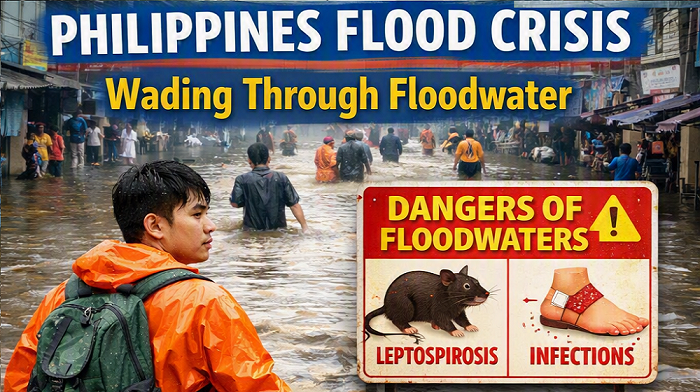
I write this article to explain the two biggest hidden dangers of floodwater exposure: leptospirosis and skin infections, and what you can do to protect yourself and your family. Lean more about the WILD diseases during the rany season.
Why Floodwater Is Dangerous for Your Health
Thinis because floodwater picks up trash, animal waste, and sewage, thus becoming contaminated with bacteria, viruses, and fungi. These germs may enter your body through cuts, eyes, nose, and mouth. Every exposure carries unpredictable health risks.
1. Leptospirosis — The Most Serious during the rainy season in the Philippines
What Is Leptospirosis and How Do You Get It?
Leptospirosis is a bacterial infection from Leptospira, carried in animals’ kidneys and spread via urine. Rain and floods mix the bacteria with water. It enters the body through skin cuts, scrapes, blisters, scratches, or cracked skin—even tiny breaks suffice—and through eyes, nose, or mouth from splashes. Contact with contaminated wet soil or mud also poses risk.
The Department of Health (DOH) in the Philippines consistently warns the public about leptospirosis every rainy season. Nationwide, thousands of cases are reported each year, with numbers rising sharply during periods of heavy flooding. This disease especially is often mistaken for ordinary flu.
Symptoms and Early Warning Signs
Symptoms appear 2 days–2 weeks after exposure, resembling the flu: sudden high fever, headache, calf pain, eye redness, weakness, vomiting, or stomach pain. Many mistake it for a Flu and delay care that can damage the kidneys and liver: kidney failure, jaundice, breathing trouble, internal bleeding, or even death.
You should suspect leptospirosis if you develop fever within two weeks after walking through floodwater. The combination of fever plus severe muscle pain in the legs is an important clue. I used to ask my patients if they were exposed to floodwater before getting sick, this information helps me make the right diagnosis.
Prevention and Treatment of Leptospirosis
Prevent leptospirosis primarily by avoiding floodwater whenever possible. If you must cross flooded areas, wear waterproof footwear and cover all open wounds with waterproof bandages. Should your skin touch floodwater, wash exposed areas thoroughly with soap and clean running water immediately upon returning home.
After floodwater exposure with open wounds, see a doctor within 24–48 hours; doxycycline can prevent infection but needs prescription. Seek care quickly if symptoms appear—early antibiotic treatment is highly effective. Delays raise complication risks, as the disease can damage organs and cause life-threatening conditions. Special fast lanes and medical services exist for urgent care.
2. Fungal, Bacterial Infections and Rashes
Fungal infections are one of the most common skin issues, and they spread easily in rainy weather. Fungi grow well in warm, wet, and dirty places like floodwater. When skin stays wet too long, it softens and small gaps open, letting fungi get deep inside. You may see red, itchy patches that burn or sting—often between toes, on soles, or near ankles.
These infections aren’t dangerous, but they can become painful and hard to cure if treated late. Nonstop itching can disturb your sleep and daily tasks. Cracked skin also lets bacteria enter and cause worse sickness. Fungi can move to other body parts through your hands or clothes, and easily pass to family members who share towels or walk on the same floors. Quick care helps stop them from spreading further.
Bacterial Skin Infections and Wound Complications
Bacteria found in floodwater, which is common in rainy season in the Phiippines, can easily infect your skin. Even a tiny cut or blister can turn red, swell up, feel warm, and hurt badly within hours. The spot may fill with pus, and redness can spread fast. This common infection is called cellulitis, and it reaches deeper skin layers. You need medicine from a doctor to treat it, or it could spread to your blood and become dangerous.
People with diabetes or poor blood flow face extra risks. Their skin heals slower and fights germs worse, so even small floodwater injuries may lead to serious sickness or hospital stays. If you have diabetes, be very careful during the rainy season here in the Philippines. Never walk through floodwater, and check your feet every night for redness, sores, or blisters.
Practical Steps to Protect Your Skin and Health
You don’t need special tools or costly medicine to stay safe from floodwater sickness—steady, simple habits work best. When it rains hard, check your way first: avoid flooded paths, take dry routes, or wait for water to drop. If you must go through floods, wear rubber or waterproof shoes high enough to keep feet dry. Skip canvas shoes or cloth slippers—they soak up water and raise your risk of getting sick.
Check your skin before going out: cover every cut, scratch, or sore with a waterproof bandage. Stay out of floodwater if wounds are too big to cover. When you get home, wash exposed skin well with soap and clean water, scrub gently, and dry fully. Change into dry clothes right away. If an open wound touches floodwater, clean it, use antiseptic, and see a doctor within 24 hours.
When to See a Doctor Immediately
Many people think they can treat these problems at home with herbal medicine or over-the-counter cream, and that is a mistake. You should seek medical help right away if you develop fever after walking through floodwater, especially if the fever comes with severe headache, muscle pain in your calves, or red eyes. These are early signs of leptospirosis, and every hour matters. You should also see a doctor if a wound becomes red, swollen, warm to the touch, or if the redness is spreading. Pus, increasing pain, or fever along with a skin wound means the infection is getting deeper and needs proper medical treatment with antibiotics.
If a skin rash does not improve after three days of using simple cream, or if it spreads to other parts of your body, it may be a fungal or bacterial infection that needs specific medicine prescribed by a doctor. Do not keep using cream that is not working—delaying proper treatment only makes the infection harder and more expensive to treat.
Summary
Floodwater is common during the rainy season in the Philippines, but it is not safe. It carries germs that can cause leptospirosis, a sickness that harms your kidneys and liver if not treated quickly. It may also lead to rashes and skin infections. You can stay safe by staying out of floodwater, wearing rubber boots, covering cuts, washing well after contact, and seeing a doctor if you feel unwell.
References
- Department of Health. (2025). Leptospirosis Clinical Management Guidelines for Health Care Workers. Department of Health Philippines. Retrieved from https://doh.gov.ph
- World Health Organization. (2023). Leptospirosis: Fact Sheet. World Health Organization. Retrieved from https://who.int
- Centers for Disease Control and Prevention. (2024). Leptospirosis Prevention and Symptoms. CDC. Retrieved from https://cdc.gov
- Department of Health Philippines. (2026). DOH Advisory on Flood-Related Skin Infections and Wound Care During Rainy Season. Retrieved from https://doh.gov.ph
- Philippine Dermatological Society. (2025). Common Skin Conditions During the Rainy Season: Prevention and Management Guidelines. Retrieved from https://pds.org.ph
Published by Dr. Helal, Helal Medical Manila — Unit 105 Vareb Mansion, 1679 Mabini Street, Malate, Manila.
Walk-in consultations, laboratory testing, and affordable medical care for all Filipinos and residents. Rain or shine, we are here for you.
At Helal Medical, we treat these illnesses every year. We provide quick check-ups, tests, and proper care for leptospirosis and other flood-related health problems. Finding and treating issues early works best. Do not wait until you feel worse. Visit us as soon as you notice something is wrong, because your health matters to us always.
Read more from helalmedical.com:
Rainy Season Food & Water Safety: How to Beat Cholera, Typhoid, and Diarrhea
Dengue Fever During the Rainy Season: Protecting Your Family in the Philippines
Stay Safe from 5 com
mon Infections During Rainy Season in the Philippines
Health Risks During Floods in the Philippines: How to Stay Safe This Rainy Season
Leptospirosis Cases Rise During Floods in the Philippines: Symptoms and Prevention
Respiratory Virus Season in the Philippines: What Is the Best Way to Deal with it
Waterborne Diseases After Floods: Cholera, Typhoid, and Diarrhea in the Philippines
Mosquito-borne diseases Common Types
Discover more from Helal Medical Manila
Subscribe to get the latest posts sent to your email.


