
W.I.L.D. Diseases in Tag-Ulan: The 4 Big Rainy Season Health Risks Filipinos Must Know
Last Updated on 08/31/2026 by DrHelal, MD Medical Doctor with 50+ Years of Clinical Practice • [Read Full Author Bio & Credentials →]
Every year when the rainy season arrives in the Philippines, we shift to cooler weather but also suffer differen diseases. As the rains fall and floodwaters rise, health authorities warn us about something very important.
The Department of Health (DOH) consistently reminds the public that the rainy season diseases in the Philippines brings four major health threats known as W.I.L.D. diseases. Many people suffer each year simply because they do not know what to look for or how to protect themselves.
DOH warns vs. surge of ‘WILD’ diseases – Manila Standard: Jun 5, 2026 · THE Department of Health (DOH) on Friday issued an advisory warning the public against a surge of seasonal illnesses collectively known as “W.I.L.D.” as the rainy season begins.
As a doctor serving the Manila community, I see these cases arrive at our clinic every time the rains come. In this article I will explain what W.I.L.D. diseases are, how you can avoid them, and when you must seek medical care.
What Are W.I.L.D. Diseases?
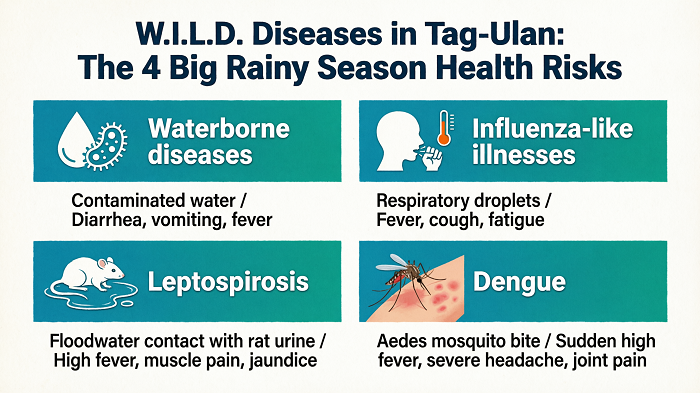
The acronym W.I.L.D. was created by health officials to help Filipinos remember the most common and dangerous illnesses that increase during the rainy season. Each letter stands for one disease group; these are waterborne diseases, influenza-like illnesses, leptospirosis, and dengue. Knowing them and how they spread is your first and best defense:
1. Waterborne Diseases
Waterborne diseases are illnesses you get from drinking or touching dirty water. Heavy rains make floodwater mix with waste and sewage, which can get into drinking water, food, and household items—especially when pipes are broken or old. This contaminated water spreads germs easily.
Common sicknesses include cholera, typhoid, and diarrhea. Cholera causes severe diarrhea and vomiting that quickly dehydrates you. Typhoid brings a slowly rising fever, weakness, and stomach pain. Even simple diarrhea can turn dangerous fast for kids, elders, and pregnant women.
Keep safe by drinking only boiled or purified water—boil it for two full minutes. Wash hands often, avoid street food when it rains hard, and store water in clean, covered containers. See a doctor right away if you have severe diarrhea, vomiting, or fever lasting over two days.
2. Influenza and Respiratory Illnesses
Influenza and other respiratory illnesses like colds, sore throat, and pneumonia are often seen as minor, but they can turn serious—especially if you already have health issues. In the rainy season, cool, damp air and closed windows keep people indoors, letting viruses spread easily from person to person. It is important not to dismiss these common sicknesses, as they can affect your health more than you might expect.
Flu hits suddenly with high fever, body aches, headache, sore throat, and dry cough. Unlike a regular cold, it makes you feel very weak right away. Most recover in about a week, but some develop dangerous complications such as pneumonia. The young, elderly, and those with diabetes or heart problems face the highest risk and should take extra care.
Protect yourself by opening windows daily to let fresh air in and flush out trapped viruses. Stay home when sick to avoid spreading illness. Eat well, sleep enough, and keep warm. High-risk people should get a yearly flu vaccine. See a doctor right away if you have trouble breathing, chest pain, or a fever lasting over three days.
3. Leptospirosis: The Hidden Danger in Floodwater
The letter L stands for leptospirosis. This is a bacterial infection that many people do not know enough about, even though it is very common among diseases during the rainy season in the Philippines. This bacteria lives in the urine of rats and other animals.
You can get leptospirosis when floodwater touches open skin through small cut, scratch, or wound that you may not notice. The symptoms usually appear five to fifteen days after exposure: high fever, severe headache, muscle pain especially in the calves, red eyes, and sometimes vomiting.
The best way to prevent leptospirosis is to avoid walking through floodwater. If your skin touches floodwater, wash it very well with soap and clean water as soon as you get home. If you develop fever within two weeks after wading in flood waters, go to a health center right away and tell the doctor that you were exposed to floodwater.
Leptospirosis Cases Rise Every Rainy Season – Asia Pacific. Jun 1, 2026 · Floodwaters rise, leptospirosis cases follow, and hospitals brace for the surge.
4. Dengue
Dengue is a viral illness spread by the Aedes mosquito. In the rainy season, these mosquitoes breed easily in still, clean water collected in pots, tires, cans, gutters, and containers around homes. When rain leaves water standing for just a few days, their numbers grow fast, making dengue much more common.
Symptoms appear 4–10 days after being bitten: sudden high fever, bad headache, eye pain, body and joint aches, and sometimes a rash. Most recover in about a week, but some get severe dengue. Watch for dangerous signs after fever drops — severe belly pain, repeated vomiting, bleeding, or cold skin — and go to the hospital right away.
You can help prevent dengue with the 4S approach: remove stagnant water where mosquitoes breed, wear long sleeves and use repellent, see a doctor quickly if you have a fever, and agree to fogging when needed. Check your home weekly, empty water containers, and get medical help early if fever lasts over two days.
Rainy Season 2026: Updates
Philippines’ 2026 rainy season begins – RAPPLER
Jun 4, 2026 · MANILA, Philippines – The weather bureau declared the start of the rainy season on Thursday, June 4, five days after it announced the onset of the southwest monsoon or habagat.
Seasonal Forecast – PAGASA
Rather than say “below normal this July”, we can say “30% chance to be below normal this July” when we think less rain is not so likely; or we can say “70% chance to be above normal this July “
Summary: Final Advice
The rainy season in the Philippines is a time when we must be extra careful about our health. The four W.I.L.D. diseases — waterborne illnesses, influenza, leptospirosis, and dengue — increase every year when the rains come. The good news is that all of them are preventable with simple, consistent actions. Drink safe water, keep your home clean and well ventilated, avoid floodwater when possible, cover your wounds, remove stagnant water around your home, and seek medical help early when you feel sick.
At Helal Medical, we are here to serve you throughout the year, rain or shine. We offer laboratory testing, doctor consultations, and medical advice for all these conditions. Early detection and early treatment are always the best protection. Stay safe, take care of your health, and do not hesitate to visit us if you have any concerns.
References
- Department of Health Central Visayas CHD. (2024). DOH Central Visayas CHD Urges Vigilance Against W.I.L.D. Diseases During Rainy Season. Retrieved from https://ro7.doh.gov.ph
- Department of Health & Philippine Information Agency. (2026). DOH Intensifies Dengue Warning as Rainy Season Raises Nationwide Risk. Retrieved from https://pia.gov.ph
- Department of Health & Philippine News Agency. (2026). DOH Readies Facilities, Referral System as Leptospirosis Cases Rise. Retrieved from https://www.pna.gov.ph
- Department of Health Bicol CHD. Public Warned of Diseases During Rainy Season. Retrieved from https://bicol.doh.gov.ph
- World Health Organization. Management of Dengue Fever in Primary Health Care. Retrieved from https://cdn.who.int
Published by Dr. Helal, Helal Medical Manila — Unit 105 Vareb Mansion, 1679 Mabini Street, Malate, Manila.
Walk-in consultations and laboratory testing available. Serving the Filipino community with quality, affordable health care
Read mor from helalmedical.com:
Rainy Season Food & Water Safety: How to Beat Cholera, Typhoid, and Diarrhea
Dengue Fever During the Rainy Season: Protecting Your Family in the Philippines
Stay Safe from 5 com
mon Infections During Rainy Season in the Philippines
Health Risks During Floods in the Philippines: How to Stay Safe This Rainy Season
Leptospirosis Cases Rise During Floods in the Philippines: Symptoms and Prevention
Respiratory Virus Season in the Philippines: What Is the Best Way to Deal with it
Waterborne Diseases After Floods: Cholera, Typhoid, and Diarrhea in the Philippines
Mosquito-borne diseases Common Types
Discover more from Helal Medical Manila
Subscribe to get the latest posts sent to your email.


