
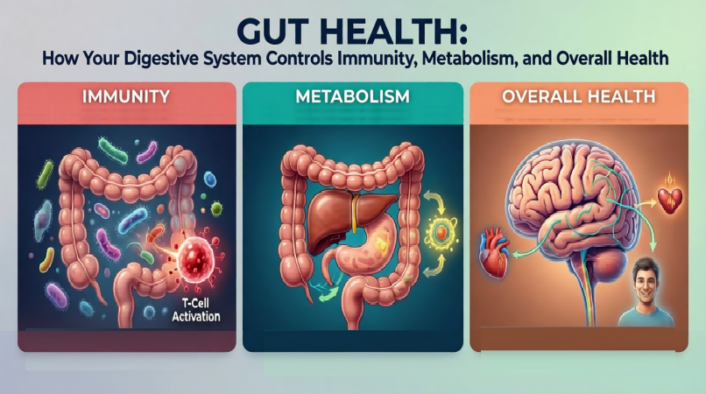
Gut Health: How Your Digestive System Controls Immunity, Metabolism, and General Health
Last Updated on 03/17/2026 by DrHelal
Many people think of the gut as a simple tube for digesting food only. However, modern medicine tells a very different and complicated story.
In this article, we will explore gut health, how your digestive system influences immunity, metabolism, inflammation, and even mental well-being. We will also cover practical steps to protect your gut.
By reading the article till the end, you know everything you need to maintain your gut health. Also, you know how to be generally healthy. Please keep reading!
What Is Gut Health?
It is structure and function of the gastrointestinal tract including the stomach and intestines. It also includes the trillions of microorganisms living inside them. A healthy gut digests food efficiently, absorbs nutrients properly, and maintains a balanced interaction with the immune system.
When gut is disturbed, digestive symptoms may start to show up. However, problems can also develop far beyond the intestines affecting immunity, energy levels, mood, and long-term disease risk.
What is The Gut Microbiome?
It is the collection of bacteria, viruses, and fungi living primarily in the large intestine. These microorganisms are not harmful; most are essential for our health. Each person’s microbiome is unique, shaped by genetics, diet, environment, medications, and lifestyle.
What Do Gut Bacteria Do?
They aid digestion, synthesize essential vitamins and boost the immune system. A balanced gut microbiome is key to overall health, influencing everything from mood to metabolism!
- Help digest complex carbohydrates and fiber by breaking down them. Your body can’t handle alone.
- Produce vitamins such as vitamin K and some B vitamins
- Protect against harmful pathogens.
- Boost immune system by training it to recognize and fight off harmful invaders
- Influence metabolism and inflammation
An imbalance in these gut bacteria, known as dysbiosis, is linked to many chronic diseases.
How the Gut Supports the Immune System
About 70% of the immune system is located in and around the gut. This makes the digestive tract one of the most important immune organs in the body.
Gut Barrier Function
The intestinal lining acts as a selective barrier:
- Allows nutrients to pass into the bloodstream
- Blocks toxins, pathogens, and harmful substances
When this barrier is weakened, unwanted substances may enter the circulation, triggering inflammation and immune activation.
Gut Bacteria and Immune Balance
Healthy gut bacteria help train the immune system to:
- Respond appropriately to infections
- Avoid overreaction that leads to allergies or autoimmune conditions
Gut and Digestion
A healthy digestive system can do the following jobs optimally:
- Breaks down food efficiently
- Absorbs nutrients properly
- Moves waste regularly without discomfort
Signs of Poor Digestive Health
- Bloating
- Excessive gas
- Constipation or diarrhea
- Abdominal pain
- Acid reflux
Occasional symptoms are common, but persistent ones can indicate underlying gastro-intestinal dysfunction.
Gut and Chronic Diseases
Gut bacteria influence how the body processes calories, stores fat and regulates blood sugar. Dysbiosis has been linked to:
- Obesity
- Type 2 diabetes
- Metabolic syndrome
Gut Health and Inflammation
An unhealthy gut can promote chronic low-grade inflammation, which plays a role in:
- Heart disease
- Diabetes
- Autoimmune conditions
Gut and Liver Disease
The gut and liver are closely connected through the “gut–liver axis.” Harmful gut bacteria and toxins can worsen liver inflammation and disease progression.
From my Diary:
Mr. S come came at Helal Medical, with bloating. He thought water with meals was the culprit! Despite my advice, the bloating persisted. But, after long suffering he followed my advice. This highlighted the need to educate on proper hydration, especially during Manila’s heat days.
The Gut–Brain Connection
How the Gut Communicates with the Brain! The gut and brain are connected through:
- The vagus nerve
- Hormonal signaling
- Immune pathways
- Gut-derived neurotransmitters
This relationship is often called the gut–brain axis.
Gut and Mental Well-Being
Research shows that gut imbalance may contribute to:
- Anxiety
- Depression
- Brain fog
- Sleep disturbances
While gut health is not the sole cause of mental disorders, it plays a significant supporting role.
Source: Harvard Publishing – The Gut-Brain Connection
https://www.health.harvard.edu/diseases-and-conditions/the-gut-brain-connection
Common Conditions Linked to Poor Gut
Irritable Bowel Syndrome (IBS)
A functional disorder characterized by abdominal pain, bloating, and altered bowel habits.
Infections
Bacterial, viral, or parasitic infections can disrupt gut balance, sometimes with long-term effects.
Food Intolerances
Poor digestion or gut inflammation may lead to sensitivity to certain foods.
Inflammatory Bowel Disease (IBD)
Conditions such as Crohn’s disease and ulcerative colitis involve chronic intestinal inflammation.
Factors That Harm Your Gut
Poor Diet
- Low fiber intake
- High processed food consumption
- Excess sugar and unhealthy fats
Antibiotic Overuse
While lifesaving, antibiotics can disrupt beneficial gut bacteria when used unnecessarily.
Chronic Stress
Stress alters gut motility, permeability, and microbiome balance.
Poor Sleep
Sleep disturbances negatively affect gut bacteria and digestive function.
How to Improve and Protect Your Gut
1. Eat a Fiber-Rich Diet
Fiber feeds beneficial gut bacteria and supports regular bowel movements.
Good sources include:
- Vegetables
- Fruits
- Whole grains
- Legumes
2. Include Fermented Foods
Fermented foods contain beneficial bacteria that support microbiome diversity:
- Yogurt
- Kefir
- Fermented vegetables
3. Stay Hydrated
Adequate water intake supports digestion and stool consistency.
4. Manage Stress
Stress reduction improves gut motility and microbiome balance.
5. Use Medications Wisely
Avoid unnecessary antibiotics and consult a doctor before using supplements or laxatives long-term.
Probiotics and Gut Health
Do Probiotics Help?
Probiotics can be beneficial in specific situations, such as:
- After antibiotic use
- Certain digestive disorders
- Some infections
However, probiotics are not a cure-all and should be used selectively.
Food First, Supplements Second
For most people, improving diet and lifestyle has a greater impact than supplements alone.
🔗 Trusted source:
World Gastroenterology Organisation – Probiotics and Prebiotics
https://www.worldgastroenterology.org/guidelines/global-guidelines/probiotics-and-prebiotics
When Should You See a Doctor?
You should see a doctor if you experience one or more of the following Gastrointestinal symptoms:
- Persistent abdominal pain
- Unexplained weight loss
- Blood in stool
- Chronic diarrhea or constipation
- Severe bloating or vomiting
- Symptoms affecting daily life
Early evaluation prevents complications and allows targeted treatment.
Frequently Asked Questions
No. Gut health affects immunity, metabolism, inflammation, and mental well-being.
Yes. Some gut imbalances cause subtle or delayed effects rather than obvious digestive complaints.
Yes. The gut microbiome remains adaptable throughout life with appropriate lifestyle changes.
Summary
Gut health is essential for digestion, immunity, and overall well-being. A healthy gut helps protect against infections, supports metabolism, reduces inflammation, and influences mood and sleep. Eat a balanced diet rich in fiber, manage stress and sleep well consistently.
Source:
- https://www.niddk.nih.gov/health-information/digestive-diseases
- What Is the Intestinal Epithelium and Why Is It Important? – Biology Insights
- Your Gut Bacteria and Your Health
If you suspect that you may have symptoms, Helal Medical can help, offering quick, private, and convenient testing options. You may contact us here: Facebook page
Read More in Our Cornerstone Articles:
- Sleep Health
- Prostate Health
- Bone Health: A Lifelong Guide
- Mental Health: Why It’s More Important Than Ever
- Heart Health: How to Prevent Before It Starts
- Diabetes Types, symptoms, complications and management
Discover more from Helal Medical Manila
Subscribe to get the latest posts sent to your email.


