
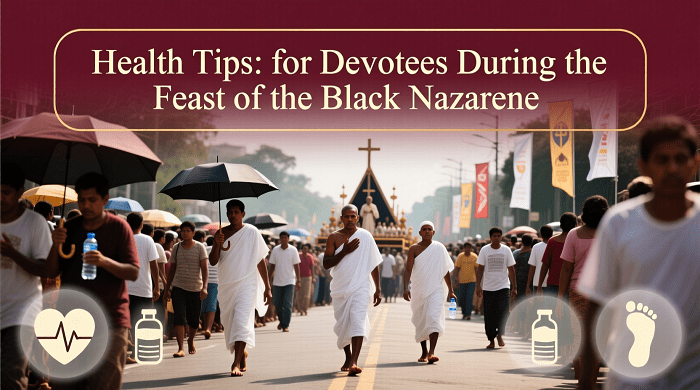
Health Tips for Devotees During the Feast of the Black Nazarene
Last Updated on 03/07/2026 by DrHelal
Millions of Filipinos gather every year on January 9 to participate in the Feast of the Black Nazarene. This is one of the largest religious processions in the world. Because of the massive crowds, long walking hours, and intense devotion, many attendees experience fatigue, heat stress, and even injuries. In this article, we’ll share practical Feast of the Black Nazarene health tips to help devotees stay safe while honoring their faith.
The procession is a powerful symbol of hope and healing for many Filipinos, but safety must always come first. Whether you are a first-time attendee or a yearly devotee, preparation can make a big difference in your overall well-being.
1. Prepare Physically Before the Procession
The Traslación typically involves 10–15 hours of walking and standing. In the days leading up to January 9, be sure to:
- Get enough sleep
- Eat balanced meals
- Hydrate regularly
- Avoid alcohol
According to the Philippine Red Cross (source: Philippine Red Cross health tips), light stretching and proper hydration are essential before participating in long religious events.
2. Protect Yourself from Heat and Dehydration
Even in January, Manila can get hot during crowded processions. To prevent heat exhaustion:
- Bring a refillable water bottle
- Wear light-colored clothing
- Use a hat or towel to protect from the sun
- Take short rests when possible
The DOH also recommends staying hydrated during mass gatherings (source: DOH health advisory).
3. Avoid Close Contact If Feeling Unwell
If you have fever, cough, or flu-like symptoms, avoid attending the crowded procession. This protects you and others from preventable infections.
WHO guidance on large religious gatherings (source: WHO crowd safety | World Health Organization) highlights that sick attendees should avoid mass events to reduce transmission risks.
4. Secure Personal Belongings
Crowded environments increase the risk of theft or accidental loss. Bring only essentials:
- Water
- Small snack
- Identification
- Mobile phone
- Small towel
Avoid bringing jewelry or large bags.
5. Know the Emergency Spots Along the Route
If you feel dizzy, dehydrated, or injured, look for medical stations.
Every year, multiple first-aid tents are set up along:
- Quiapo
- Luneta/Rizal Park
- Quirino Grandstand
- Major intersections
If you live near Manila, you may also visit Helal Medical in Manila before the procession for a quick blood pressure check or general wellness evaluation.
6. Attend in Groups for Safety
Devotees are encouraged to walk in groups, as companions can offer support if someone feels weak or overwhelmed. Moving together also makes it easier to navigate through the crowd.
7. After the Procession: Rest and Rehydrate
Once home, drink water or electrolyte solutions, eat a light meal, and allow your body to recover. Take note of:
- Dizziness
- Persistent headache
- Muscle cramps
- Extremely high fatigue
If symptoms last, visit a clinic for evaluation.
Summary
Health precautions for the Feast of the Black Nazarene are straightforward but crucial, particularly with the massive crowd of devotees attending the January 9 procession in Manila. Preparing physically, staying hydrated, knowing the emergency stations, and listening to your body can help ensure a meaningful and safe experience.
If you need pre-event checkups or blood pressure monitoring, you are welcome to 💬 Chat with Us:
You can easily reach Helal Medical via WhatsApp (+63 966 974 1609), Facebook Messenger, or by clicking the chat icon at the lower right corner of our website HelalMedical.com.
Discover more from Helal Medical Manila
Subscribe to get the latest posts sent to your email.


