
Hepatitis A vs. B: Key Differences Explained
Last Updated on 02/24/2026 by DrHelal
Hepatitis A and B are viral infections affecting the liver. Understanding Hepatitis A vs. B is crucial for proper prevention and treatment. Knowing the key differences is essential to making informed decisions.
Simple choice could protect you from a lifetime of liver complications. Understanding the differences between these viruses could save your health. Keep reading to unlock the secrets to liver health.
In this article, we will explore the key differences between hepatitis A and B. We will also discuss prevention and treatment. The goal is to empower you with knowledge. You may want to read our corner stone about: Viral Hepatitis Types A, B, C, D & E: Latest Diagnosis & Treatment (2026 Update)
Understanding Hepatitis
Hepatitis is liver inflammation caused mainly by viral infections. Still, alcohol and toxins can also cause it. There 5 types of hepatitis; A and B are the most common types.
What is Hepatitis A?
- It is a highly contagious liver infection.
- Caused by the hepatitis A virus (HAV).
- It usually spreads through contaminated food, and also through water.
Read more about: Viral Hepatitis Types A, B, C, D & E Diagnosis & Treatment
What is Hepatitis B?
- It is a serious liver infection.
- Caused by the hepatitis B virus (HBV).
- It is spread through bodily fluids including blood and semen.
How They Spread?
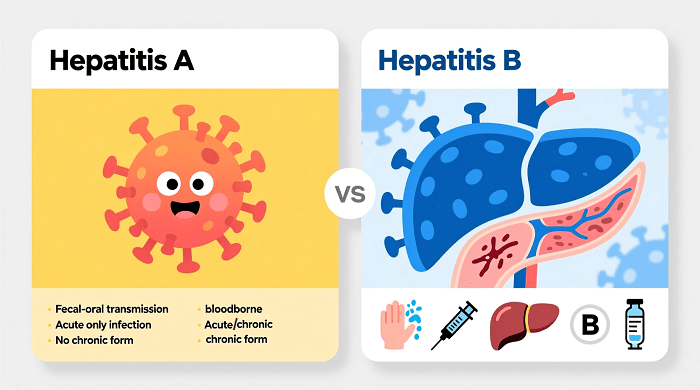
Hepatitis A spreads via the fecal-oral route while hepatitis B spreads through blood and body fluids. This is the main difference.
HAV spread way is the fecal-oral route; this means ingesting contaminated food or water. Therefore, poor hygiene and unwashed hands are the primary causes of spread.
HBV spreads through blood and body fluids. This includes sexual contact, sharing needles for drug use and from mother to baby during birth. Contaminated medical sharp tools can spread it. HBV is not spread through food or water nor through casual contact.
Severity and Chronicity
Hepatitis A is an acute infection that usually resolves on its own, it does not cause chronic liver disease. Recovery from HAV is typically total. However, it can still be severe, and some patients need hospitalization.
Hepatitis B can be acute or chronic; the acute condition often resolves spontaneously. Chronic cases can lead to serious problems including cirrhosis and liver cancer. Early diagnosis and management are vital.
Symptoms
Some symptoms overlap. Both can cause fatigue, nausea, and jaundice and abdominal pain. Dark urine and light stools can occur.
Key symptom differences are subtle. Acute HAV symptoms typically start quickly after infection and resolve as the body fights the virus. Acute HBV can also cause these symptoms, but chronic form can have no symptoms for years.
Prevention
Both have effective vaccines. The Hepatitis A vaccine prevents HAV. It is recommended for children and at-risk adults. Good hygiene practices and washing your hands thoroughly and often, can prevent HAV
The Hepatitis B vaccine prevents HBV. It is recommended for all newborns. It is also recommended for children and adolescents. At-risk adults should also get vaccinated. This includes healthcare workers and people with multiple sex partners. Safe sex practices prevent HBV transmission. Never share needles or personal sharp items.
Treatment
There is no specific treatment for Hepatitis A, but the body fights it off naturally. Treatment focuses on supportive care as rest and hydration which are important.
For acute Hepatitis B, treatment is supportive. Chronic form has antiviral treatments that can control the virus. They reduce the risk of liver damage and can improve liver functions. Also, they prevent serious complications. Regular monitoring is essential for chronic HBV.
| Feature | Stress-Related ED | Other Causes of ED |
|---|---|---|
| Onset | Sudden, often during a stressful period | Gradual development |
| Morning Wood | Usually present | Often absent |
| Consistency | Inconsistent; may work with one partner but not another, or in some situations but not others | More consistent; present in all situations |
| “Spectator” Effect | Present; feeling like you’re watching yourself | Usually absent |
| Underlying Causes | Psychological factors (stress, anxiety, relationship issues) | Cardiovascular, endocrine, lifestyle, medications |
Summary
Hepatitis A and B are distinct viruses. They have different transmission methods. They also have different long-term impacts. Both are preventable through vaccination. Understanding these differences protects your liver. Make informed choices for your health.
For more information on viral hepatitis, visit the CDC comprehensive page. Learn about global liver health initiatives from the WHO.
If you suspect that you may have symptoms, Helal Medical can help, offering quick, private, and convenient testing options. You may contact us here: Facebook page
Read More Viral Hepatitis:
Discover more from Helal Medical Manila
Subscribe to get the latest posts sent to your email.


