
How Stress Affects Your Heart and Blood Pressure
Last Updated on 03/03/2026 by DrHelal
Stress is a natural part of life, but when it becomes constant, it can quietly harm your heart. Studies show that chronic stress can raise blood pressure, increase heart rate, and even contribute to heart disease. Understanding the link between stress and heart health is key to protecting your cardiovascular system.
One of my patients at Helal medical, lived years of chronic stress from work and family. This year he felt constant fatigue. He’d ignored the warning signs, headaches, insomnia, until a health scare forced him to seek help.
I advised him to follow the health protocol: rest, hydration, and stress management. He learned to balance his life with self-care, understanding that his health was paramount. This story highlights the importance of addressing chronic stress before it manifests into serious health issues.
How Stress Affects the Body
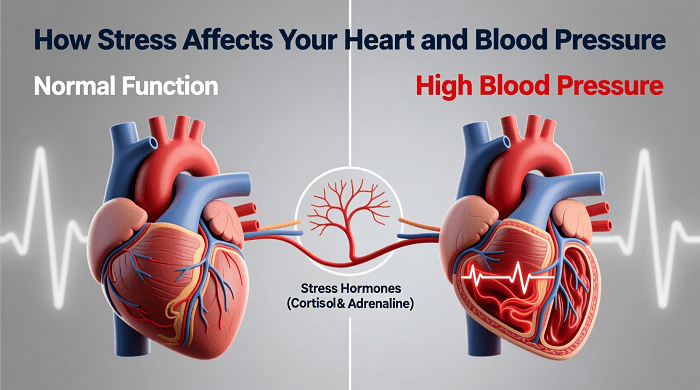
When you’re stressed, your body releases hormones like adrenaline and cortisol. These trigger the “fight-or-flight” response, causing:
- Increased heart rate
- Narrowing of blood vessels
- Higher blood pressure
Occasional stress isn’t dangerous. However, prolonged exposure to these hormones can damage artery walls. It can also increase the risk of hypertension and heart attacks.

Stress and High Blood Pressure
Chronic stress causes the heart to work harder over time. People who are often tense or anxious tend to have persistently elevated blood pressure, hypertension. This condition strains the heart and arteries, making them more prone to damage or blockage. Read more about: How Stress Affects Your Heart and Blood Pressure.
Stress can lead to unhealthy coping habits including overeating, smoking, or lack of exercise. All of these habits add more pressure on your cardiovascular system.
How to Manage Stress for Better Heart Health
1. Practice Relaxation Techniques: (Breathing exercises, meditation, or yoga), can reduce cortisol levels and lower blood pressure.
2. Exercise Regularly: Even 30 minutes, daily, of brisk walking or cycling can help your body handle stress better.
3. Eat a Balanced Diet: Fruits, vegetables, whole grains, and omega-3-rich foods like fish. Avoid excess caffeine and processed foods.
4. Sleep Well
Lack of sleep increases stress hormones, (cortisol, adrenaline), and raises blood pressure. Aim for 7–8 hours of quality sleep per night.
5. Stay Connected (social): Spending time with family and friends can improve mood and reduce tension. This is a sort of emotional support that is vital for heart health.
When to See a Doctor
If you experience frequent headaches, chest tightness, palpitations, or constant fatigue, it may be a sign that stress is affecting your heart. A doctor can check your blood pressure, assess heart function, and recommend strategies to manage both stress and cardiovascular risk.
Summary
Chronic stress doesn’t just affect your mind — it can strain your heart and raise your blood pressure. By managing stress through lifestyle changes, exercise, and mindfulness, you can protect your heart for the long term.
✅ Sources:
- American Heart Association – Stress and Heart Health
- NIH – Stress Effects on the Body
- Cleveland Clinic – Managing Stress for a Healthy Heart
🏥 Internal Link (Helal Medical):
Learn more about Blood Pressure Management at Helal Medical
Discover more from Helal Medical Manila
Subscribe to get the latest posts sent to your email.


