
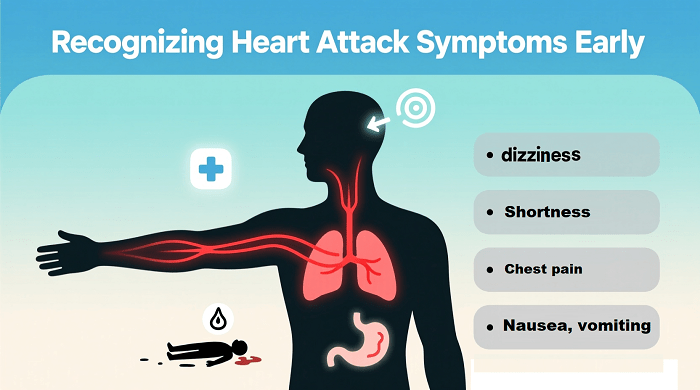
Recognizing Heart Attack Symptoms Early
Last Updated on 03/24/2026 by DrHelal
A heart attack, or myocardial infarction, occurs when blood flow to part of the heart is blocked. Early recognition of symptoms can mean the difference between life and death. Many people delay seeking help because they don’t realize they’re having a heart attack. Knowing the warning signs and acting fast—can save your life.
You could save your own or someone else’s life by recognizing heart attack symptoms early. Continue reading if you are ready to learn how to be a lifesaver!
In this article, we will explore common heart attack symptoms: core one and those often missed. We will also discuss risk factors and prevention. The goal is to help you recognize a heart attack.
Read more in our cornerstone article: (Heart Health: How to Prevent Heart Disease Before It Starts).
Common Heart Attack Symptoms
Chest discomfort, like pressure or pain, is a biggie. You might also feel pain in your arm, jaw, or back. Shortness of breath, nausea, and cold sweats are other signs. Don’t wait, call for help if you feel these!
Core Symptoms (Most Common)
- Chest Pain or Pressure:
The pain is often described as a heavy weight in the center of the chest. It can feel like squeezing or fullness. This sensation lasts for more than a few minutes, or it goes away and comes back. - Pain Radiating to Other Areas:
Discomfort can move from the chest to other parts of the body. These areas include the arm (often the left), back, neck, jaw, or stomach. - Shortness of Breath (Dyspnea):
Feeling like you can’t catch your breath. This occurs with or without chest discomfort. It can happen even while resting. - Cold Sweat, Nausea, or Vomiting:
A sudden onset of feeling clammy can occur. You can break out in a cold sweat. This is often accompanied by stomach upset or nausea. - Lightheadedness or Fainting:
A feeling of dizziness, vertigo, or a sudden loss of consciousness.
Symptoms (Often Missed)
- Unexplained Fatigue:
Extreme tiredness that comes on suddenly and may last for days. This is a very common symptom for women in the days or weeks before a heart attack. - Pain in the Upper Back or Abdomen:
A burning or aching sensation occurs in the upper back. It feels like bad indigestion or heartburn. This does not go away with antacids. - Palpitations or Irregular Heartbeat:
A sudden onset of a rapid, racing, or fluttering sensation in the chest. - Silent Heart Attack (Atypical Symptoms):
No traditional chest pain at all. Symptoms can be very mild and confused with another illness. This is more common in diabetics and the elderly. - Anxiety or “Sense of Doom”:
A sudden, profound feeling of intense anxiety or panic can occur. You also experience a vague, overwhelming sense that something is seriously wrong.
| Symptom | How Heart Attack Causes It |
|---|---|
| Chest pain or discomfort | Blocked coronary artery reduces blood flow to heart |
| Shortness of breath | Heart’s impaired pumping ability due to damage |
| Nausea or vomiting | Affects stomach, triggers nausea |
| Pain in arm, neck, jaw | Due to referred pain |
| Cold sweat | A response from pain and heart strain |
| Lightheadedness or dizziness | Decreased blood flow to brain |
⚠️ Note: Women experience atypical symptoms as fatigue, back pain, or indigestion.
What To Do If You Suspect a Heart Attack?
- Call emergency services without delay, every minute counts.
- Chew and swallow an aspirin (unless allergic).
- Stay calm and rest. Avoid physical exertion while waiting for help.
- If trained, use CPR if the person becomes unconscious.
Prevention Tips
- Control blood pressure, cholesterol, and blood sugar.
- Avoid smoking and excessive alcohol.
- Exercise regularly—at least 150 minutes weekly.
- Eat a heart-healthy diet rich in vegetables, fruits, and whole grains.
- Manage stress through relaxation and proper sleep.
The Importance of Quick Action
Time is critical during a heart attack you must act fast to reduce the damage!
Minimizing Damage
- Quick treatment reduces heart damage. It improves long-term outcomes.
- Early intervention saves lives. Seeking Immediate Help.
- Do not delay seeking medical attention because every minute counts. Call emergency services immediately.
Sources For Further Reading:
- American Heart Association – Heart Attack Symptoms
- CDC – Heart Disease Prevention
- NHS – What To Do During a Heart Attack
- Philippine Heart Association
- Department of Health (DOH)
Summary
Recognizing early heart attack symptoms can save your life. Chest pain, shortness of breath, or sudden fatigue should never be ignored. Quick medical attention and healthy lifestyle habits are your best protection against heart disease.
If you suspect that you may have symptoms, Helal Medical can help, offering quick, private, and convenient testing options. You may contact us here: Facebook page
Read More About Heart Disease:
- Heart Attack Prevention: Importance of a Lipid Profile Test
- Heart attack, can be spotted by a rapid low cost by blood test?
- Electrocardiogram (ECG): It’s Indications, and How to Read the Report
- Heart Health
Discover more from Helal Medical Manila
Subscribe to get the latest posts sent to your email.

