
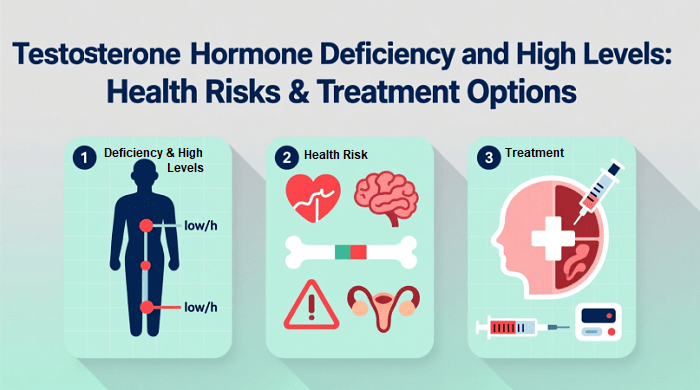
Testosterone Hormone Deficiency and High Levels Health Risk: Treatment Options | Part 2
Testosterone plays a vital role in overall health, energy, mood, and sexual wellness. When levels become either too low or too high, symptoms can appear slowly—but they can significantly affect quality of life. In this guide, we explore testosterone deficiency treatment options, starting with natural solutions, medication choices, risks of therapy, and the symptoms and dangers of elevated testosterone levels in both males and females. If you’re concerned about your hormone balance, this comprehensive patient-friendly guide will help you understand the safest path to recovery.
What Does Testosterone Do? A Quick Refresher
Before discussing treatment options, it’s helpful to understand why testosterone matters.
In Males
- Supports sexual desire and function
- Maintains muscle strength
- Helps bone density
- Supports mood and cognitive function
- Regulates energy levels
In Females
- Affects libido
- Supports muscle and bone strength
- Helps mood balance
- Contributes to normal ovarian function in small amounts
Testosterone imbalance—whether too low or too high—can create noticeable changes in health. Let’s start with deficiency.
Section 1: Testosterone Deficiency — Natural Treatment Options (First-Line)
For many patients, low testosterone (Low-T) can be improved through lifestyle changes before using medications. Natural interventions are often safe, low-cost, and effective, especially when the deficiency is mild.
1. Improve Sleep Quality
Poor or insufficient sleep lowers testosterone dramatically.
How to improve sleep:
- Maintain a regular sleep schedule
- Avoid screens 1–2 hours before bedtime
- Limit caffeine after 2 PM
- Treat sleep apnea if present (major cause of Low-T)
2. Maintain a Healthy Weight
Obesity is strongly linked to lower testosterone because fat tissue increases estrogen and suppresses hormone production.
Natural ways to manage weight:
- Balanced meals with lean protein, vegetables, whole grains
- Daily physical activity
- Reduce sugary foods and processed carbohydrates
Even 5–10% weight loss can significantly improve testosterone levels naturally.
3. Strength Training and High-Intensity Exercise
Resistance training encourages the testes (or ovaries in females) to produce more testosterone.
Best exercises:
- Squats
- Deadlifts
- Bench press
- Push-ups and body-weight routines
Aim for 3–4 sessions per week.
4. Stress Reduction
High stress increases cortisol, a hormone that suppresses testosterone production.
Helpful methods:
- Meditation or deep breathing
- Walking
- Yoga
- Mindfulness practices
5. Nutrient Optimization
Specific vitamins and minerals support hormone production.
Key nutrients:
- Vitamin D
- Zinc
- Magnesium
- B-complex vitamins
- Healthy fats (omega-3)
Low levels of vitamin D and zinc are especially associated with testosterone deficiency.
6. Avoid Hormone-Disrupting Substances
Testosterone levels drop when exposed to:
- Excessive alcohol
- Smoking
- Steroid medications
- Anabolic steroid abuse
- Chemicals like BPA (found in plastics)
Reducing exposure can gradually improve hormone balance.
Section 2: Medical Treatment Options for Testosterone Deficiency
If natural methods are not enough or symptoms remain severe, medical therapy might be recommended after proper testing.
1. Testosterone Replacement Therapy (TRT) for Men
TRT directly increases testosterone levels and improves symptoms. It is available as:
A. Injections
- Rapid improvement
- Long-lasting doses
- Requires monitoring for side effects
B. Gels and Creams
- Easy to apply
- Stable daily levels
- Risk of transferring hormone to others through skin contact
C. Patches
- Daily use
- Avoids blood level fluctuations
D. Pellets
- Implanted under the skin every 3–6 months
- Low-maintenance
Who Should NOT Use TRT?
- Men planning to have children (TRT reduces sperm production)
- Patients with prostate or breast cancer
- Those with untreated sleep apnea
- Men with very high red blood cell counts
2. Medication Options for Low-T in Women
Testosterone therapy for women is more limited and must be given in very controlled doses.
Women may receive:
- Low-dose topical testosterone
- Hormone-balancing therapy if menopause is involved
This must be strictly supervised to avoid excess male-type side effects.
Section 3: Risks and Side Effects of Testosterone Medications
While many patients improve with TRT, medications carry potential risks.
Side Effects in Men
- Acne
- Increased red blood cells (risk of clots or stroke)
- Worsening sleep apnea
- Swelling (fluid retention)
- Mood changes
- Fertility reduction
- Enlarged breast tissue (gynecomastia)
Long-Term Risks
- Heart attack or stroke risk in older men with pre-existing disease
- Prostate enlargement
- Potentially increased risk of prostate cancer progression (still debated, but monitored closely)
Side Effects in Women
- Acne
- Deepened voice
- Excess hair growth
- Irregular menstrual cycles
- Mood irritability
- Enlarged clitoris (rare but irreversible)
Why Medical Monitoring Is Required
Patients on testosterone therapy must undergo:
- Regular hormone level checks
- Prostate monitoring (for men)
- Liver function tests
- Hemoglobin and hematocrit tests
- Fertility discussions
TRT must never be started without proper testing.
Section 4: Elevated Testosterone Levels — Health Issues, Symptoms, and Solutions
High testosterone is not as common as deficiency, but it can occur due to medical conditions, supplements, or certain disorders.
A. Elevated Testosterone in Males
Symptoms
- Aggression or irritability
- Acne
- Hair loss (male-pattern baldness)
- Increased muscle mass
- Fertility problems
- High red blood cell count
- Liver issues (mainly with steroid abuse)
Causes
- Overuse of testosterone supplements
- Anabolic steroid abuse
- Tumors of the adrenal glands or testes
- Certain medications
Health Risks
- Heart disease
- Stroke
- Infertility
- Sleep apnea worsening
- Liver damage (from oral steroids)
Solutions
- Stop unnecessary testosterone supplements
- Treat tumors if present
- Adjust medications
- Manage complications like high RBC count
- Hormone-blocking medications in rare cases
B. Elevated Testosterone in Females
High testosterone in women is significantly more common than in men.
Symptoms
- Irregular periods
- Excess facial or body hair (hirsutism)
- Acne
- Deepened voice
- Hair thinning (female-pattern baldness)
- Infertility
- Weight gain or abdominal obesity
Causes
- Polycystic Ovary Syndrome (PCOS) – most common
- Adrenal gland disorders
- Congenital adrenal hyperplasia
- Ovarian or adrenal tumors
- Overuse of supplements
Health Risks
- Infertility
- Metabolic syndrome
- Diabetes
- High cholesterol
- Emotional and psychological stress
Solutions
- Treat underlying disorders (e.g., PCOS)
- Weight management
- Metformin for insulin resistance
- Hormonal birth control
- Anti-androgen medications like spironolactone
- Lifestyle improvement to reduce inflammation
Section 5: When Should You See a Doctor?
Seek medical help if you experience:
- Unexplained fatigue
- Low libido
- Erectile dysfunction
- Irregular periods
- Sudden hair loss or hair growth
- Persistent acne
- Rapid weight changes
- Mood swings
- Fertility issues
Hormone testing is essential for a correct diagnosis.
Section 6: Clickable External Sources
These authoritative sources provide reliable hormone information:
- Harvard Health – Testosterone Therapy Guide
https://www.health.harvard.edu/mens-health/testosterone-therapy - Cleveland Clinic – High and Low Testosterone Overview
https://my.clevelandclinic.org/health/articles/24101-testosterone
(Both links are clickable and lead directly to their source pages.)
Summary: Understanding Testosterone Deficiency and High Levels
The primary keyword “testosterone deficiency treatment” is essential because many patients seek safe, reliable solutions. Treatment begins with natural lifestyle changes, including weight management, exercise, sleep improvement, and stress reduction. When these measures are not enough, medical therapy such as TRT may help—but it must be carefully monitored due to potential side effects and long-term risks.
On the other hand, elevated testosterone levels can cause major health issues in both genders, ranging from acne and mood changes to infertility and metabolic disorders. Identifying the cause is the key to proper treatment.
If you suspect hormone imbalance, the safest step is a proper evaluation with a healthcare professional.
Call to Action — Helal Medical Can Help
Hormone issues can be confusing, but you don’t need to manage them alone.
Helal Medical in Manila provides complete hormone testing, testosterone evaluation, safe treatment planning, and ongoing monitoring—designed specifically for your health needs.
📞 Contact Helal Medical today to schedule your consultation and take control of your hormone health.
Discover more from Helal Medical Manila
Subscribe to get the latest posts sent to your email.


