
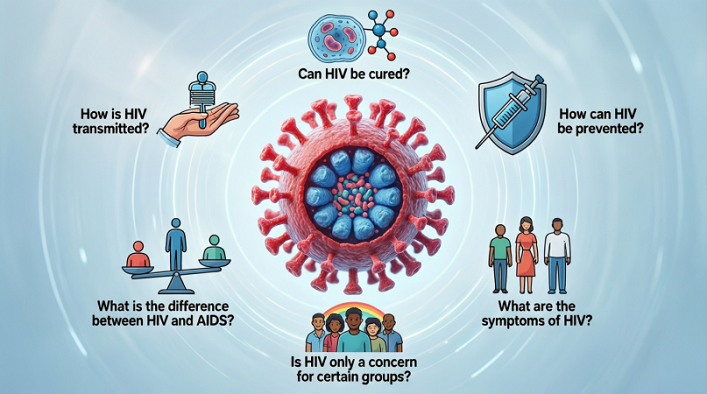
About Human Immunodeficiency Virus: Top (HIV) FAQs
Last Updated on 03/08/2026 by DrHelal
HIV remains a significant global health concern. Many people have questions about HIV.
This article addresses “Human Immunodeficiency Virus (HIV) FAQs” to understand the facts which is crucial for prevention. Facts also help reduce stigma and promote care. Let’s explore common questions and clear up misconceptions.
Are you confused about HIV transmission, testing or treatment? Get the answers to all your burning questions here. Read on to learn the essential facts about HIV. In this article, we will explore “Top Human Immunodeficiency Virus (HIV) FAQs”, transmission, prevention, and treatment. We’ll also address common misconceptions and answer common questions.
About Human Immunodeficiency Virus (HIV)
HIV is a virus that attacks the body’s immune system. It specifically targets CD4 cells that are crucial for fighting off infections and maintaining a healthy immune response. Over time, HIV weakens the immune system, making the body susceptible to various illnesses and opportunistic infections. Without treatment, HIV can lead to AIDS (acquired immunodeficiency syndrome), the most advanced stage of HIV infection. Source CDC [About HIV]
What are the Types of HIV?
- There are 2 main types, HIV1 and HIV2. HIV-1 is the most common and most virulent strain, responsible for most HIV infections globally. HIV-2 is less common and less virulent, primarily affecting people in West Africa. Read more about HIV Types
Global Prevalence
Globally, HIV remains a significant public health issue. According to the World Health Organization (WHO), approximately 40.8 million people were living with HIV at the end of 2024, with 65% residing in the WHO African Region. In 2024, an estimated 630,000 people died from HIV-related causes, and about 1.3 million individuals acquired HIV. The Western Pacific Region had an estimated 3.0 million people living with HIV in 2024. (Source WHO [HIV and AIDS])
Progression and Management of HIV
If left untreated, HIV progresses through three stages: acute HIV infection, chronic HIV infection, and AIDS. However, with proper medical care, the virus can be controlled. This includes antiretroviral therapy (ART). People with HIV can live long and healthy lives. ART reduces the amount of HIV in the blood (viral load). It can even make the virus undetectable. This prevents transmission to others. (Read mor about HIV infection stages.)
Can HIV Live Outside the Body?
Not for very long. Compared with other types of viruses, such as influenza or chicken pox, HIV is relatively fragile. It does not thrive at room temperature (68 degrees F). It fares poorly when exposed to ultraviolet (UV) radiation from the sun. It also struggles at pH levels that are dissimilar to that of blood.
The odds of infection are next to zero. This is true even if a small amount of virus manages to survive for a short period of time. For example, there have been no confirmed cases of HIV from a blood-tainted needle in a public place. To date, such a case has never been documented. Even in a healthcare setting, the risk of infection from a needlestick injury is only around 0.3 percent.
Human Immunodeficiency Virus (HIV) Transmission FAQs
HIV is transmitted through specific body fluids. This includes blood, semen, and vaginal fluids. It can also spread through breast milk. Common transmission routes include unprotected sex. Sharing needles or syringes is also a risk. Mother-to-child transmission can occur during birth.
Unprotected anal sex poses the highest risk. according to the CDC,
– Receptive anal sex: 1 in 72.
– Shared injection drug use: 1 in 159.
– Insertive anal sex: 1 in 909.
– Receptive penile-vaginal sex: 1 in 1,250.
– Insertive penile-vaginal sex: 1 in 2,500.
HIV is not typically transmitted through kissing. Saliva contains a very low concentration of the virus. Transmission would require a large amount of saliva. There would also need to be open sores. Deep, open-mouthed kissing poses a theoretical risk. However, it is extremely low.
– Read more: Can Oral Sex transmit HIV?
HIV is not transmitted through sharing utensils. The virus cannot survive for long outside the body. Exposure to air and heat kills the virus. Sharing food or drinks poses no risk.
HIV is not transmitted through toilet seats. The virus cannot survive on surfaces. It also requires direct contact with body fluids. Toilet seats pose no risk of HIV transmission.
HIV is not transmitted through mosquito bites. Mosquitoes do not inject blood. They only suck blood for their own nutrition. The virus also cannot survive in mosquitoes. Mosquito bites pose no risk of HIV transmission.
People with HIV can prevent transmission. Take ART as prescribed to achieve undetectable. Use condoms during sexual activity. Talk to your doctor about other prevention methods.
.
Prevention FAQs
There are several effective ways to prevent HIV. Use condoms consistently during sexual activity. Avoid sharing needles or syringes. Get tested regularly for HIV. If HIV-positive, start treatment immediately. Pre-exposure prophylaxis (PrEP) is also an option. It involves taking medication to prevent HIV.
PrEP stands for Pre-Exposure Prophylaxis. It involves taking daily medication to prevent HIV. PrEP is highly effective when taken consistently. It is recommended for at-risk individuals. Talk to your doctor to see if PrEP is right.
PEP stands for Post-Exposure Prophylaxis. It involves taking medication after potential exposure. This medication must be started within 72 hours of exposure. It can prevent HIV infection. PEP is used in emergency situations.
Testing FAQs
The frequency of HIV testing depends on risk factors. Sexually active individuals should get tested regularly. Those with multiple partners should test more often. People who inject drugs should also test regularly. Talk to your doctor about testing recommendations
HIV testing is available at various locations. This includes clinics, hospitals, and health departments. Many community organizations also offer testing. Home testing kits are also available.
A positive HIV test means you have HIV. A negative test means you do not have HIV. False-negative results can occur early after infection. Repeat testing is often recommended.
.
Treatment FAQs
It stands for Antiretroviral Therapy. It involves taking multiple medications daily. These medications suppress the virus. They prevent it from replicating. ART can help people with HIV live long lives. It also reduces the risk of transmission.
ART is highly effective in controlling HIV. It can reduce the viral load to undetectable levels. This means the virus is not detectable in the blood. Undetectable equals untransmittable (U=U). People with undetectable viral loads cannot transmit HIV.
ART medications can cause side effects. Common side effects include nausea and fatigue. More serious side effects can also occur. Talk to your doctor about potential side effects. They can help manage any issues.
Treatment FAQs
Living with HIV FAQs
Yes, people with HIV can live normal lives. With ART, they can maintain good health. They can also have relationships and families. Regular medical care is essential.
Various support services are available. This includes medical care and counseling. Support groups can also be very helpful. Many organizations offer assistance.
Common Misconceptions about HIV FAQs
This is a common misconception. With ART, people with HIV can live long lives. HIV is now a manageable chronic condition.
HIV can affect anyone, regardless of background. It is important to practice prevention. Get tested regularly.
HIV is the virus that causes AIDS. AIDS is the late stage of HIV infection. They are not the same thing.
The Importance of Education and Awareness
Education and awareness are crucial for preventing HIV. Accurate information empowers individuals. It helps them make informed decisions. Awareness campaigns can reduce stigma. They promote testing and treatment.
The Role of Healthcare Providers
Healthcare providers play a vital role. They provide testing and treatment. They also offer counseling and support. They can help prevent HIV transmission.
The Impact of Research and Innovation
Research and innovation are essential. They lead to new prevention methods. They also improve treatment options. The goal is to find a cure for HIV.
Summary
HIV attacks the immune system. Many FAQs address transmission. Prevention and treatment are vital. Education combats stigma. Knowing “HIV and Top HIV FAQs” saves lives
SOURCES
- https://www.who.int/news-room/fact-sheets/detail/hiv-aids
- https://www.sciencedaily.com/news/health_medicine/hiv_and_aids/
- https://www.thebody.com/article/hiv-treatment-pipeline-2022-2023
If you suspect that you may have symptoms, Helal Medical can help, offering quick, private, and convenient testing options. You may contact us here: Facebook page.
Read More About HIV
- HIV Types (HIV-1 & HIV-2): Understanding HIV-2
- Infection with HIV: Understanding the 3 Stages
- HIV Infection Prevalence in the Philippines, Benefits of HIV Testing, and Who Should Get Tested
- HIV vs AIDS: the 5 Main differences?
Discover more from Helal Medical Manila
Subscribe to get the latest posts sent to your email.


