
Understanding Hepatitis A: Prevention & Symptoms
Last Updated on 02/15/2026 by Helal Medical
Hepatitis A virus (HAV) is a common contagious liver infection that range from mild to severe illness. This article explores Hepatitis A, its causes, symptoms, and how to prevent it. Knowledge is your best defense against HAV. In this article, I will cover the next key points:
- What is Hepatitis A Virus?
- How Does Hepatitis A Spread?
- Common Symptoms Prevention
- Treatment
- Summary
If you want to read more about Viral Hepatitis, including detail about Liver damages click here!
What is Hepatitis A?
It is a viral infection that primarily affects the liver resulting in its inflammation. This inflammation can impair liver functions. Unlike Hepatitis B or C, it does not cause chronic liver disease. Still, it can be serious that some cases need hospitalization.
How Does Hepatitis A Spread?
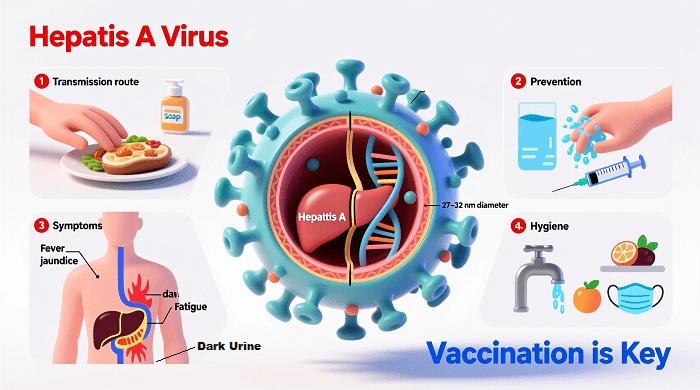
The Hepatitis A virus spreads easily via the “fecal-oral” route. This means infected fecal matter contaminates food or water. Then, a person consumes the contaminated food or drink. Poor hygiene, unwashed hands after using the restroom can spread it. Eating raw shellfish from polluted waters is risky. Close contact with an infected person also poses a threat, this can happen in households or childcare settings. Also, traveling to areas with poor sanitation increases risk.
Common Symptoms of Hepatitis A
Symptoms can vary, and some people show no symptoms at all. Symptoms often include fatigue, nausea, vomiting, abdominal pain, dark urine, and jaundice. Jaundice is a yellowing of the skin and eyes. Fever and joint pain can also occur. Symptoms usually start 2 to 4 weeks after exposure (called incubation period). They can last for several weeks or even months.
Preventing Hepatitis A Infection
That’s a very important topic! The most effective ways to prevent Hepatitis A infection involve vaccination and good hygiene and sanitation practices. Read more in our cornerstone article: Preventive Health: Medical Checkups and Screenings That Can Save Your Life
💉 Vaccination
- Routine Vaccination for all children: It should start at 12 – 23 months of age. The vaccine is given as a two-dose series. The second dose is typically 6 months after the first.
- Vaccination for At-Risk Groups and older children at higher risk, including:
- International travelers going to countries where Hepatitis A is common.
- Men who have sex with men.
- People who use illegal drugs (both injection and non-injection).
- People with chronic liver disease (like Hepatitis B or C).
- People with occupational risks (e.g., those who work with the virus in a lab setting).
- Post-Exposure Prophylaxis (PEP):
If you’ve been exposed and haven’t been vaccinated, you should get the Hepatitis A vaccine. Alternatively, you can get immune globulin. The choice depends on your age and health status. Receiving it within two weeks of exposure can help prevent illness.
🧼 Hygiene and Sanitation
Hence it is spread through the fecal-oral route, these practices are crucial:
- Safer Sex Practices: Practice safer sex, especially for activities that involve oral-anal contact.
- Hand-washing for at least 20 seconds, especially:
After using the restroom or changing diapers.
Before preparing or eating food.
After caring for someone who is sick.
- Food and Water Safety (Especially when traveling):
- Drink only safe water:
bottled water, or water that has been boiled for at least 1 minute). Avoid ice made with unsafe water.
- Avoid raw or under-cooked foods, particularly raw shellfish.
- Peel all fresh fruits and vegetables yourself. Avoid pre-cut produce or food from street vendors unless you are sure of the hygiene standards.
Treatment for Hepatitis A
There is no specific treatment for Hepatitis A, but the body typically clears the virus on its own. Treatment focuses on managing symptoms like Rest, Hydration, avoiding alcohol. Medications can be given to relieve the symptoms. Most people recover from HAV in a short time, but, in some, it can take time.
Summary: Stay Informed, Stay Protected
Hepatitis A virus is a preventable disease. Vaccination offers excellent protection and practicing good hygiene further reduces risk. Understand its symptoms and how it spreads to keep yourself safe and protect your liver health.
Was this “health tip” helpful? Share! And subscribe to our website so you never miss new health article! Any concerns? Contact us at Helal Medical today. For more information on vaccination schedules, visit the CDC website. You can also learn about global HAV prevalence from the World Health Organization.
Reminder:
For those following our live updates, don’t forget to join our Live Q&A sessions. We discuss these latest medical breakthroughs in real-time.
For further reading:
Viral Hepatitis Types A, B, C, D & E: Latest Diagnosis & Treatment (2026 Update)viral-hepatitis-types-a-b-c-d-e-latest-diagnosis-treatment-2025. May 4, 2025
Liver Diseases: A Comprehensive Guide with an In-Depth Look at Viral Hepatitisliver-diseases-a-comprehensive-guideHepatitis. Feb 7, 2026
Who Should Get the Hepatitis A Vaccine?who-should-get-the-hepatitis-a-vaccine. Explore travel health advisories. Jan 27, 2026
Understanding Hepatitis B: A Comprehensive Guide for HepaB Virus infectionunderstanding-hepatitis-b-a-comprehensive-guide-for-hepab-virus. Sep 15, 2024
Liver Functions: Over 500 Reasons to Keep it Healthyliver-functions-over-500-reasons-to-keep-it-healthy. Feb 7, 2026
Understanding Hepatitis A: Prevention & Symptoms understanding-hepatitis-a-prevention-symptoms. Jan 24, 2026
Hepatitis C Virus Infection: Symptoms, Diagnosis, and Treatmenthepatitis-c-virus-infection-symptoms-diagnosis-and-treatment. Feb 19, 2023
Discover more from Helal Medical Manila
Subscribe to get the latest posts sent to your email.


