
Nourishing Your Brain: Fueling Cognitive Power, Memory, and Mood
Last Updated on 04/13/2026 by Helal Medical
Nourishing Your Brain isn’t just about eating healthy. It’s about understanding how specific foods and nutrients directly impact your cognitive power. They also affect your memory and mood.
Ever feel like your brain is running on empty, struggling to focus or recall simple things? You’re not alone. In our busy lives, it’s easy to forget. Our brain is the control center for everything we do. It needs the right fuel to function optimally.
Ready to discover how delicious foods can boost your brainpower and keep your mind sharp? Let’s dive in! In this article, we will explore what it means to nourish your brain. We will also look into how to nourish it with the best food choices. We will also cove foods you must avoid.
What Does It Mean to Nourish Your Brain?
Nourishing Your Brain means providing it with the essential nutrients it needs to function at its best. Think of your brain like a high-performance car. It needs the right kind of fuel. It requires regular maintenance. It also needs protection from damage to run smoothly. This involves:
- Providing Energy: Your brain uses about 20% of your body’s energy, primarily in the form of glucose (sugar).
- Building and Repairing Cells: Your brain is made of billions of nerve cells (neurons). These and other cells constantly need building blocks and repair.
- Protecting from Damage: Brain cells are vulnerable to damage from inflammation and oxidative stress.
- Facilitating Communication: Ensuring the chemical signals (neurotransmitters) that allow brain cells to talk to each other are produced and balanced.
When your brain gets the right nourishment, you’ll notice improvements in focus and memory. You’ll experience better learning ability and mood regulation. This leads to overall mental clarity. Read More about: Unlock Your Brain’s Potential: A Lifelong Journey to Optimal Brain Health
The Brain-Boosting Power of Food
What you eat has a profound and direct impact on your brain’s health and function. Here’s a look at key nutrients and foods that are superstars for your brain:
1. Healthy Fats: The Building Blocks of Brain Cells
Fats are essential for building the membranes that surround your brain cells. Omega-3 fatty acids, in particular, are crucial.
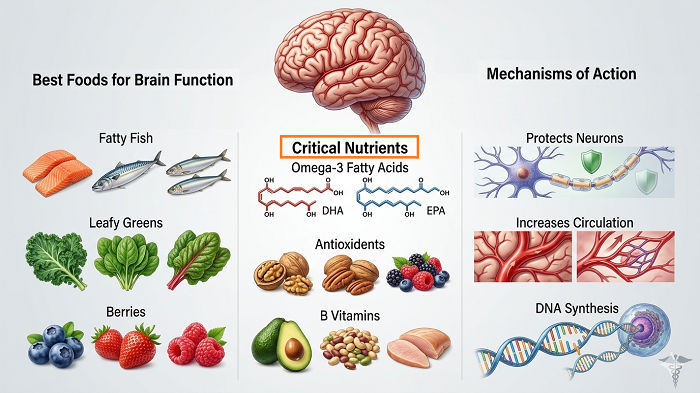
- Omega-3 Fatty Acids (DHA & EPA): These are critical for brain structure and function. DHA is a major structural component of brain cell membranes. DHA and EPA have anti-inflammatory properties that protect the brain.
- Superstar Foods: Fatty fish like salmon, mackerel, sardines, and herring are the best sources. You can also find ALA (which the body converts to DHA/EPA, though less efficiently) in flaxseeds, chia seeds, and walnuts.
- Monounsaturated Fats: These healthy fats can also support brain health and improve blood flow.
- Superstar Foods: Avocados, olive oil, almonds, and peanuts.
2. Antioxidants: Your Brain’s Protective Shield
Your brain uses a lot of oxygen, which can lead to the production of harmful byproducts called free radicals. Antioxidants act like tiny bodyguards, neutralizing these free radicals and protecting your brain cells from damage and inflammation. This protection is vital for preventing age-related cognitive decline.
- Vitamins C & E: Powerful antioxidants.
- Sources: Vitamin C is abundant in citrus fruits (oranges, grapefruits), berries, bell peppers, and broccoli. Vitamin E is found in nuts (almonds, sunflower seeds), seeds, and vegetable oils.
- Flavonoids: A large group of plant compounds with strong antioxidant and anti-inflammatory effects.
- Superstar Foods: Berries (especially blueberries!), dark chocolate (rich in flavanols), apples, grapes, and tea are excellent sources. Colorful vegetables also contribute significantly.
3. B Vitamins: Essential for Energy and Neurotransmitters
The B vitamin family (especially B6, B12, and folate) plays a critical role in brain health. They help:
- Produce Energy: They are essential for converting the food you eat into energy your brain can use.
- Make Neurotransmitters: These are the chemical messengers that allow brain cells to communicate. Balanced neurotransmitters are key for mood, focus, and memory.
- Maintain Nerve Health: They help keep nerve pathways healthy and functioning.
- Superstar Foods: Whole grains, lean meats, fish, eggs, dairy products, and legumes such as beans and lentils. Include leafy green vegetables and fortified foods like cereals and nutritional yeast.
4. Minerals: The Unsung Heroes
Minerals are vital for various brain functions, from nerve signaling to protecting cells.
- Magnesium: Involved in nerve signal transmission, learning, and memory. It also helps regulate mood and can have a calming effect.
- Superstar Foods: Nuts (almonds, cashews), seeds (pumpkin, chia), whole grains, dark leafy greens.
- Zinc: Crucial for nerve signaling and plays a role in memory and learning.
- Superstar Foods: Oysters, beef, pumpkin seeds, lentils, chickpeas.
- Iron: Essential for carrying oxygen to the brain. Iron deficiency (anemia) can lead to fatigue, poor concentration, and cognitive impairment.
- Superstar Foods: Red meat, poultry, fish, beans, spinach (pair with Vitamin C for better absorption).
5. Fiber: Supporting Gut-Brain Connection
While not directly in the brain, dietary fiber plays a crucial role through the gut-brain axis. A healthy gut microbiome, supported by fiber, influences mood, stress response, and even cognitive function.
- Superstar Foods: Fruits, vegetables, whole grains, legumes, nuts, and seeds are all rich in fiber.
| Nutrient/Food Group | Key Benefit for Brain | Top Food Sources |
|---|---|---|
| Omega-3 Fats | Brain cell structure, anti-inflammatory | Salmon, mackerel, sardines, flaxseeds, walnuts |
| Antioxidants | Protect cells from damage, reduce inflammation | Berries, dark chocolate, leafy greens, colorful veggies |
| B Vitamins | Energy production, neurotransmitter synthesis | Whole grains, lean meats, eggs, dairy, legumes |
| Magnesium | Nerve signaling, mood regulation | Nuts, seeds, whole grains, dark leafy greens |
| Fiber | Supports gut-brain axis, reduces inflammation | Fruits, vegetables, whole grains, legumes, seeds |
| Whole Grains | Steady energy supply, B vitamins | Oats, quinoa, brown rice, whole wheat |
Foods That Can Hinder Brain Function
Just as some foods nourish your brain, others can hinder its performance. Being mindful of these can make a big difference:
- Excess Sugar and Refined Carbohydrates:
Foods like white bread, pastries, sugary drinks, and candy cause rapid spikes and crashes in blood sugar. This can lead to brain fog, irritability, and over time, contribute to inflammation and increase the risk of cognitive decline. - Trans Fats:
Often found in fried foods, commercial baked goods, and some processed snacks, trans fats are highly inflammatory and detrimental to brain health, increasing the risk of stroke and dementia. - Highly Processed Foods:
These often contain a combination of unhealthy fats, excessive sodium, added sugars, and artificial ingredients that can contribute to inflammation and impair cognitive function. - Excessive Alcohol: Heavy or chronic alcohol consumption can damage brain cells, impair memory, and increase the risk of cognitive disorders.
Putting It All Together: A Brain-Healthy Diet
Nourishing Your Brain is about creating a balanced eating pattern that emphasizes whole, unprocessed foods. Here’s a simple guide:
- Eat the Rainbow:
Aim to include a variety of colorful fruits and vegetables in your diet daily. Different colors often indicate different beneficial nutrients and antioxidants. - Choose Whole Grains:
Swap refined grains (white bread, white rice) for whole grain options. - Include Healthy Fats:
Make fatty fish, avocados, nuts, and seeds regular parts of your diet. Use olive oil for cooking and dressings. - Prioritize Lean Protein like fish, poultry, beans, lentils, and tofu.
- Stay Hydrated.
- Limit Processed Foods, Sugar, and Unhealthy Fats: Be mindful of hidden sugars and fats in packaged foods.
Summary
Nourishing Your Brain is fundamental for optimal cognitive power, memory, and mood. By incorporating a variety of nutrient-dense foods – rich in healthy fats, antioxidants, B vitamins, and minerals – you provide your brain with the essential building blocks and protection it needs.
Focusing on whole foods like fatty fish, berries, leafy greens, nuts, seeds, and whole grains, while limiting processed items, excessive sugar, and unhealthy fats, can enhance your brain health, (mental clarity, memory recall, and emotional balance).
Trusted Sources for Further Reading
- Harvard Health Publishing: Foods that Boost Brainpowerhttps://www.health.harvard.edu/healthbeat/foods-that-boost-brainpower
- An article detailing specific foods and their impact on cognitive function.
- National Institute on Aging: Healthy Diethttps://www.nia.nih.gov/health/healthy-eating-healthy-aging/healthy-diet-healthy-aging
- Information on how diet impacts aging, including brain health.
- World Health Organization (WHO): Healthy Diet<a href=”https://www.who.int/news-room/fact-sheets/detail/healthy-diet” target=”_blank”>https://www.who.int/news-room/fact-sheets/detail/healthy-diet</a>
🔗 Connect with Helal Medical:
If you suspect that you may have symptoms, Helal Medicalc an help, offering quick, private, and convenient testing options. You may contact us here: Facebook page
This article provides general information. Always consult with a healthcare professional for personalized medical advice.
Discover more from Helal Medical Manila
Subscribe to get the latest posts sent to your email.

