
Unlock Your Brain’s Potential: Guide for Filipinos
Last Updated on 08/28/2026 by DrHelal, MD Medical Doctor with 50+ Years of Clinical Practice • [Read Full Author Bio & Credentials →]
In a world buzzing with information, demands, and stress leading many people to overlook their brain while it is the vital engine that powers all.
I wrote this article based on my medical experience the Philippines and other coutries to explain what exactly Brain Health means and why it’s important. I will explain how anyone, including Filipinos, can keep it sharp.
Keep reading to learn practical strategies, to keep your mind sharp, your memory strong and your mood balanced.
What Is Brain Health?
It isn’t just about avoiding diseases like Alzheimer‘s or dementia, but about brain functioning at its best. Let’s explain these functions – cognitive, emotional, motor and sensory – in short, one by one:
1. Cognitive Function
Did you ask yourself what does this mean! This is exactly the core of our mental activity: thinking, learning, deciding and remembering, perhaps what most people basically need.
Cognitive functions includes your ability to:
1. Learn new information: Such as grasping new concepts, skills, or facts.
2. Remembering: Recalling past events, names, faces, and other important details.
3. Focus and Concentrate, paying attention to tasks and filtering out distractions.
4. Solve Problems: Analyzing situations, thinking and finding effective solutions.
5. Make Decisions: Compareng, weighing options and choosing the best one.
6. Think Clearly and processing information logically and efficiently.
2. Emotional Function
Manage Emotions:
Respond to situations appropriately. Rather than being overwhelmed by strong feelings like anger, sadness, or anxiety.
Cope with Stress:
This means you handle life’s pressures smoothly without becoming chronically stressed or burnt out. Thus you can maintain a positive attitude enjoying your life, while contented, and optimistic.
3. Motor Function: Moving with Ease
Your brain controls all your movements, from the smallest muscle twitch to complex athletic moves. Healthy brain function supports the following:
- Smooth Coordination: Performing actions like walking, writing, or playing sports with precision.
- Balance: You can maintain stability and prevent falls.
- Fine Motor Skills: These are doing tasks requiring dexterity, such as buttoning a shirt or using a computer mouse.
4. Sensory Function: Exploring the World
Your brain interprets the signals from your 5 basic senses, allowing you to undersatnd and interact with your environment. This includes: Clear Vision, sharp Hearing to understand sounds and smell, taste, and touch.
Essentially, brain health means ensuring all these systems work together harmoniously. This coordination enables you to think, feel, move, and perceive the world effectively throughout your entire life. It’s a dynamic state that you can influence and improve at any age.
Why Brain Health Care Is So Important?
Your brain serves as the body’s master controller, overseeing vital functions, memory, and daily experiences. This makes caring for its health essential to overall well-being.
Keeping the brain healthy preserves independence, helping you manage finances, make sound decisions, and maintain self-reliance and dignity throughout life. It also enriches quality of life and relationships, letting you engage fully with loved ones, pursue interests, and find joy and connection.
A healthy mind boosts productivity, learning, and creativity by sharpening focus, improving problem-solving, and helping you adapt and grow. It also protects you against cognitive decline and reducing dementia risk through lifestyle choices.
Finally, nurturing brain health strengthens emotional balance, improves stress management, and supports a more positive, resilient outlook on life.

Keep Your Brain Healthy
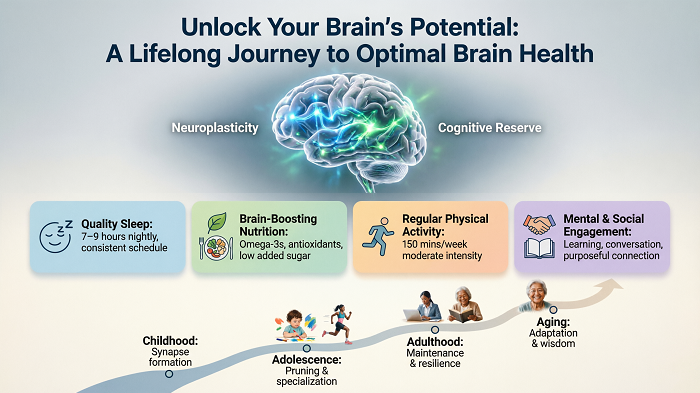
Nurturing your brain health isn’t about following a restrictive diet or an extreme exercise regimen. It’s about adopting a holistic lifestyle that supports your brain’s structure and function. These key pillars work together synergistically to keep your mind sharp and resilient.
1. Nourishing Your Brain
What you eat significantly impacts your brain health and function. Key brain-boosting foods include:
- Omega-3s (fatty fish, flaxseeds) for memory and reducing inflammation.
- Antioxidants (berries, leafy greens) to protect brain cells.
- Vitamins: B vitamins (whole grains, meats) for nerve and neurotransmitter function. Vitamin E & D (nuts, sun exposure) for brain protection and development.
- Magnesium & Zinc (nuts, seeds, oysters) for nerve signaling and memory.
- Whole grains for steady brain energy.
Limit processed foods, excess sugar, unhealthy fats, and heavy alcohol to avoid hurting your brain. Also, stay well hydrated for optimal brain performance. Read more details in this article: Nourishing Your Brain: Fueling Cognitive Power
2. Exercise for a Stronger Brain
Regular physical activity is one of the most powerful tools we have for boosting brain health. It’s not just about building muscles or losing weight; it’s about actively building a stronger, more resilient brain.
How Exercise Benefits Your Brain
Boosts Blood Flow: Exercise pumps oxygen-rich blood to your brain, delivering vital nutrients and removing waste products more efficiently. This is like giving your brain a constant fresh supply.
Stimulates Neurogenesis: This is the process of creating new brain cells (neurons). Exercise, especially aerobic activity, promotes neurogenesis. It is particularly evident in the hippocampus, which is a key area for learning and memory.
Enhances Neuroplasticity: This refers to your brain’s amazing ability to reorganize itself. It does this by forming new neural connections and pathways throughout life. Exercise is a major driver of neuroplasticity, making your brain more adaptable and better at learning.
Reduces Risk of Brain-Affecting Diseases: Regular physical activity helps manage key risk factors for brain problems. These include high blood pressure, diabetes, obesity, and high cholesterol. It also directly reduces the risk of stroke.
Improves Mood and Reduces Stress: Exercise releases endorphins, natural mood boosters that can combat feelings of depression and anxiety. It also helps regulate stress hormones like cortisol.
What Kind of Exercise is Best?
A balanced approach combining different types of activity yields the most benefits:
- Aerobic Exercise: Activities that get your heart rate up and improve cardiovascular fitness are paramount. Think brisk walking, jogging, swimming, cycling, dancing, or even vigorous gardening. Aim for at least 150 minutes of moderate-intensity aerobic activity. During such activity, you should be able to talk but not sing. Alternatively, aim for 75 minutes of vigorous-intensity activity per week.
- Strength Training: Lifting weights, using resistance bands, or performing bodyweight exercises (like squats and push-ups) builds muscle mass. This is important for overall health. It can also benefit brain function. Aim for at least two days per week.
- Flexibility and Balance Exercises: Activities like yoga, Tai Chi, and stretching are crucial. They improve coordination, especially as we age. These activities also reduce the risk of falls, which can lead to head injuries, and promote a mind-body connection.
Even incorporating more movement into your day, like taking the stairs or going for short walks, can make a difference.
3. Keep Your Mind Active: Mental Stimulation
Just like muscles, your brain needs regular workouts to stay strong and agile. The principle is simple: “use it or lose it.” Engaging in mentally stimulating activities helps build what’s called cognitive reserve:
Cognitive reserve is like a mental buffer. It’s the brain’s ability to improvise to find ways of getting a job done when damaged or declined. People with a higher cognitive reserve can maintain their cognitive function for longer. They can do so even in the presence of brain changes associated with aging or disease. Building this reserve is a lifelong process.
Activities to Challenge Your Brain
Embrace Lifelong Learning – the cornerstone of building cognitive reserve, read more and deeply, engage in puzzles and games (word Puzzles, logic Puzzles and Strategy Games) and stay Curious and Ask Questions.
Challenge Your Routine and introduce novelty into your daily life. Choose activities that are challenging, enjoyable, and varied. Pushing yourself slightly outside your comfort zone is where the most significant cognitive benefits
Brain Health Issues in Seniors:
1. Cognitive Decline: Age-related changes can lead to slower thinking, memory issues, and difficulty with complex tasks.
2. Dementia & Alzheimer’s: These are progressive neurological disorders characterized by severe memory loss, impaired judgment, and changes in personality and behavior. Alzheimer’s is the most common form of dementia.
3. Stroke: It occurs when blood supply to the brain is interrupted, causing brain cells to die. This can lead to various impairments, including speech difficulties, paralysis, and cognitive issues.
4. Parkinson’s Disease: This neurodegenerative disorder primarily affects movement but can also involve cognitive and mood changes, including depression and memory problems.
5. Sensory Impairments: Vision and hearing loss can indirectly affect brain health by leading to social isolation and reduced cognitive stimulation.
Brain Health Issues in Filipino Seniors
As our loved ones grow older, watching over their well-being means caring for both body and mind. brain health issues are becoming more common among Filipinos, affecting memory, thinking, and daily life.
About 1 in 10 Filipino seniors aged 60 and above live with dementia, making it one of the most pressing concerns for families and communities nationwide. Understanding these challenges, spotting warning signs early, and taking simple protective steps can help seniors enjoy better quality of life and keep their dignity intact. (Source from pmc.ncbi.nlm.nih.gov: Dementia Incidence, Burden and Cost of Care: A Filipino Community-Based Study)
Accessing Brain Health Services in the Philippines
Filipinos can access brain health and mental wellness services through a broad network of public and private facilities nationwide. Here is what I gathered during my practice as a medical doctor in Helal Medical Manila, used to keep in my records as reference:
1. Government-accredited providers:
Rural health units, city and municipal health offices, and Level 1 and 2 hospitals, where general consultations, initial assessments, and basic care are available, often covered by PhilHealth with annual coverage of up to 10,000 pesos for general services and about 20,000 pesos for specialized care.
Level 3 hospitals and larger facilities with psychiatrists, neurologists, and psychologists offer advanced diagnosis, treatment, and rehabilitation. They cover conditions like stroke and epilepsy, dementia and behavioral disorders.
National referral centers such as the Philippine General Hospital in Manila, the National Center for Mental Health in Mandaluyong, and major regional hospitals provide a low-cost care.
2. Specialized private institutes such as Asian Hospital’s Asian Brain Institute and Cardinal Santos’ Brain and Spine Institute. They offer comprehensive neuroscience services from prevention through rehabilitation.
Memory clinics, telehealth platforms, and community-based wellness hubs further expand access, and crisis support is available 24/7 through hotlines such as NCMH at 1553 and Hopeline Philippines. Brain Care Services are increasingly accessible both in-clinic and online, making brain support available across urban and underserved provincial areas.
Local Resources
Alzheimer’s Disease Association of the Philippines (ADAP): 10 Warning Signs
Dementia Society of the Philippines
National Commission of Senior Citizens
Brain Foundation of the Philippines
Asian Hospital Asian Brain Institute
Summary
Brain Health is about optimizing your brain’s function, not just avoiding disease. It includes cognitive abilities, emotional well-being, motor skills, and sensory perception. Prioritizing brain health enhances independence, quality of life, productivity, and reduces cognitive decline risk.
Key strategies include a brain-boosting diet, regular exercise, mental stimulation, quality sleep, social connection, and protecting your brain from injury. Small, consistent lifestyle changes yield significant benefits.
Small daily changes add up to big results. Start today—choose one healthy meal, walk a little longer, or sleep earlier—to unlock your brain’s potential for a sharper, happier, and more fulfilling life.
Local Resources
Alzheimer’s Disease Association of the Philippines (ADAP): 10 Warning Signs
Dementia Society of the Philippines
National Commission of Senior Citizens
Brain Foundation of the Philippines
Department of Health – Tips for Good Brain Health
Asian Hospital Asian Brain Institute
Sources for Further Reading
- Mayo Clinic: Healthy Lifestyle – Brain Health
- Provides comprehensive advice on diet, exercise, and other lifestyle factors for maintaining brain health.
- National Institute on Aging (NIA): Alzheimer’s and Related Dementias – Healthy Lifestyle
- Offers insights into how lifestyle choices can impact cognitive function and reduce the risk of dementia.
- World Health Organization (WHO): Dementia
🔗 Connect with Helal Medical:
If you suspect that you may have symptoms, Helal Medical can help, offers quick, private, and convenient testing options. You may contact us here: Facebook page
This article provides general information. Always consult with a healthcare professional for personalized medical advice.
Discover more from Helal Medical Manila
Subscribe to get the latest posts sent to your email.


