
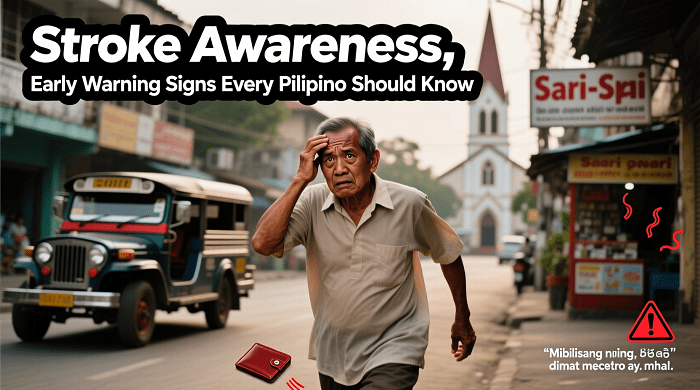
Stroke Awareness — Early Warning Signs Every Filipino Should Know
Last Updated on 08/08/2026 by DrHelal, MD Medical Doctor with 50+ Years of Clinical Practice • [Read Full Author Bio & Credentials →]
Every year, thousands in the Philippines suffer from a stroke, a deadly illness that awareness can prevent. According to the Department of Health (DOH), this disease is the second leading cause of death in the Philippines.
The good news: many stroke cases can be prevented or treated early when recognized early. This requires spreading awareness of early warning signs.
During my long medical practice, I learned that every minute counts and immediate action can prevent disability and also save lives.
Let’s learn what a stroke is and how to spot the early warning signs “FAST”. I will also discuss the common causes and risk factors. My purpose of writing now is to raise awareness about stroke in the Philippines.
What Is a Stroke?
A stroke occurs when blood flow to part of the brain is blocked or when a blood vessel bursts.
Without enough oxygen, brain cells start to die within minutes.
There are two main types:
Ischemic Stroke – blockage caused by a clot (most common). The second type is Hemorrhagic Stroke – bleeding in the brain due to a ruptured vessel.
⚕️ Stroke can happen to anyone — but risk increases with age, high blood pressure, diabetes, and smoking.
Early Warning Signs — Remember “FAST”
The easiest way to remember stroke symptoms is the FAST rule (Face drooping/Arm weakness/Speech difficulty/Time to call for help):
- F – Face drooping: One side of the face suddenly feels weak or droops.
- A – Arm weakness: One arm can not be raised.
- S – Speech difficulty: Speech becomes slurred or hard to understand.
- T – Time to call for help: If you notice any of these signs, call emergency services or go to the nearest hospital. The sooner treatment begins, the better the chances of survival and recovery.
Other Stroke Symptoms
Filipinos should also watch out for these sudden signs. Never ignore mild symptoms — even a mild stroke (Transient Ischemic Attack) is a serious warning.:
- Numbness on one side of the body, severe headache, blurred or loss of vision, dizziness or loss of balance, and confusion or difficulty understanding speech.
Mild Stroke or Heart Issue: You Must Not Ignore
While updating this article, I remembered a story told to me by a 45-year-old patient – a heart patient survivor. She visited our clinic for after-recovery follow-up early this year.
She experienced what she thought was a mild stroke (numbness, headache, and dizziness). She immediately went to the hospital. She was admitted to the Heart Center – Philippines.
An emergency operation to remove a thrombus was done, and she was showing significant recovery in one month. To spread hope, even if you have nothing, and awareness, her story was published on the Heart Center website.
Common Causes and Risk Factors in Filipinos
Causes are mainly the wrong lifestyle: foods, drinks, daily activities, and bad health habits. These can play a big role in stroke risk. Filipinos who eat salty dishes like tuyo, instant noodles, and processed meats daily have a higher risk of hypertension leading to stroke.
- High blood pressure (hypertension)
- Diabetes
- High cholesterol
- Smoking and alcohol use
- Lack of exercise
- Unhealthy Filipino diet (salty, fatty, and processed food)
- Age: A stroke can happen to anyone at any age, but the risk increases with age or the above-mentioned factors.
How to Prevent Stroke
You can significantly lower your risk of stroke by adopting these habits:
1. Control your blood pressure.
Check it regularly at home or your barangay health center. This is particularly important for hypertensive persons.
2. Manage diabetes and cholesterol levels.
Check your blood sugar, eat balanced meals, and take your medications as prescribed.
3. Eat healthy Filipino meals.
Choose vegetables, fruits, fish, and brown rice. Avoid excess salt, oil, and processed foods.
4. Exercise regularly.
Even 20-30 minutes of brisk walking five days a week can help.
5. Avoid smoking and limit alcohol.
Quitting smoking is life-saving as it lowers your risk of stroke and heart disease. Also, not smoking can protect your lungs.
6. Get regular check-ups.
Stroke and heart regular screening, which is vital for people at risk. This can help with early detection of risks.
What To Do If a Stroke Happens
If someone shows symptoms or signs of stroke, the following must be done:
– Call emergency help asap. Call: (911, National Emergency Hotline, Philippine Red Cross 143). Click here for more local emergency numbers.
– Note the time symptoms began and remember that early treatment (within 3–4 hours) saves the brain.
If you attend to a patient: Act FAST: note the exact time symptoms start, lay the person safely on their side, loosen tight clothing, keep airways clear, do NOT give food/water/medicines, and stay calm with them until emergency help arrives
The Importance of acting fast
Here is a real story to highlight the importance of acting fast. A friend of mine left the Philippines for Saudi Arabia on a business trip. While he was there in Riyadh, he experienced symptoms. He rushed to the hospital and was confined in the ICU. He left the hospital after 3 weeks and recovered completely. He was 55 at that time; now he is 65 years old, enjoying good health.
The good news: I asked him recently about smoking, as I know he was a heavy smoker. He told me he has never smoked since that incident. This may inspire everyone to quit smoking before it’s too late!
Remember a stroke happens when blood flow to part of the brain is blocked, or a vessel bursts; brain cells quickly lose oxygen and die, causing sudden weakness, confusion, slurred speech, or vision loss.
Philippines Government and Community Programs
The DOH and Philippine Neurological Association (PNA) promote public awareness through some programs. Participating in these programs can help reduce risks, especially for adults over 40.:
- Brain Attack Awareness Campaign
- National Stroke Awareness Month, the month of May.
- Barangay Health Check Days for free BP and blood sugar testing
Sources and More Reading:
Read more on our website:
Heart Disease Prevention Tips for Filipinos Over 50
Managing Diabetes and Hypertension Together in the Philippines
Now it’s time to give an easy-to-remember summary
The most important point to remember is that stroke is a medical emergency in the Philippines as well as worldwide. But awareness and early action can save lives. So, it is useful to learn and remember the FAST signs, keep a healthy lifestyle, and visit your doctor regularly for check-ups.
At Helal Medical Manila, we educate patients and families on stroke prevention. We offer risk assessments. We also promote long-term heart and brain health. 📍 For a Stroke Risk Screening or BP Check-Up: Helal Medical can help, offering quick, private, and convenient testing options. You may contact us on the Facebook page, and click here to get a free medical consultation.
This article provides general information. Always consult with a healthcare professional for personalized medical advice.
Discover more from Helal Medical Manila
Subscribe to get the latest posts sent to your email.


