
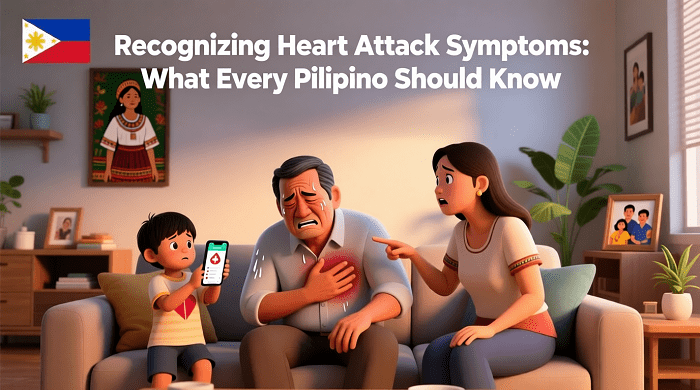
Recognizing Heart Attack Symptoms: What Every Filipino Should Know
Last Updated on 08/03/2026 by DrHelal, MD Medical Doctor with 50+ Years of Clinical Practice • [Read Full Author Bio & Credentials →]
Heart attack, or myocardial infarction, is one of the leading causes of death among Filipinos. According to the Department of Health (DOH), over 74,000 Filipinos die each year due to heart diseases. This is often because the symptoms were ignored. And treatment came too late.
Many Filipinos mistake early signs of heart attack for “pagod,” “kabag,” or “stress.” That is a big mistake Filipinos do! Recognizing the symptoms of a heart attack can be the difference between life and death.
In this article I will explore what is heart attack, common warning signs and how to recognize the symptoms of a heart attack. Continue reading to learn what to do If you suspect a heart attack!
What Is a Heart Attack?
It is a serious health emergency when the blood flow the heart is blocked. This usually occurs due to a clot in the coronary arteries. Without oxygen, part of the heart muscle starts to die, (myocardial infarction), an emergency that needs medical treatment within minutes.
Common Warning Signs
Here are the most common symptoms Filipinos should watch for, Read more details about heart attack symptoms.
❤️ Chest pain or pressure which is a heavy or squeezing feeling is in the center of the chest. It lasts more than a few minutes.
💪 Pain: discomfort radiating to the arm (especially left), neck, jaw, or back.
😮💨 Shortness of breath, even without chest pain.
😰 Cold sweat, dizziness, or nausea.
😩 Extreme fatigue — especially in women, who may have subtle symptoms like weakness and indigestion.
Important:
Not all heart attacks cause severe pain. Some start slowly, like mild discomfort or tiredness, especially among diabetics and older adults.
Heart Attack vs. “Kabag” (Indigestion)
Many in the Philippines confuse a heart attack with “kabag” (gas pain). Here’s how the difference:
| Symptom | Heart Attack | Kabag (Gas Pain) |
|---|---|---|
| Location | Center of chest, spread to arm/jaw | Upper abdomen |
| Duration | More than 5–10 minutes | Comes and goes |
| Relieved by burping? | ❌ No | ✅ Often yes |
| Linked to sweating or dizziness? | ✅ Yes | ❌ Rarely |
When in doubt; don’t risk it. Go to the nearest emergency care hospital like PGH in Manila for check-up.
What To Do If You Suspect a Heart Attack
- Call for help: Go to the nearest hospital with cardiac care (e.g., Philippine Heart Center, PGH or a local emergency department).
- Chew an aspirin (if you are not allergic to it).
- Stay calm and sit or lie down.
- Do not drive yourself — wait for help or have someone take you.
⏱ Act FAST; Every minute of delay increases heart damage and death risk.
Heart Attack Risk Factors Among Filipinos
People in the Philippines have a higher risk of heart attack due to a mix of genetic and lifestyle factors:
- High blood pressure and diabetes
- Unhealthy diet (fried foods, processed meats, salty dishes)
- Smoking and alcohol
- Stress and lack of sleep
- Lack of physical activity
❤️ In Metro Manila, stress, poor diet, and sedentary work contribute to rising heart attack cases among adults aged 35–60.
How to Prevent a Heart Attack
✅ Control blood pressure and sugar levels; regular monitoring is key.
✅ Eat heart-healthy Pinoy food — go for grilled fish, vegetables, and fresh fruits.
✅ Exercise 30 minutes daily.
✅ Quit smoking. It’s never too late.
✅ Get regular check-ups for cholesterol and ECG screening.
Government and Community Support
The DOH and Philippine Heart Association (PHA) run several heart health programs, including:
- Healthy Heart Month (February) campaigns
- Community BP Monitoring Programs
- Heart Smart Pilipinas initiative promoting awareness and lifestyle change
These programs encourage Filipinos to check blood pressure and cholesterol regularly — even without symptoms.
Sources:
- Department of Health – Heart Disease Prevention
- Philippine Heart Association – Heart Smart Pilipinas
- World Heart Federation – Global Heart Health
Summary
A heart attack can strike without warning; Filipinos and residents must be aware how to get help in the Philippines. It’s largely preventable. Know the signs, control your risk factors, and act quickly once you have symptoms.
🔗 Connect with Helal Medical:
If you suspect that you may have symptoms, Helal Medical can help, offering quick, private, and convenient testing options. You may contact us here: Facebook page, Get Free medical consultation!
This article provides general information. Always consult with a healthcare professional for personalized medical advice.
Discover more from Helal Medical Manila
Subscribe to get the latest posts sent to your email.


