
Vitamin B Complex: Types, Roles, Sources, Symptoms of Deficiency
Last Updated on 08/28/2026 by DrHelal, MD Medical Doctor with 50+ Years of Clinical Practice • [Read Full Author Bio & Credentials →]
Are you getting enough of the essential nutrients your body needs? Among the most important are the vitamins that make up the Vitamin B complex. These vitamins are crucial for energy, brain health, and overall well-being. But many people overlook their importance until symptoms of deficiency appear.
Did you know that a lack of Vitamin B complex can lead to fatigue, nerve issues, and even mood disorders?
Understanding the different types, their roles, and sources can help you maintain optimal health. Keep reading to discover how this vital nutrient supports your body and how to recognize deficiency symptoms early.
Why Vitamin B Complex Matters
Because these vitamins play vital roles in metabolic processes, energy production, brain function, and promote healthy skin and hair. They are water-soluble vitamins.
In today’s fast-paced world, many people don’t prioritize a balanced diet rich in B vitamins. This can lead to deficiencies, which may cause a range of health issues.
But what exactly are the different types of B vitamins? What roles do they play? And what are the signs of deficiency? By understanding these questions, you can take proactive steps to improve your health.
What Is Vitamin B Complex?
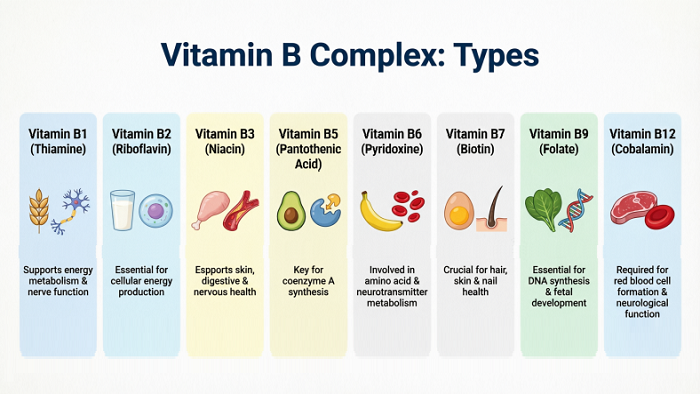
A group that consists of eight distinct vitamins, each has unique functions but works synergistically to support your health. The eight types of Vitamin B:
| Type of B Vitamin | Main Roles | Sources | Deficiency Symptoms |
|---|---|---|---|
| B1 (Thiamine) | Converts carbs into energy, supports nerve function | Whole grains, pork, beans | Fatigue, nerve damage, weakness |
| B2 (Riboflavin) | Energy production, skin and eye health | Eggs, dairy, green vegetables | Cracks at mouth corners, sore throat |
| B3 (Niacin) | Supports metabolism, skin health, nervous system | Poultry, fish, nuts | Skin rashes, fatigue, indigestion |
| B5 (Pantothenic Acid) | Hormone synthesis, energy production | Chicken, eggs, whole grains | Fatigue, numbness, muscle cramps |
| B6 (Pyridoxine) | Brain development, immune function | Fish, bananas, potatoes | Anemia, depression, confusion |
| B7 (Biotin) | Hair, skin, nail health | Eggs, nuts, seeds | Hair loss, skin rash, fatigue |
| B9 (Folate) | Cell growth, DNA synthesis | Leafy greens, citrus, beans | Anemia, birth defects in pregnancy |
| B12 (Cobalamin) | Nervous system, red blood cell formation | Meat, dairy, eggs | Fatigue, nerve damage, memory issues |
Why Is Vitamin B Complex Important?
Because these vitamins are essential for converting the food you eat into energy, support brain health, mood, and immunity. Without enough B vitamins, your body cannot perform these functions efficiently. This can lead to fatigue, irritability, and more serious health problems.
Roles of Vitamin B Complex in Your Body
Energy Production
Vitamin B1, B2, B3, B5, and B6 are directly involved in metabolizing carbohydrates, fats, and proteins into energy. Without sufficient B vitamins, your energy levels plummet, leading to fatigue and exhaustion.
Brain and Nervous System Support
B1, B6, and B12 are critical for brain health. They help maintain nerve function and neurotransmitter synthesis. Deficiencies can cause memory loss, confusion, and nerve pain.
Skin, Hair, and Nail Health
Biotin (B7) and B2 help keep your skin, hair, and nails healthy. Deficiencies often manifest as brittle nails, hair loss, or skin rashes.
Red Blood Cell Formation
Folate (B9) and B12 are vital for producing red blood cells. A deficiency can cause anemia, leading to weakness and dizziness.
Mood and Mental Health
B vitamins, especially B6, B9, and B12, influence mood regulation. Low levels are linked to depression and irritability.
Sources of Vitamin B Complex
Getting enough B vitamins from your diet is essential. Here are the best sources:
Natural Food Sources
- Whole grains (brown rice, oats, barley)
- Meat (pork, beef, poultry)
- Dairy products (milk, cheese, yogurt)
- Eggs and seafood (fish, shellfish)
- Leafy greens (spinach, kale)
- Nuts and seeds (almonds, sunflower seeds)
- Fruits (bananas, citrus fruits)
- Legumes (beans, lentils, chickpeas)
Supplementation
In cases of deficiency or increased need (like pregnancy), supplements may be recommended. Always consult a healthcare provider before starting any new supplement.
What are the Symptoms of Vitamin B Complex Deficiency?
Symptoms include fatigue, weakness, irritability, numbness, tingling, anemia, skin rashes, and cognitive issues. They result from impaired energy production, nerve damage, and red blood cell formation. Recognizing deficiency symptoms early can prevent serious health issues.
| Deficiency Symptoms | Associated B Vitamins | Details |
|---|---|---|
| Fatigue and weakness | B1, B2, B3, B5, B6 | Low energy, tiredness |
| Nerve problems | B1, B6, B12 | Tingling, numbness, nerve pain |
| Skin issues | B2, B7 | Rashes, cracks, skin irritation |
| Anemia | B9, B12 | Weakness, pallor, dizziness |
| Mood changes | B6, B9, B12 | Depression, irritability |
| Hair loss | B7 | Thinning hair, brittle nails |
| Memory issues | B12 | Cognitive decline, confusion |
The Impact of B Vitamin Deficiency on Overall Health
This can lead to serious health issues, including anemia, nervous system damage, skin disorders, cognitive decline and cardiovascular disease. Ensuring adequate intake of B vitamins supports overall vitality and health.
Conclusion: Prioritize Your B Vitamin Intake
The Vitamin B complex is a cornerstone of good health, supporting energy, brain function, skin health, and more.
Are you getting enough? Incorporate foods rich in B vitamins into your diet. Consider supplements if needed, especially during pregnancy or illness.
Remember: Early signs of deficiency are often subtle but can lead to severe health problems if ignored. Stay informed, eat well, and consult your healthcare provider regularly.
Trusted Sources:
- National Institutes of Health (NIH) – Vitamin B
- Mayo Clinic – Vitamin B Complex Supplements
- Harvard Health Publishing – B Vitamins and Brain Health
Table: Vitamin B Complex – Types, Roles, Sources, Symptoms of Deficiency
| Type of B Vitamin | Main Roles | Sources | Deficiency Symptoms |
|---|---|---|---|
| B1 (Thiamine) | Converts carbs into energy, supports nerves | Whole grains, pork, beans | Fatigue, nerve damage, weakness |
| B2 (Riboflavin) | Energy production, skin, eye health | Eggs, dairy, green vegetables | Cracks at mouth corners, sore throat |
| B3 (Niacin) | Supports metabolism, skin, nervous system | Poultry, fish, nuts | Skin rashes, fatigue, indigestion |
| B5 (Pantothenic Acid) | Hormone synthesis, energy | Chicken, eggs, grains | Fatigue, numbness, muscle cramps |
| B6 (Pyridoxine) | Brain development, immunity | Fish, bananas, potatoes | Anemia, depression, confusion |
| B7 (Biotin) | Hair, skin, nails | Eggs, nuts, seeds | Hair loss, skin rash, fatigue |
| B9 (Folate) | Cell growth, DNA synthesis | Leafy greens, citrus | Anemia, birth defects in pregnancy |
| B12 (Cobalamin) | Nervous system, red blood cells | Meat, dairy, eggs | Fatigue, nerve damage, memory issues |
If you suspect that you may have symptoms, Helal Medical can help, offering quick, private, and convenient testing options. You may contact us here: Facebook page
Read More About Vitamins:
- Causes of Vitamin B12 Deficiency
- 5 Top Vitamin B12 Benefits, You Need to Know
- Vitamin B12 and Red Blood Cell Formation: Why It Matters
- 5 vitamins to repair your nerves
- The Essential Role of Vitamin D: More Than Just a Vitamin
- Top 5 Causes of Vitamin D Deficiency
- Vitamin B12 Deficiency Symptoms You Shouldn’t Ignore
Discover more from Helal Medical Manila
Subscribe to get the latest posts sent to your email.


