
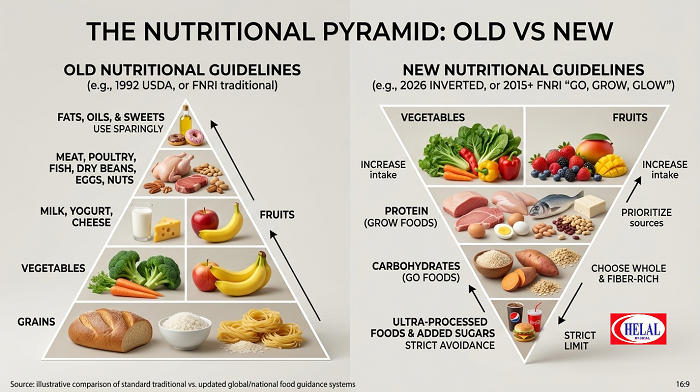
The Nutritional Pyramid: Old vs New – What Changed, And Why It Matters
Last Updated on 10/08/2026 by DrHelal, MD Medical Doctor with 50+ Years of Clinical Practice • [Read Full Author Bio & Credentials →]
The Nutritional Pyramid was the world’s go-to blueprint for healthy eating until experts completely tore it apart and rebuilt it from scratch. What was so wrong with the original version? How is the new pyramid different, and does it actually help you avoid disease and feel better?
In this article, we’ll break down every key difference between the old and new nutritional pyramids, explain exactly why this massive shift happened, and give you simple, actionable rules to eat well without the confusion.
The Old 1992 Nutritional Pyramid: What We Grew Up Learning
Released by the USDA in 1992, the original food pyramid became one of the most recognized health graphics in history. It was designed to be simple for ordinary people to follow, but decades later we learned it had major, harmful flaws.
How It Was Structured
The pyramid was built in horizontal layers, with the largest section at the bottom meant to be the foundation of your diet:
- Base (largest section): All grains – bread, cereal, rice, pasta – 6–11 servings per day, no distinction between whole wheat and white refined flour
- Second layer: Vegetables and fruit – 2–5 servings per day
- Third layer: Dairy and protein (meat, eggs, beans) – 2–3 servings each per day
- Tiny top tip: Fats, oils, and sweets – labeled “use sparingly,” with zero distinction between healthy olive oil and artificial trans fat
The Hidden Flaws
Looking back, experts now agree the old pyramid was misleading at best, dangerous at worst:
- It treated all carbohydrates as equal, encouraging people to eat massive amounts of refined white bread, sugary cereal, and pasta that spike blood sugar
- It demonized all fats, even healthy ones essential for brain, hormone, and heart health
- It never mentioned added sugar or ultra-processed foods at all
- Later investigations revealed grain and sugar industry lobbies heavily influenced the guidelines to sell more of their products
The New Updated Nutritional Pyramid: A Complete Reset
In 2026, after decades of new research and rising global chronic disease rates, health authorities released a fully updated The Nutritional Pyramid – in many ways, it is the exact opposite of the old one.
How It’s Organized Today
The new pyramid is inverted, prioritizing food quality over arbitrary serving counts:
- Widest base: Non-starchy vegetables and whole fruit – the true foundation of a healthy diet
- Second layer: Healthy fats (olive oil, avocados, nuts, seeds) and high-quality protein (fish, eggs, legumes, unprocessed meat) – equal in importance to produce
- Third small layer: Whole grains and starchy vegetables – 2–4 servings per day, refined grains almost eliminated
- Tiny top tip: Ultra-processed foods, added sugar, refined flour, and industrial seed oils – explicitly labeled “occasional only, not daily”
- It also adds physical activity and hydration as core supporting pillars, which were completely missing from the old version
Why Did The Nutritional Pyramid Change?
This wasn’t a random update – it was a correction of decades of bad science and misinformation, driven by three undeniable reasons:
1. Science Debunked The “All Fat Is Bad” Myth
The biggest mistake of the old pyramid was its blanket war on fat. By 2020, hundreds of high-quality studies proved:
- Healthy unsaturated and even saturated fats from whole foods do not cause heart disease
- The low-fat push of the 90s led people to replace fat with sugar and refined carbs, which are far more harmful to metabolism
- Fats keep you full longer, help you absorb vitamins, and are critical for brain health
2. The Old Pyramid Failed Spectacularly At Improving Public Health
Thirty years after the original pyramid launched, the results spoke for themselves: global rates of obesity, type 2 diabetes, heart disease, and fatty liver skyrocketed. It was clear the advice to “eat more grains, less fat” was not working – it was actually making people sicker
3. We Exposed Harmful Industry Influence
Investigations confirmed that food industry lobbies had direct input into the old guidelines. Sugar producers paid to shift blame away from sugar and onto fat, while grain associations pushed to make carbohydrates the largest base of the pyramid. The new guidelines are far more independent, based only on peer-reviewed science, not corporate profits
Quick Comparison Table: Old vs New Nutritional Pyramid
Table
| Category | Old 1992 Nutritional Pyramid | New Updated Nutritional Pyramid |
|---|---|---|
| Base Layer | All grains (6–11 servings/day) | Non-starchy vegetables + fruit |
| Fats | All bad; eat as little as possible | Healthy fats encouraged; limit only processed trans fats |
| Carbohydrates | All equal; prioritize quantity | Prioritize quality; strictly limit refined grains/added sugar |
| Protein | Small fixed portion; lumped all sources | Larger flexible portion; prioritize unprocessed whole sources |
| Dairy | Low-fat only, mandatory | Full-fat allowed; optional, not required |
| Processed Foods | Barely mentioned | Explicitly limited to occasional use only |
| Core Message | Eat less fat, more carbohydrates | Eat whole foods; quality matters more than quantity |
Summary
For decades, The Nutritional Pyramid shaped how billions of people around the world ate, but new science and growing awareness of corporate bias forced a long-overdue complete overhaul. The old pyramid pushed excessive refined carbohydrates and demonized all fats, directly contributing to the global rise in obesity, diabetes, and heart disease. The new updated pyramid flips that outdated script, prioritizing whole unprocessed foods, healthy fats, and high-quality protein while strictly limiting ultra-processed foods and added sugar. The simple takeaway for ordinary people is this: stop counting arbitrary servings, and start choosing real, whole foods most of the time, and you will automatically build a diet that supports long-term health.
Trusted Global Sources
- Harvard T.H. Chan School of Public Health: The Healthy Eating Pyramidhttps://www.hsph.harvard.edu/nutritionsource/healthy-eating-pyramid/Independent, evidence-based breakdown of pyramid flaws and updated guidance
- World Health Organization: Healthy Diet Fact Sheethttps://www.who.int/news-room/fact-sheets/detail/healthy-dietGlobal official nutrition recommendations fully aligned with the updated pyramid framework
- USDA: Official Evolution of Food Guidancehttps://www.usda.gov/foodgroupsOfficial history and full explanation of changes to US dietary guidelines over time
🔗 Connect with Helal Medical:
If you suspect that you may have symptoms, Helal Medical can help, offering quick, private, and convenient testing options. You may contact us here: Facebook page, Get Free medical consultation!
This article provides general information. Always consult with a healthcare professional for personalized medical advice.
Read More:
Malunggay (Moringa) Health Benefits: For Filipino Well-Being
A Healthy Diet on a Budget for Filipinos: Top 5 Tips
The Essential Role of Vitamin D: More Than Just a Vitamin
Dates vs. Refined Sugar: Is Natural Sugar the Same as Table Sugar?
Discover more from Helal Medical Manila
Subscribe to get the latest posts sent to your email.


