
Deep Sleep: What It Is, How It Works and Why You Need It
Last Updated on 10/08/2026 by DrHelal, MD Medical Doctor with 50+ Years of Clinical Practice • [Read Full Author Bio & Credentials →]
Have you ever woken up after a long night yet still felt slow, or irritable? You might have spent enough hours in bed, but you missed out on the most critical part of rest: Deep sleep. Most people know sleep is important, but few understand what this sleep type actually does and how it powers your body and brain.
I’m dr. Helal from Helal Medical Manila. In this guide, I will break down exactly what deep sleep is, how your body creates it, and the powerful benefits it delivers, so you can wake up truly rested, sharp, and healthy. I will talk about my personal sleep habits and how it helped me staying healthy!
What Is Deep Sleep?
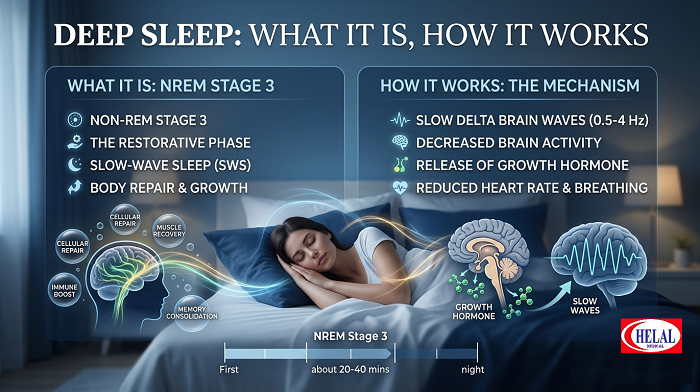
It is the third and most restorative stage of your sleep cycle, also called “slow-wave sleep” because your brain waves slow down significantly during this time. It is not just “being asleep”—it is the time when your body switches from active mode into full repair, growth, and maintenance mode.
When you enter slow-wave sleep:
1. Your breathing slows and becomes steady,
2. Heart rate drops and your blood pressure falls,
3. Muscles relax completely so that you barely move,
4. And it becomes very difficult to wake you—if you are roused suddenly, you will feel disoriented for several minutes afterward.
A full sleep cycle repeats roughly every 90 minutes. slow-wave sleep usually makes up 15–25% of your total nightly sleep, mostly in the first half of the night. As you get older, you naturally get less deep sleep,but you can still protect and improve it with simple habits.
How slow-wave sleep Works: What Happens Inside Your Body
Deep sleep is not “downtime” for your body, it is one of its busiest and most productive phases. Here is exactly how it works:
- The Brain Cleans Itself
During this sleep, your brain opens up its internal cleaning system (the glymphatic system). It flushes out waste proteins, toxins, and byproducts that build up during the day—including substances linked to memory loss and dementia. This is the only time this deep cleaning can happen effectively.
- Physical Repair and Growth
Your body releases a surge of growth hormone—the main chemical responsible for repairing muscles, tissues, and cells. It heals small injuries, builds muscle strength, and supports healthy growth in children and teens. This is why athletes and active people recover faster after a restful night.
- Memory and Learning Get Organized
Everything you learned, saw, or felt during the day gets processed and stored. Deep sleep turns short-term memories into long-term knowledge, sorts out important facts from useless details, and strengthens what you studied or practiced. This is why you understand things better after sleeping on them.
- Hormones Balance Out: It lowers stress hormones like cortisol, keeps hunger hormones in check (so you crave less sugar and junk food), supports healthy testosterone and estrogen levels and helps control insulin and blood sugar
Key Health Benefits of Deep Sleep
Getting enough deep sleep does more than just stop you from feeling tired, it protects nearly every part of you:
✅ Sharper memory and focus: Improves concentration, decision-making, and learning ability.
✅ Stronger immune system: Your body produces infection-fighting proteins while you rest.
✅ Better heart health: Lowers blood pressure and reduces strain on your heart.
✅ Healthier weight: Balances appetite hormones so you don’t overeat or crave sweets.
✅ Stable mood and emotional control: Reduces anxiety, irritability, and mood swings.
✅ Slower aging: Repairs cells and lowers inflammation throughout the body.
✅ Reduced disease risk: Linked to lower chances of diabetes, Alzheimer’s, and heart disease.
My Sleep Habits: How They Helped Me Stay Healthy
In my 40s, I worked late building Helal Medical – Manila, often past 3 AM, I did not sleep enough. I used to feel tired all the time, got sick often, and had very low energy. I thought hard work mattered more than rest.
After my 60’s, I started to sleep early getting 7 to 8 hours each night. I wake up fresh and strong and my health improved a lot. Now, I’m in my 79’s, I have good energy, think clearly, and get sick less. I say to my friends and patients: Sleep keeps us healthier.
Summary
Deep sleep is the most restorative stage of rest, where your body repairs tissues, cleans the brain, stores memories, and balances vital hormones. It is not just “quiet time”, it is essential maintenance that keeps your mind sharp, body strong, and emotions steady.
Most adults need 7–9 hours of total sleep with roughly 1.5–2 hours of deep sleep each night. By following simple habits like regular timing, cool dark rooms, and cutting caffeine late in the day, you can naturally boost your deep sleep and enjoy better health, energy, and focus for life.
Sources
1. https://www.sleepfoundation.org/stages-of-sleep. Clear, expert-backed explanation of sleep stages and their functions.
2. How to Sleep Better – Harvard Health. Research-based breakdown of how sleep affects body and brain.
3. Brain Basics: Understanding Sleep – National Institute of Neurological. Official overview from a leading U.S. health authority.
Do you have a question? please drop it down in the comments, or click here for (FREE ONLINE CONSULTATION). If you suspect that you may have symptoms, Helal Medical can help, offering quick, private, and convenient testing options. Also, you can contact us here: Facebook page.
Read More:
Benefits of Sleep: What Happens During Sleep?
Common Sleep Disorders: Unlocking the Mystery of Sleep
Sleep Apnea: A Comprehensive Guide to Better Sleep and Health
Sleep Health: Why Quality Sleep Is Essential for Your Body, Mind & Well-Being
Sleep Health: Why Quality Sleep Is Essential for Your Body, Mind & Well-Being
Discover more from Helal Medical Manila
Subscribe to get the latest posts sent to your email.


