
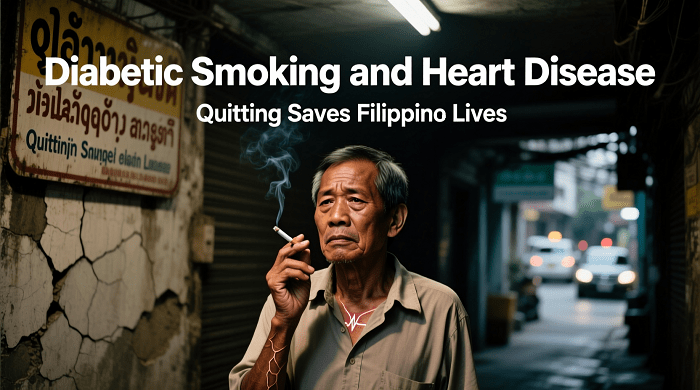
Smoking and Heart Disease: Why Quitting Saves Filipino Lives
Last Updated on 03/17/2026 by DrHelal
Smoking and heart disease in the Philippines remain a deadly combination that continues to claim thousands of lives every year. The World Health Organization (WHO) reports that tobacco use causes over 87,000 deaths annually in the country. Many of these deaths are due to heart attack, stroke, and hypertension.
Despite growing awareness, nearly one in four Filipino adults still smokes. Understanding how smoking harms your cardiovascular system is the first step toward quitting — and saving your life.
How Smoking Affects the Heart
Every puff of a cigarette introduces more than 7,000 toxic chemicals into your body. These chemicals damage the lining of your arteries, making them stiff and narrow — a condition known as atherosclerosis.
This process reduces blood flow and oxygen supply to your heart, increasing the risk of:
❤️ Heart attack (myocardial infarction)
🧠 Stroke
💥 Peripheral artery disease
💔 Heart failure
Over time, even light or occasional smoking significantly raises the risk of heart disease and premature death.
The Situation in the Philippines
The Philippines has one of the highest smoking rates in Southeast Asia. According to the DOH Global Adult Tobacco Survey, about 16 million Filipinos still smoke daily.
- Smoking is more common among men, but rates among young women are rising.
- Cigarette smoking contributes to 40% of cardiovascular-related deaths in the country.
- Rural areas and low-income groups have limited access to cessation programs.
These statistics reveal the urgent need for nationwide awareness and support for smoking cessation.
What Happens When You Quit Smoking
The body begins to heal immediately after quitting:
🕒 20 minutes – Heart rate and blood pressure begin to drop.
🕒 12 hours – Carbon monoxide levels in the blood normalize.
🕒 2–12 weeks – Circulation and lung function improve.
🕒 1 year – Risk of coronary heart disease is cut in half.
🕒 5 years – Stroke risk drops to nearly that of a non-smoker.
🕒 15 years – Heart disease risk returns to normal.
Quitting smoking is not easy — but the benefits begin within hours, and the heart starts to recover rapidly.
Tips to Quit Smoking
💪 Set a quit date and prepare mentally.
👨⚕️ Seek medical help – Your doctor can recommend nicotine replacement therapy (NRT) or prescription medications.
🚶 Stay active – Exercise helps manage cravings and stress.
🍎 Eat healthy foods to restore lung and heart function.
🤝 Join support groups – Share your journey with others trying to quit.
At Helal Medical Manila, our team offers personalized smoking cessation counseling, blood pressure checks, and cardiac assessments to help you monitor your progress.
Government Programs and Support
The Philippine government has implemented several programs to help smokers quit:
- DOH “QUITline” 1558 – A free hotline offering advice and counseling.
- The Sin Tax Law – Higher taxes on cigarettes to discourage use.
- The Tobacco Regulation Act (RA 9211) – Restricts advertising and smoking in public areas.
- Healthy Pilipinas Campaign – Promotes awareness about the dangers of tobacco use.
These initiatives aim to reduce smoking-related diseases, especially heart disease and lung cancer.
Sources
- Departmentٍخعقؤثس of Health – Tobacco Control Program
- World Health Organization – Tobacco and Health Facts
- Quitline Philippines – Call 1558
Summary
Smoking and heart disease in the Philippines continue to threaten millions of lives.
Quitting smoking is one of the most powerful ways to protect your heart, improve your circulation, and extend your lifespan.
At Helal Medical Manila, we can help you start your smoke-free journey through medical check-ups, heart screenings, and lifestyle counseling.
📞 Visit Helal Medical on Facebook or drop by our clinic in Manila.
🚭 Quit smoking today — your heart will thank you tomorrow.
Read More (Helal Medical)
Discover more from Helal Medical Manila
Subscribe to get the latest posts sent to your email.

