
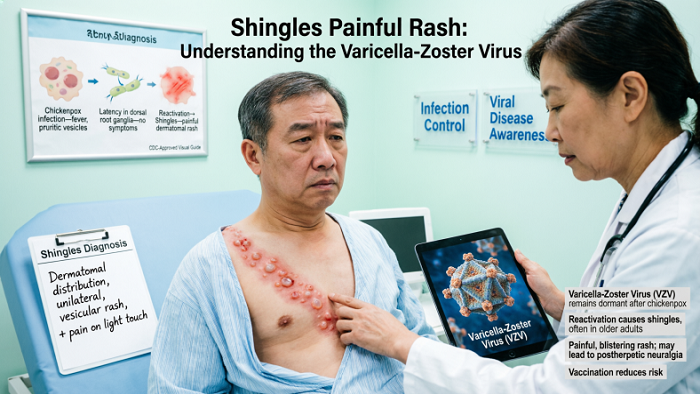
Shingles Painful Rash: Understanding the Varicella-Zoster Virus
Last Updated on 08/13/2026 by DrHelal, MD Medical Doctor with 50+ Years of Clinical Practice • [Read Full Author Bio & Credentials →]
Shingles is a condition that causes painful rash and intense discomfort; caused by the varicella-zoster virus. This is the same virus that causes chickenpox. Understanding shingles helps in managing the condition and preventing complications.
The chickenpox you had as a child could come back to haunt you in a completely different way! Understanding this reactivation could save you from weeks of agonizing pain. Keep reading to unlock the secrets to managing shingles.
In this article, I will explore Shingles, its causes and symptoms. I will also discuss treatment and prevention. The goal is to empower you with knowledge.
Understanding Shingles: Cause of Painful Rash
Shingles is a viral infection that affects the nerves. It causes painful rash. The varicella-zoster virus (VZV) causes it, it also causes chickenpox.
What is Varicella-Zoster Virus?
- VZV causes chickenpox in childhood.
- After recovery, the virus stays dormant. It resides in nerve cells.
- It can reactivate later in life.
Reactivation of the Virus
- This reactivation causes shingles.
- The virus travels along nerve pathways casing inflammation and pain.
- It also causes a characteristic skin rash.
Causes and Risk Factors
Shingles results from VZV reactivation causing painful rash. Several factors increase the risk.
1. Weakened Immune System
- A weakened immune system is a key factor.
- Factors that can suppress immunity: aging, stress and certain medications.
2. Age
- The risk increases with age.
- People over 50 are more susceptible.
- Also, the immune system weakens over time.
3. Stress
- Stress weakens the immune system.
- Chronic stress increases shingles risk.
4. Medical Conditions
- HIV and cancer increase the risk.
- These conditions weaken immunity.
- Transplant recipients are also at risk.
Symptoms of Shingles Disease
Symptoms vary in intensity.
Early Symptoms
- Pain and tingling are common early signs.
- Burning sensation also occurs.
- Itching and sensitivity are possible.
- These symptoms occur before the rash.
Rash
- A rash appears after a few days.
- It usually occurs on one side of the body.
- It follows a nerve pathway.
- The rash consists of fluid-filled blisters.
Pain
- Pain is a hallmark of shingles.
- It can be severe and debilitating.
- It is often described as burning or stabbing.
- Pain can persist after the rash heals.
Other Symptoms
- Fever and headache are possible.
- Fatigue and malaise may occur.
- Sensitivity to light is also possible.
Complications of Shingles
Complications can be serious.
Post-herpetic Neuralgia (PHN)
- This is the most common complication.
- It is chronic nerve pain that persists after the rash heals.
- Course: It can last for months or years.
Eye Involvement
- Shingles can affect the eye.
- This is called herpes zoster ophthalmicus.
- It can cause vision problems.
- It can even lead to blindness.
Skin Infections
- The rash can become infected.
- Bacterial infections are possible.
- Antibiotics are needed to treat infections.
Neurological Problems
- Shingles can affect the brain.
- It can cause encephalitis or meningitis.
- These are serious complications.
Diagnosis of Shingles
Diagnosis is usually based on signs and symptoms.
Physical Examination
- Doctors examine the rash to assess the distribution of blisters. They also evaluate pain levels.
Viral Culture
- A sample from the blister is tested to confirms VZV infection.
- This is not always necessary for diagnosis.
Tzanck Smear
- Cells from the blister are examined to dectect VZV infection.
- It is less accurate than viral culture.
Treatment Options
Treatment aims to reduce pain and prevent complications.
Antiviral Medications
- Antivirals are most effective early.
- Acyclovir, valacyclovir, and famciclovir are used.
- They reduce viral replication.
- They shorten the duration of illness.
Pain Management
- Pain relievers help manage discomfort.
- Over-the-counter options include ibuprofen.
- Prescription pain medications may be needed.
- Nerve pain medications can help.
Topical Treatments
- Calamine lotion soothes the skin.
- Cool compresses relieve itching.
- Topical anesthetics reduce pain.
Postherpetic Neuralgia Treatment
- Nerve pain medications are used.
- Antidepressants can also help.
- Topical capsaicin cream is an option.
- Pain management is often complex.
Prevention of Shingles
Vaccination is the best prevention. Read more about: Shingles (Herpes Zoster) and the Importance of Vaccination
Shingles Vaccine
- Called Shingrix vaccine is highly effective.
- Recommended for adults over 50.
- It reduces the risk of shingles and the risk of PHN.
Who Should Get Vaccinated?
- Adults aged 50 and older should get vaccinated.
- Even those who had chickenpox should get it.
The Importance of Vaccination
Vaccination provides long-term protection; it’s safe and effective. Consult your doctor for vaccination.
The Role of Stress
The article “Can Stress Cause Erectile Dysfunction” highlights stress. Stress weakens the immune system. This increases the risk of shingles. Managing stress is very important.
Managing Stress
- Practice relaxation techniques.
- Try meditation and yoga.
- Seek support from friends and family.
- Maintain a healthy lifestyle.
Stress and Immunity
Stress hormones suppress the immune system. This makes you more vulnerable. Reduce stress to boost immunity.
Conclusion: Taking Control of Your Health
Shingles painful rash is a serious condition. It is caused by VZV reactivation. Understanding the causes and symptoms is key. Vaccination is the best prevention. Treatment reduces pain and complications. Consult a doctor for diagnosis and management. Take control of your health today. Knowledge empowers you to manage shingles.
Sources:
- Mayo Clinic: https://www.mayoclinic.org/diseases-conditions/shingles/symptoms-causes/syc-20353044
- Centers for Disease Control and Prevention (CDC): https://www.cdc.gov/shingles/index.html
- National Institute of Neurological Disorders and Stroke (NINDS): https://www.ninds.nih.gov/Disorders/All-Disorders/Shingles-Information-Page
Any concerns?
🔗 Connect with Helal Medical:
- Facebook: https://facebook.com/helalmedical
- Clinic & Lab (Manila) location: https://g.page/helalmedical
This article provides general information. Always consult with a healthcare professional for personalized medical advice.
Discover more from Helal Medical Manila
Subscribe to get the latest posts sent to your email.


