
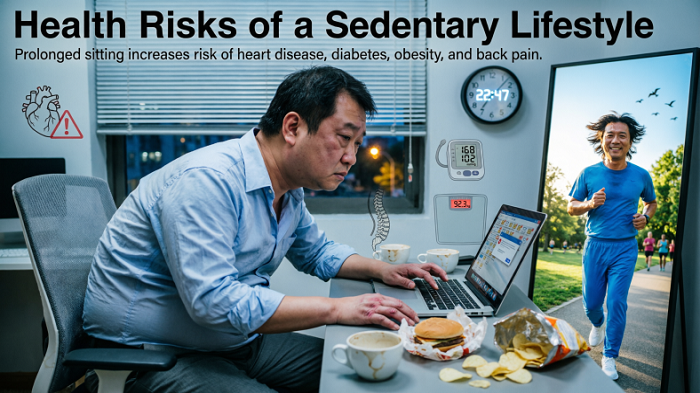
The Silent Crisis: Health Risks of a Sedentary Lifestyle
Last Updated on 03/14/2026 by DrHelal
A sedentary lifestyle, extended periods of sitting or inactivity, is a major driver of chronic disease in 2026. Lack of movement increases the risk of cardiovascular disease, Type 2 diabetes. It also contributes to metabolic syndrome by slowing down lipid metabolism and insulin sensitivity.
In this article, we will explore what is sedentary lifestyle is, the health risks and why it’s dangerous. We will also discuss practical tips for prevention and finally the FAQs. The goal is to help you live a more active life.
What is Sedentary Behavior?
Technically, sedentary behavior is any waking activity, (while awake), characterized by an energy expenditure of equal or less than1.5 metabolic equivalents (METs) while in a sitting, reclining, or lying posture. In modern society, this often manifests as “The Sitting Disease.” Office work, commuting, and screen time dominate our daily cycles.
Common Activities
- Sitting at a desk for long hours.
- Watching television for extended periods.
- Driving for long distances.
- Using computers or smartphones excessively.
Why is Sitting So Dangerous for Your Health?
When you sit for long periods, your body essentially “shuts down” at a metabolic level.
1. Reduced Glucose and Lipid Metabolism
Muscle contractions are required to trigger the processes that break down fats and sugars in the blood. When you are sedentary:
- Lipoprotein Lipase (LPL) activity drops. This is the enzyme responsible for vacuuming fats out of your bloodstream.
- Insulin Sensitivity decreases. This change makes it harder for your body to manage blood sugar leading to Type 2 Diabetes risk.
2. Cardiovascular Strain
A sedentary life is a direct contributor to Hypertension (High Blood Pressure). Without regular movement, your arteries can become stiffer. Your heart has to work harder to pump blood through a stagnant system.
3. Musculoskeletal Imbalance
Prolonged sitting leads to “Postural Collapse.” This includes:
- Tight Hip Flexors: Leading to lower back pain.
- Weakened Gluteal Muscles: Affecting your gait and balance.
- Neck Strain: Often referred to as “Tech Neck” from looking at screens.
Obesity
Sedentary life leads to weight gain. It reduces calorie expenditure. It also contributes to metabolic issues.
- Lack of activity burns fewer calories.
- This leads to fat accumulation.
- It increases the risk of obesity.
MY CLINICAL EXPERIENCE
In my practice at Helal Medical Manila, I frequently saw many patients who believed work and movement can lead hypertension. This is wrong! In middle East, men used to sit long times at coffee shops (Qahwa), that can extend more that 4-6 hours. Still, they wonder why they have high blood pressure!
5 Ways to Break the Sedentary Cycle
According to the latest 2026 health guidelines: “exercise sessions” at gym aren’t enough if you spend the other 23 hours sitting. You must focus on NEAT (Non-Exercise Activity Thermogenesis): Read more about Healthy Lifestyle!
- The 50/5 Rule: For every 50 minutes of sitting, stand and move for 5 minutes.
- Standing Desks: Alternate between sitting and standing throughout your workday.
- Walking Meetings: If you’re on a phone call, walk around the room.
- Commute Active: If you take public transport, get off one stop early and walk the rest of the way.
- Hydrate Frequently: Using a small glass instead of a large bottle forces you to get up more often to refill.
Common Questions (FAQ)
Does hitting the gym for an hour cancel out 8 hours of sitting?
Unfortunately, no. Research shows that “The Active Couch Potato”—someone who exercises but sits all day—still carries higher health risks than someone who moves moderately throughout the whole day.
How many steps do I actually need?
While “10,000 steps” is a common goal, 2026 studies suggest that even reaching 7,000 to 8,000 steps significantly reduces all-cause mortality.
Clinical Note: If you are experiencing chronic back pain, lethargy, or have concerns about your metabolic health due to a desk job, visit Helal Medical Manila for a comprehensive wellness check-up.
References:
- Sedentary Lifestyle: Overview of Updated Evidence of Potential Health Risks (NIH)
- World Health Organization (WHO) Guidelines on Physical Activity and Sedentary Behavior.
- Journal of the American College of Cardiology: The Sedentary Heart.
- Manila Health Department: Rising Trends in Metabolic Syndrome (2025 Report).
Discover more from Helal Medical Manila
Subscribe to get the latest posts sent to your email.

