
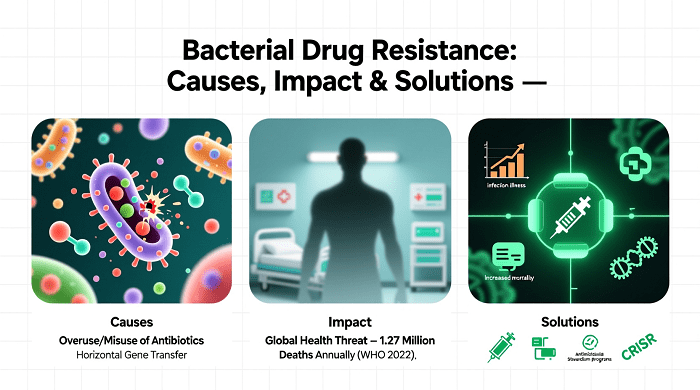
Bacterial Drug Resistance Explained: Causes, Impact & Solutions
Last Updated on 09/04/2026 by DrHelal, MD Medical Doctor with 50+ Years of Clinical Practice • [Read Full Author Bio & Credentials →]
🦠 What Is Bacterial Drug Resistance?
Bacterial drug resistance (also called antibiotic resistance) occurs when bacteria that cause infections no longer respond to antibiotics. These antibiotics used to kill them. In simple words, the medicine that once worked stops working.
This problem is growing worldwide. It makes infections harder to treat. It increases hospital stays and even leads to more deaths. At Helal Medical, and our channel, I see many patients suffering for Gonorrhea. They came seeking my advice as thy did not improve after taking different types of antibiotics. The World Health Organization (WHO) has called antibiotic resistance one of the biggest threats to global health.
🔍 How Does Bacterial Drug Resistance Happen?
Bacteria can adapt quickly. When exposed to antibiotics repeatedly or unnecessarily, they learn how to become resistant and survive. Here are 5 possibilities how it works:
- Natural Selection:
Some bacteria naturally resist antibiotics due to natural mutations. When exposed, only these strong ones survive and multiply. - Misuse of Antibiotics:
- Taking antibiotics for viral infections (like colds or flu), is not effective, but it gives bacteria a chance to adapt.
- Stopping antibiotics too early allows surviving bacteria to regrow — often stronger than before.
- Overuse in Agriculture:
Many farms use antibiotics to make animals grow faster or prevent disease. These drugs enter the environment and food chain, allowing resistant bacteria to spread. - Poor Infection Control:
In hospitals or communities with weak hygiene, resistant bacteria can spread from one person to another. - Lack of New Antibiotics:
Drug companies find it expensive to develop new antibiotics. As a result, we rely on the same ones for years. This gives bacteria more time to resist.
⚠️ Why Is It Dangerous?
Resistance cause antibiotics stop working; therefore, even simple infections can become deadly. Here are some real dangers:
- Longer and harder infections to treat:
Pneumonia, urinary tract infections, and wound infections last longer. - Higher medical costs:
Patients need stronger, more expensive drugs, or hospital treatment. - Complications during surgery or chemotherapy:
These treatments rely on antibiotics to prevent infection. - Global spread:
Resistant bacteria don’t respect borders — international travel and trade help them spread quickly.
According to the Centers for Disease Control and Prevention (CDC), antibiotic-resistant infections cause over 2.8 million illnesses and 35,000 deaths each year in the United States alone (CDC).
🧬 Common Drug-Resistant Bacteria
Here are some bacteria that have become resistant to many antibiotics:
- MRSA (Methicillin-Resistant Staphylococcus aureus):
Causes severe skin, lung, and bloodstream infections. - ESBL-producing E. coli:
Resistant to many penicillin and cephalosporins. - Carbapenem-Resistant Enterobacteriaceae (CRE):
Extremely difficult to treat; causes high death rates. - Drug-Resistant Tuberculosis (TB):
Requires long, complex treatment. - Gonorrhea:
Some strains now resist nearly all available antibiotics.
These “superbugs” are a growing challenge in hospitals, communities, and even animal farms.
💊 Common Causes of Antibiotic Misuse
Understanding the causes helps us prevent resistance:
- Self-medication:
Using leftover antibiotics without a doctor’s advice. - Over-the-counter sales:
In some countries, antibiotics are available without prescription. - Incomplete treatment:
Not finishing a prescribed course. - Poor patient education:
Many people still believe antibiotics can cure viral infections like flu or COVID-19. - Unregulated farming:
Continuous antibiotic use in poultry, pigs, and cattle.
🌍 The Global Impact
Bacterial drug resistance is not just a medical issue — it’s a global economic and social problem.
The World Bank warns that antibiotic resistance could push millions of people into extreme poverty by 2050 if not controlled.
Healthcare systems spend billions treating infections that no longer respond to common antibiotics.
Some experts even call this crisis a “silent pandemic” — spreading quietly, but with deadly consequences.
Learn more about WHO’s global action plan against antibiotic resistance here:
World Health Organization: Antimicrobial Resistance
🧠 Can We Reverse Antibiotic Resistance?
Completely reversing resistance is hard, but we can slow it down and prevent it from worsening.
Here’s how:
🩺 For Individuals
- Take antibiotics only when prescribed by a qualified healthcare professional.
- Complete the full course, even if you feel better early.
- Never share or reuse antibiotics.
- Avoid pressuring your doctor for antibiotics for colds, coughs, or flu.
- Practice good hygiene: handwashing, safe food handling, and vaccination.
🏥 For Healthcare Workers
- Follow infection prevention protocols.
- Prescribe antibiotics only when necessary and based on bacterial culture results.
- Report resistant infections to health authorities.
🐄 For Farmers and the Food Industry
- Limit antibiotic use to sick animals only.
- Follow government guidelines for safe and responsible antibiotic use.
- Support organic or antibiotic-free farming practices.
🧪 For Policymakers (government and others)
- Support research for new antibiotics and vaccines.
- Strengthen antibiotic regulation and prescription control.
- Improve access to laboratory testing to guide proper treatment.
🔬 Promising Solutions Ahead
Scientists and governments around the world are working together to fight resistance.
Some exciting developments include:
- New Antibiotic Classes: Ongoing research into novel drugs that bacteria haven’t yet encountered.
- Phage Therapy: Using viruses that attack bacteria instead of antibiotics.
- Vaccines: Preventing infections reduces the need for antibiotics.
- Artificial Intelligence (AI): Helps predict and design new drug molecules faster.
You can read more about how science is fighting antibiotic resistance here:
Harvard Health Publishing: Antibiotic Resistance
Examples of Resistant Bacteria
Bacterial drug resistance, also known as antimicrobial resistance (AMR), happens when bacteria evolve. They no longer respond to antibiotics, making infections harder to treat. Multidrug-resistant (MDR) bacteria are resistant to three or more classes of antimicrobial drugs and pose significant threats to public health.
Gram-Positive Resistant Bacteria
Staphylococcus aureus
This bacterium is notable for its resistance to methicillin, leading to Methicillin-resistant Staphylococcus aureus (MRSA). MRSA has acquired the mecA gene, which alters penicillin-binding proteins, rendering beta-lactam antibiotics ineffective. Strains like Vancomycin-intermediate Staphylococcus aureus (VISA) and Vancomycin-resistant Staphylococcus aureus (VRSA) have also emerged. VRSA often acquires the vanA gene from other resistant bacteria.
Enterococcus species
These are known for Vancomycin-resistant Enterococcus (VRE), which can cause serious hospital-acquired infections. Enterococcus species resist vancomycin through resistance genes like vanA and vanB, which can be transferred to other bacteria via plasmids.
Streptococcus pneumoniae
This bacterium can develop resistance to various antibiotics. These include penicillin and macrolides. This resistance makes the treatment of pneumonia, meningitis, and other infections more challenging.
Clostridioides difficile
While not typically resistant to antibiotics used to treat it, infections often arise after the use of broad-spectrum antibiotics. These antibiotics disrupt the gut microbiome. This disruption makes it a significant challenge in healthcare settings.
Gram-Negative Resistant Bacteria
Escherichia coli
Common resistant strains include Extended-spectrum β-lactamase (ESBL)-producing E. coli, which produces enzymes that break down a wide range of beta-lactam antibiotics, and Carbapenem-resistant E. coli (CREC). These resistances are often due to genes like TEM, SHV, and CTX-M, which can be transferred between bacteria.
Klebsiella pneumoniae
This bacterium significantly contributes to Carbapenem-resistant Klebsiella pneumoniae (CRKP). This issue is particularly concerning because of its ability to cause severe infections. It also shows resistance to last-resort antibiotics.
Acinetobacter baumannii
Known for Carbapenem-resistant Acinetobacter baumannii (CRAB), this bacterium is a major cause of hospital-acquired infections. It resists carbapenems by producing various beta-lactamase enzymes. It also modifies porin proteins and increases efflux pump activity.
Pseudomonas aeruginosa
This bacterium can develop Carbapenem-resistant Pseudomonas aeruginosa (CRPA). This development often occurs through changes in its outer membrane. It also happens due to increased efflux pump activity and the production of enzymes that inactivate antibiotics.
Enterobacterales (general)
This broad group, including E. coli and Klebsiella, frequently develops resistance to carbapenems (Carbapenem-resistant Enterobacterales (CRE)) and third-generation cephalosporins. Their resistance mechanisms include producing beta-lactamase enzymes, decreasing outer membrane permeability, and altering antibiotic binding sites.
Neisseria gonorrhoeae
The causative agent of gonorrhea, it has developed Cephalosporin-resistant N. gonorrhoeae strains, complicating treatment and posing a significant public health threat.
Salmonella species
These bacteria are responsible for salmonellosis. They have developed Fluoroquinolone-resistant Salmonella species. Mutations in genes like gyr and par reduce the antibiotic’s binding affinity. They also carry quinolone-protective genes.
Shigella species
Shigella causes shigellosis (dysentery). It has developed Fluoroquinolone-resistant Shigella species. These resistances are due to mutations in genes such as gyrA, gyrB, parC, and parE. These mutations prevent the drug from attaching properly.
Other Notable Resistant Bacteria
Mycobacterium tuberculosis
The bacterium causing tuberculosis is notorious for drug resistance. It is known for Multidrug-resistant tuberculosis (MDR-TB), which resists at least isoniazid and rifampicin. Another type, Extensively drug-resistant TB (XDR-TB), has even broader resistance. This resistance often arises from genetic mutations in the drug target sites.
✅ Final Thoughts
Bacterial drug resistance is one of the greatest health challenges of our time — but it’s also preventable.
We can protect future generations through responsible antibiotic use. Better hygiene is essential. Supporting research will also help prevent a world where common infections become deadly again.
Every person, doctor, farmer, and policymaker has a role to play. Together, we can keep antibiotics working — for us, and for the future.
Sources:
- CDC – Antibiotic Resistance Threats
- WHO – Antimicrobial Resistance Factsheet
- Harvard Health Publishing – Antibiotic Resistance
If you suspect that you may have symptoms, Helal Medical can help, offering quick, private, and convenient testing options. You may contact us here: Facebook page.
Read More About Infections:
- Infectious Diseases: Causes and Prevention (2026 Update)
- Common Infectious Bacterial Diseases: causative bacteria for each
- Bacterial Infections: How to Fight Against Harmful Bacteria
- Common Bacterial Infections in the Philippines: Your Health Guide
This article provides general information. Always consult with a healthcare professional for personalized medical advice.
Discover more from Helal Medical Manila
Subscribe to get the latest posts sent to your email.


