
Navigating Tramadol Risks: A Guide to Safe Pain Management
Last Updated on 08/03/2026 by DrHelal, MD Medical Doctor with 50+ Years of Clinical Practice • [Read Full Author Bio & Credentials →]
What is Tramadol?
Tramadol is an opioid pain reliever that requires prescription because of its risks. It is used to manage moderate to severe pain. It is effective, but patients and caregivers must be fully aware of the potential risks linked to its use. Understanding these risks is key to safe pain management.
In this article, we will explore Tramadol Risks, including addiction, side effects, and withdrawal. You will learn how to use this pain medication safely! Read more about: Drug testing!
The Dangers of Addiction and Dependence
Like all opioid medications, it carries a significant risk of physical addiction. Physical dependence means your body adapts to the drug and experiences withdrawal symptoms if you stop taking it suddenly. Addiction is a complex brain disease characterized by compulsive drug seeking and use.
The risk of addiction increases with higher doses and with longer duration of use. A personal or family history of substance abuse further heightens the risk. It’s essential to use it exactly as prescribed by your doctor.
Common and Serious Side Effects
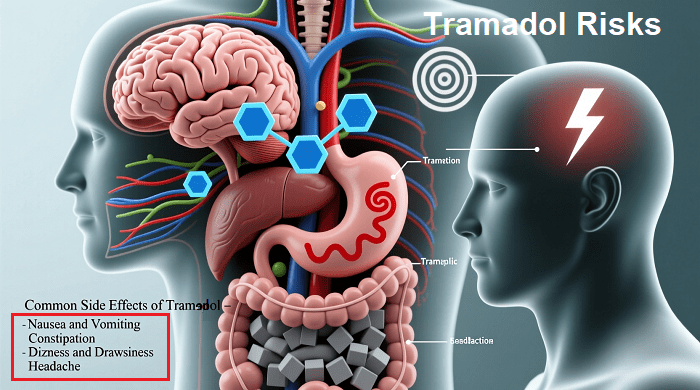
Tramadol can cause a range of side effects, some of which can be serious. Common side effects include:
- Nausea and vomiting
- Constipation
- Dizziness and drowsiness
- Headache
More serious Tramadol risks include:
- Seizures:
It lowers the seizure threshold, especially at higher doses or in individuals with a history of seizures. - Serotonin Syndrome:
This is a life-threatening condition. It can occur when the tablets are taken with other medications that increase serotonin levels. These include antidepressants (SSRIs, SNRIs). Symptoms can include agitation, hallucinations, rapid heartbeat, fever, and muscle rigidity. - Respiratory Depression:
I can also slow or stop breathing. This is less common than with stronger opioids. The risk increases when taken with alcohol or other central nervous system depressants. - Hypoglycemia:
In rare cases, this medication use has been linked to dangerously low blood sugar levels.
You can learn more about drug interactions and side effects from reputable sources like the National Institutes of Health.
Withdrawal Symptoms
If you have been taking tramadol regularly and stop abruptly, you will experience withdrawal symptoms. These can range from flu-like symptoms, anxiety, and insomnia to more severe effects like hallucinations and seizures.
A supervised, gradual tapering off the medication is usually recommended to minimize withdrawal discomfort. For comprehensive information on opioid withdrawal, resources like the Substance Abuse and Mental Health Services Administration (SAMHSA) are invaluable.
Conclusion
Tramadol can be an effective pain reliever. However, it comes with significant Tramadol risks. These risks should not be underestimated. Always follow your doctor’s instructions, never share your medication, and be vigilant for any signs of adverse effects or dependence. Open communication with your healthcare provider is paramount for safe pain management.
🔗 Connect with Helal Medical:
If you suspect that you may have symptoms, Helal Medical can help, offering quick, private, and convenient testing options. You may contact us here: Facebook page, Get Free medical consultation!
This article provides general information. Always consult with a healthcare professional for personalized medical advice.
Discover more from Helal Medical Manila
Subscribe to get the latest posts sent to your email.


