
Treatment Options for Lung Cancer
Last Updated on 02/25/2026 by DrHelal
Treatment options for lung cancer depend on various factors. These include the type and stage of the cancer, the patient’s overall health, and specific genetic characteristics of the tumor. The primary goal can be curative. It aims to eliminate the cancer. Alternatively, it can be palliative, focusing on relieving symptoms and improving quality of life. Read more about Malignant Diseases.
What are Lung Cancer Treatment Options?
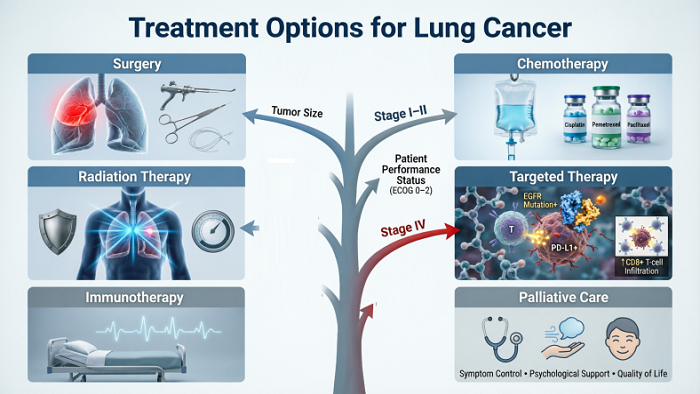
They include surgery, radiation, chemotherapy, targeted therapy, and immunotherapy. Often, a combination of treatments is used to improve outcomes. Treatment varies depending on the stage and type.
1- Surgical Treatment for Lung Cancer
It is the preferred option for early-stage non-small cell lung cancer (NSCLC). This applies when the tumor is confined to the lung. It is also chosen if the cancer has not spread extensively. Common procedures include:
- Lobectomy: removal of an entire lobe of the lung.
- Segmentectomy or wedge resection: removal of a small part of the lung.
- Pneumonectomy: removal of an entire lung in advanced cases.
2. Chemotherapy
Using drugs to destroy cancer cells, especially for small cell lung cancer (SCLC) and advanced NSCLC. It can be administered before surgery (neoadjuvant) to shrink tumors or after surgery (adjuvant) to kill residual cells. Chemotherapy can cause side effects such as hair loss, fatigue, and nausea.
3. Radiation Therapy
This employs high-energy rays to target and kill cancer cells. It can be used:
- As a primary treatment when surgery isn’t feasible.
- After surgery to eliminate remaining cancer cells.
- To relieve symptoms in advanced cases.
4. Targeted Therapy
Targeted therapies are drugs designed to attack specific genetic mutations or proteins involved in cancer growth. Examples include:
- EGFR inhibitors (e.g., erlotinib, gefitinib)
- ALK inhibitors (e.g., crizotinib)
- VEGF inhibitors (e.g., bevacizumab)These are typically used in advanced NSCLC with identified genetic alterations and tend to have fewer side effects than chemotherapy.
5. Immunotherapy
To boost the body’s immune response to recognize and attack cancer cells. Drugs like pembrolizumab, nivolumab, and atezolizumab are used for advanced lung cancers, especially those expressing PD-L1. It can be used alone or combined with chemotherapy.
Summary
Lung cancer treatment varies depending on the stage and type. It includes surgery, chemotherapy, radiation, targeted therapy, and immunotherapy. Often, a combination of treatments is used based on the cancer’s stage and the patient’s overall health.
Discover more from Helal Medical Manila
Subscribe to get the latest posts sent to your email.


