
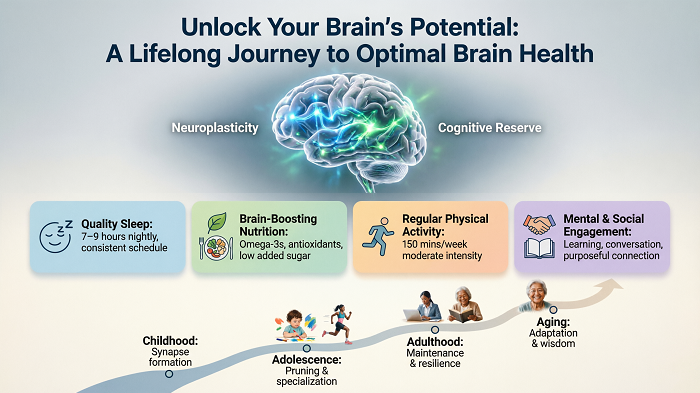
Unlock Your Brain’s Potential: A Lifelong Journey to Optimal Brain Health
But what exactly does Brain Health mean, and how can you nurture it throughout your life? In a world buzzing with information and demands, it’s easy to overlook the engine that powers it all.
This article offers practical, everyday strategies to keep your mind sharp. You can also keep your memory strong and your mood balanced. Get ready to discover how simple lifestyle choices can unlock your brain’s potential and help you live a vibrant life.
What Is Brain Health? Your Command Center
Brain Health isn’t just about avoiding diseases like Alzheimer’s or dementia, it’s about your brain functioning at its best. It encompasses several interconnected aspects (Cognitive, emotional, motor and sensory) :
1. Cognitive Function: Thinking, Learning, and Remembering
This is perhaps what most people associate with brain health. It includes your ability to:
- Learn new information: Grasping new concepts, skills, or facts.
- Remember: Recalling past events, names, faces, and important details.
- Focus and Concentrate: Paying attention to tasks and filtering out distractions.
- Solve Problems: Analyzing situations and finding effective solutions.
- Make Decisions: Weighing options and choosing the best course of action.
- Think Clearly: Processing information logically and efficiently.
2. Emotional Well-being: Navigating Your Feelings
Your brain is the seat of your emotions. Good brain health means you can:
- Manage Emotions: Respond to situations appropriately rather than being overwhelmed by feelings like anger, sadness, or anxiety.
- Cope with Stress: Effectively handle life’s pressures without becoming chronically stressed or burnt out.
- Maintain a Positive Outlook: Experience joy, contentment, and optimism.
- Build Resilience: Bounce back from setbacks and challenges.
3. Motor Skills and Coordination: Moving with Ease
Your brain controls all your movements, from the smallest muscle twitch to complex athletic feats. Healthy brain function supports:
- Smooth Coordination: Performing actions like walking, writing, or playing sports with precision.
- Balance: Maintaining stability and preventing falls.
- Fine Motor Skills: Tasks requiring dexterity, such as buttoning a shirt or using a computer mouse.
4. Sensory Perception: Experiencing the World
Your brain interprets the signals from your senses, allowing you to interact with your environment. This includes:
- Clear Vision: Processing visual information accurately.
- Sharp Hearing: Understanding sounds and speech.
- Vivid Smells, Tastes, and Touch: Experiencing the richness of your environment.
Essentially, brain health is about ensuring all these systems work together harmoniously. This coordination enables you to think, feel, move, and perceive the world effectively throughout your entire life. It’s a dynamic state that can be influenced and improved at any age.
Why is Brain Health So Crucial?
Your brain is the ultimate multitasking organ: controls everything from heartbeat and breathing to your ability to read this sentence. It also helps you recall memories or laugh at a joke. Prioritizing its health offers profound benefits at every of life:
Brain Health means Independence and Autonomy
A healthy brain empowers you to manage your daily life without assistance. This means being able to:
- Handle personal finances.
- Drive safely.
- Make informed decisions about your health and lifestyle.
- Live independently in your own home for as long as possible.This ability to maintain control over your life is fundamental to dignity and well-being.
Enhancing Quality of Life and Relationships
Cognitive and emotional well-being directly impacts your overall satisfaction with life. A healthy brain allows you to:
- Engage Fully: Participate actively in hobbies, social events, and family gatherings.
- Build Stronger Relationships: Communicate effectively, empathize with others, and maintain meaningful connections.
- Experience Joy and Fulfillment: Appreciate life’s moments and pursue personal goals with enthusiasm.
Boosting Productivity, Learning, and Creativity
Whether at work, school, or pursuing personal projects, a sharp mind is your greatest asset. Good brain health supports:
- Faster Learning: Acquiring new skills and knowledge more easily.
- Improved Problem-Solving: Tackling challenges with greater insight and efficiency.
- Enhanced Creativity: Generating new ideas and thinking outside the box.
- Better Focus: Maintaining concentration for longer periods, leading to increased productivity.
Reducing the Risk of Cognitive Decline and Dementia
While some cognitive changes are a normal part of aging, serious decline and diseases like Alzheimer’s are not inevitable. By actively promoting brain health, you can:
- Build Cognitive Reserve: This is like a buffer that helps your brain cope better with age-related changes or damage. The more robust your cognitive reserve, the more resilient your brain is.
- Delay Onset: Lifestyle factors can significantly delay the onset of dementia symptoms, allowing for more years of high-quality life.
- Potentially Prevent: In some cases, adopting brain-healthy habits may significantly reduce the risk of developing certain forms of dementia.
Improving Mood and Emotional Resilience
The brain regulates mood and stress responses. Prioritizing its health can lead to:
- Better Stress Management: Developing healthier coping mechanisms for life’s challenges.
- Reduced Risk of Depression and Anxiety: Maintaining a balanced emotional state.
- Increased Optimism: Fostering a more positive outlook on life.
The Pillars of Optimal Brain Health
Nurturing your brain health isn’t about following a restrictive diet or an extreme exercise regimen. It’s about adopting a holistic lifestyle that supports your brain’s structure and function. These key pillars work together synergistically to keep your mind sharp and resilient.
1. Nourishing Your Brain
What you eat significantly impacts your brain’s health and function. Key brain-boosting foods include:
- Omega-3s (fatty fish, flaxseeds) for memory and reducing inflammation.
- Antioxidants (berries, leafy greens) to protect brain cells.
- B Vitamins (whole grains, meats) for nerve and neurotransmitter function.
- Vitamin E & D (nuts, sun exposure) for brain protection and development.
- Magnesium & Zinc (nuts, seeds, oysters) for nerve signaling and memory.
- Whole grains for steady brain energy.
Limit processed foods, excess sugar, unhealthy fats, and heavy alcohol to avoid brain damage. Also, stay well hydrated for optimal brain performance.our brain’s ability. Read more details in this article: Nourishing Your Brain: Fueling Cognitive Power
2. The Magic of Movement: Exercise for a Stronger Brain
Regular physical activity is one of the most powerful tools we have for boosting brain health. It’s not just about building muscles or losing weight; it’s about actively building a stronger, more resilient brain.
How Exercise Benefits Your Brain
- Boosts Blood Flow: Exercise pumps oxygen-rich blood to your brain, delivering vital nutrients and removing waste products more efficiently. This is like giving your brain a constant fresh supply.
- Stimulates Neurogenesis: This is the process of creating new brain cells (neurons). Exercise, especially aerobic activity, promotes neurogenesis. It is particularly evident in the hippocampus, which is a key area for learning and memory.
- Enhances Neuroplasticity: This refers to your brain’s amazing ability to reorganize itself. It does this by forming new neural connections and pathways throughout life. Exercise is a major driver of neuroplasticity, making your brain more adaptable and better at learning.
- Reduces Risk of Brain-Affecting Diseases: Regular physical activity helps manage key risk factors for brain problems. These include high blood pressure, diabetes, obesity, and high cholesterol. It also directly reduces the risk of stroke.
- Improves Mood and Reduces Stress: Exercise releases endorphins, natural mood boosters that can combat feelings of depression and anxiety. It also helps regulate stress hormones like cortisol.
What Kind of Exercise is Best?
A balanced approach combining different types of activity yields the most benefits:
- Aerobic Exercise: Activities that get your heart rate up and improve cardiovascular fitness are paramount. Think brisk walking, jogging, swimming, cycling, dancing, or even vigorous gardening. Aim for at least 150 minutes of moderate-intensity aerobic activity. During such activity, you should be able to talk but not sing. Alternatively, aim for 75 minutes of vigorous-intensity activity per week.
- Strength Training: Lifting weights, using resistance bands, or performing bodyweight exercises (like squats and push-ups) builds muscle mass. This is important for overall health. It can also benefit brain function. Aim for at least two days per week.
- Flexibility and Balance Exercises: Activities like yoga, Tai Chi, and stretching are crucial. They improve coordination, especially as we age. These activities also reduce the risk of falls, which can lead to head injuries, and promote a mind-body connection.
Even incorporating more movement into your day, like taking the stairs or going for short walks, can make a difference.
3. Keep Your Mind Active: The Power of Mental Stimulation
Just like muscles, your brain needs regular workouts to stay strong and agile. The principle is simple: “use it or lose it.” Engaging in mentally stimulating activities helps build what’s called “cognitive reserve.”
What is Cognitive Reserve?
Cognitive reserve is like a mental buffer. It’s the brain’s ability to improvise to find ways of getting a job done when damaged or declined. People with a higher cognitive reserve can maintain their cognitive function for longer. They can do so even in the presence of brain changes associated with aging or disease. Building this reserve is a lifelong process.
Activities to Challenge Your Brain
- Embrace Lifelong Learning: This is the cornerstone of building cognitive reserve.
- Engage in Puzzles and Games: These provide structured mental challenges.
- Word Puzzles, logic Puzzles and Strategy Games (Chess, checkers and bridge).
- Read Widely and Deeply
- Stay Curious and Ask Questions
- Challenge Your Routine and introduce novelty into your daily life.
The key is to choose activities that are challenging, enjoyable, and varied. Pushing yourself slightly outside your comfort zone is where the most significant cognitive benefits
Summary
Brain Health is about optimizing your brain’s function, not just avoiding disease. It includes cognitive abilities, emotional well-being, motor skills, and sensory perception. Prioritizing brain health enhances independence, quality of life, productivity, and reduces cognitive decline risk.
Key strategies include a brain-boosting diet, regular exercise, mental stimulation, quality sleep, social connection, and protecting your brain from injury. Small, consistent lifestyle changes yield significant benefits.
Sources for Further Reading
- Mayo Clinic: Healthy Lifestyle – Brain Health
- Provides comprehensive advice on diet, exercise, and other lifestyle factors for maintaining brain health.
- National Institute on Aging (NIA): Alzheimer’s and Related Dementias – Healthy Lifestyle
- Offers insights into how lifestyle choices can impact cognitive function and reduce the risk of dementia.
- World Health Organization (WHO): Dementia
- Philippine Department of Health (DOH): Non-Communicable Diseases – Hypertension
- National Nutrition Council (NNC) Philippines: Healthy Lifestyle Promotion
🔗 Connect with Helal Medical:
If you suspect that you may have symptoms, Helal Medical can help, offers quick, private, and convenient testing options. You may contact us here: Facebook page
This article provides general information. Always consult with a healthcare professional for personalized medical advice.
Discover more from Helal Medical Manila
Subscribe to get the latest posts sent to your email.

