
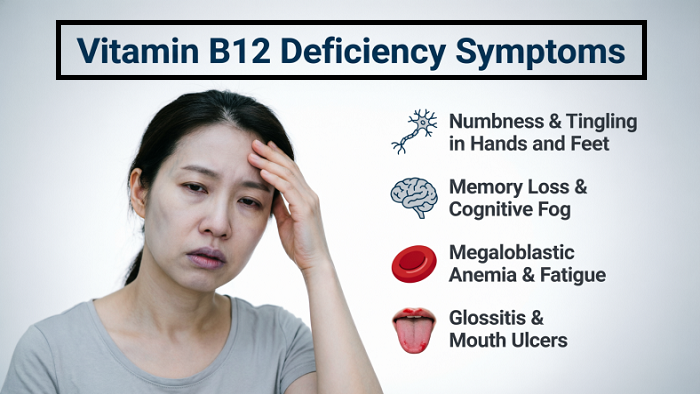
Vitamin B12 Deficiency Symptoms You Shouldn’t Ignore
Last Updated on 03/14/2026 by DrHelal
Vitamin B12 deficiency symptoms can sneak up on you. They often develop gradually, making them hard to notice. Yet, ignoring these signs can lead to serious health issues from fatigue to nerve problems. The symptoms are diverse, recognizing them early can prevent permanent damage.
Did you know that a simple blood test can detect vitamin B12 deficiency? Correcting it is often straightforward! But many people remain unaware of the signs.
In this article, we’ll dive deep into the overlooked vitamin B12 deficiency symptoms, who’s most at risk, and what steps you can take. So, keep reading to learn more. Your health might depend on it.
What Is Vitamin B12?
Vitamin B12, also known as cobalamin, is a water-soluble vitamin that your body can’t produce on its own (n essential nutrient). So, you have to get it from the foods you eat or from supplements.
Why Is It Important?
B12 is important because it’s responsible for several key functions in your body RBCs, brain and DNA. Without enough vitamin B12, these processes can be disrupted, leading to a variety of health problems. Source: Harvard | Vitamin B12 • The Nutrition Source
- Making healthy red blood cells
- Supporting the of your nerves and brain.
- Producing DNA, the genetic material in all your cells.
The good news is that vitamin B12 deficiency is often easy to diagnose and treat. However, it’s important to recognize the symptoms early to avoid long-term complications.
Common Vitamin B12 Deficiency Symptoms
In some cases, you might not notice any symptoms at first. However, as the deficiency progresses, symptoms can become more noticeable [Cleveland clinic]. The symptoms can be divided into two main categories: physical and neurological.
Physical Symptoms
- Feeling tired all the time.
One of the most common early signs of vitamin B12 deficiency is feeling tired or weak all the time. This happens because your body doesn’t have enough B12 to make healthy red blood cells. As a result of less RBCs, less oxygen is reaching your tissues. - Skin is pale or yellowish.
A lack of red blood cells can cause your skin to look pale or yellowish tinge, a condition known as jaundice. - Shortness and difficulty of breath.
When your body doesn’t have enough oxygen, you may feel short of breath. You might notice that your breathing is faster than usual, even when you’re at rest. - Dizziness or lightheadedness.
Low oxygen levels can also cause dizziness or lightheadedness, especially when you stand up quickly. - Headaches.
Many people with vitamin B12 deficiency experience frequent headaches, which can range from mild to severe. - Weight loss (undesired).
Due to a loss of appetite or difficulty absorbing nutrients. - Sore or red tongue.
B12 deficiency can cause undesired weight loss by affecting appetite and metabolism. Low B12 can lead to nausea and a reduced desire to eat. This hinders nutrient absorption and energy production. It ultimately results in weight loss. - A swollen, inflamed tongue (known as glossitis) or mouth ulcers.
In some cases, the tongue may also look smooth and shiny. - Palpitations.
You may notice that your heart is beating faster than usual. It may also be beating harder than usual. Alternatively, you might have an irregular heartbeat.
Neurological Symptoms
Vitamin B12 deficiency can cause physical symptoms. It can also affect your nervous system, leading to a range of neurological symptoms. These can be particularly serious, as some may be irreversible if left untreated [NHS].
- Numbness or tingling.
A common neurological symptom is a feeling of numbness, tingling, or “pins and needles” in your hands, feet, or legs. This is caused by damage to the nerves [Harvard Health]. - Muscle weakness.
You may notice that your muscles feel weak or that you have trouble moving around. - Problems with balance and coordination.
Vitamin B12 deficiency can affect your balance and coordination, making it difficult to walk or stand steadily. - Cognitive changes.
- You may experience problems with memory, concentration, understanding, or judgment. In severe cases, this can lead to confusion or even dementia [NHS].
- Mood changes.
Vitamin B12 deficiency can also affect your mood, causing feelings of depression, anxiety, irritability, or apathy. - Vision problems.
In some cases, vitamin B12 deficiency can cause eye problems, such as blurred vision or double vision. - Incontinence.
In severe cases, vitamin B12 deficiency can cause problems with bladder or bowel control [Harvard Health].
| Category | Symptoms | Description |
|---|---|---|
| Physical Symptoms | Fatigue and weakness | Less RBCs > reduced oxygen delivery. |
| Pale or yellowish skin | Less RBCs > Anemia> to jaundice. | |
| Shortness of breath or rapid breathing | less RBCs = low oxygen levels in the body= Rapid breathing to compensate. | |
| Dizziness or lightheadedness | Especially when standing up quickly, from decreased oxygen supply to the brain. | |
| Headaches | Messing with your nervous system. That can range from mild to severe. | |
| Weight loss | Due to loss of appetite or nutrient absorption. | |
| Sore or red tongue (glossitis) | Swollen, inflamed, or smooth, shiny tongue. | |
| Palpitations | Less RBCs=Less oxygen = more heart rate to give more blood. | |
| Neurological Symptoms | Numbness or tingling | Caused by nerve damage. |
| Muscle weakness | Weak muscles or difficulty moving. | |
| Problems with balance and coordination | Difficulty walking or standing steadily. | |
| Cognitive changes | Memory issues, difficulty concentrating, confusion, or even dementia in severe cases. | |
| Mood changes | Depression, anxiety, irritability, or apathy. | |
| Vision problems | Blurred or double vision. | |
| Incontinence | Bladder or bowel control problems. |
Who Is at Risk of Vitamin B12 Deficiency?
While anyone can develop vitamin B12 deficiency, some people are at higher risk than others. These include:
- Vegans and vegetarians
- Older adults
- People with absorption issues
- People who have had stomach or intestinal surgery
- People who take certain medications
- People who drink too much alcohol
How Is Vitamin B12 Deficiency Diagnosed?
Diagnosis involves a physical exam and blood tests check your vitamin B12 levels. Hemoglobin and hematocrit levels are checked to identify anemia. In some cases, your doctor may also order other tests to determine the cause of the deficiency.
Treatment
Treatment on the cause and severity of the condition. In most cases, it involves taking vitamin B12 supplements taken orally, as a nasal spray, or by injection. However, injections may be necessary for more severe cases or for people who have trouble absorbing B12 [Harvard Health].
Note that some symptoms of vitamin B12 deficiency may take months to improve, even with treatment. In some cases, neurological symptoms may be permanent if the deficiency is left untreated for too long [NHS]. That’s why it’s so important to recognize the symptoms early and seek treatment as soon as possible.
Summary
Vitamin B12 deficiency is a common condition. It can cause a range of symptoms, from mild fatigue and weakness to more serious neurological problems. The key is to recognize the vitamin B12 deficiency symptoms early. If you’ve any of the symptoms, talk to your doctor today.
If you suspect that you may have symptoms, Helal Medical can help, offering quick, private, and convenient testing options. You may contact us here: Facebook page
Read More About Vitamin B12:
- Atypical Symptoms of B12 deficiency
- Causes of Vitamin B12 Deficiency
- 5 Top Vitamin B12 Benefits, You Need to Know
- Vitamin B12 and Red Blood Cell Formation: Why It Matters
- 5 vitamins to repair your nerves
Disclaimer:
This article is for informational purposes only. It is not intended to be a substitute for professional medical advice, diagnosis, or treatment. Always seek the advice of your physician. Consult with any other qualified healthcare provider regarding any questions you may have about a medical condition.
Discover more from Helal Medical Manila
Subscribe to get the latest posts sent to your email.


