
Sexually transmitted Infections (STIs): A Comprehensive Guide
Last Updated on 09/04/2026 by DrHelal, MD Medical Doctor with 50+ Years of Clinical Practice • [Read Full Author Bio & Credentials →]
Sexually Transmitted Infections (STIs), formerly known as STDs, are a significant public health concern. They affect millions of people globally, regardless of age, gender, or sexual orientation. Understanding Sexually Transmitted Infections (STIs) is the first step toward prevention, early detection, and effective management.
Knowing the facts about STIs could protect you and others from serious health consequences. Embracing open communication can lead to safer sexual practices.
In this article, we will delve into the common types of Sexually Transmitted Infections (STIs). We will explore their symptoms and transmission routes. Most importantly, we will cover how to prevent them. We will also discuss the importance of testing and treatment.
Continue reading to explore the world of Sexually Transmitted Infections. You will learn what you need to know to stay informed and healthy.
Why Understanding STIs Matters
Because they have numerous serious health effects: from mild discomfort to severe cases. They can also lead to long-term health issues like infertility and an increased risk of certain cancers.
STIs are infections passed from one person to another through sexual contact: vaginal, anal, or oral sex. They can also be transmitted from mother to child during pregnancy or childbirth.
During my practice as a medical doctor at Helal Medical Manila, I have observed that some STDs are far less common than many people assume. Certain infections people fear most actually appear rarely in our clinic, often linked to specific risk factors or regions, making general assumptions about prevalence misleading for most patients. HIV is one of them!
Conversely, other STDs prove remarkably common here, in the Philippines, seen frequently. Many cases go unnoticed due to mild or no symptoms, this is the reason of their high spread. I used to advicse my patients to undergo testing if they were probably exposed to infection.
What Are Sexually Transmitted Infections (STIs)?
STIs are caused by bacteria, viruses, or parasites. They are transmitted through bodily fluids like semen, vaginal secretions, blood, or through skin-to-skin contact.
Common Types of Sexually Transmitted Infections (STIs)
Bacterial STIs
- Chlamydia: Often asymptomatic, but can cause pelvic inflammatory disease (PID) and infertility.
- Gonorrhea: Can cause discharge and painful urination; can lead to PID and infertility.
- Syphilis: Progresses through stages, can cause serious long-term health problems if untreated.
- Bacterial Vaginosis (BV): While not always sexually transmitted, it’s linked to sexual activity and can increase STI risk.
Viral STIs
- Human Immunodeficiency Virus (HIV): Attacks the immune system, leading to AIDS if untreated.
- Herpes Simplex Virus (HSV): Causes painful sores; can be transmitted even when no sores are visible.
- Human Papillomavirus (HPV): It is the most common STI. Many strains are harmless. However, some can cause genital warts or cancer, including cervical, anal, and oral cancer.
- Hepatitis B (HBV): Affects the liver; can become chronic and lead to serious liver damage.
Parasitic STIs
- Trichomoniasis: Causes vaginal discharge and itching; often asymptomatic in men.
- Pubic Lice (Crabs): Tiny insects that infest the pubic hair.
- Scabies: Mites that burrow into the skin, causing intense itching.
In the following lines, we will discuss transmission routes, the symptoms and risks of these common Sexually Transmitted Infections (STIs). Also, we will cover STI testing with, treatment and prevention.
Classification of Sexually Transmitted Diseases (STDs)
| Category | Cause | Common Examples |
|---|---|---|
| Bacterial | Bacteria | Chlamydia, Gonorrhea, Syphilis, Chancroid |
| Viral | Viruses | HIV/AIDS, Herpes, Hepatitis B, HPV (Genital Warts) |
| Parasitic | Parasites | Trichomoniasis, Pubic Lice, Scabies |
| Fungal | Fungi | Genital Yeast Infection |
Transmission Routes of STIs
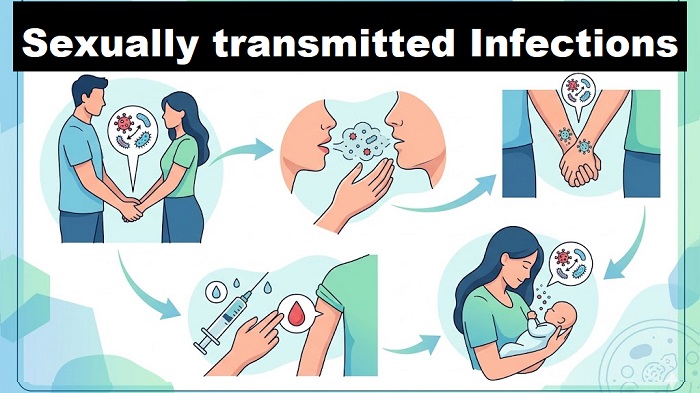
Sexually transmitted infections spread primarily through vaginal, anal, or oral sex without protection, exchanging bodily fluids like semen, vaginal fluids, and blood. Close skin-to-skin intimate contact also passes certain infections, even without penetration or fluid exchange.
Less common routes include sharing contaminated needles for drugs, tattoos, or piercings, and from an infected mother to her baby during pregnancy, childbirth, or breastfeeding. Casual contact like hugging, sharing meals, or using toilets generally does not spread STIs.
| Primary Routes | Other Routes |
|---|---|
| Unprotected vaginal, anal, or oral sex: Exchange of semen, vaginal fluids, or blood; close skin-to-skin intimate contact | Sharing contaminated needles; Mother-to-child during pregnancy, birth, or breastfeeding. Skin Tp Skin: Herps, HPV |
Symptoms of Sexually Transmitted Infections (STIs)
Many STIs have no symptoms, especially in the early stages. This is why regular testing is crucial. When symptoms do occur, they can vary widely:
Common signs and symptoms to watch for include unusual discharge from the penis or vagina, pain or a burning sensation while urinating, and the appearance of sores, bumps, or rashes on the genitals, anus, or mouth.
You may also notice itching or irritation around the genital area, experience pain during sexual intercourse, feel discomfort or pain in the lower abdomen, or develop flu-like symptoms such as fever and body aches.
Asymptomatic Sexually Transmitted Diseases
Many sexually transmitted diseases show no obvious symptoms long after infection; for months or years. Yet the infection remains active and transmissible. Common examples, without symptoms at the start, include chlamydia, gonorrhea, HIV, and syphilis.
People may feel healthy, unaware they carry an infection that can silently harm their body and spread to others. Without visible signs, sores, discharge, or pain, these hidden infections often go undiagnosed. Over time, they can cause serious damage: infertility, pelvic inflammation, or increased cancer risk.
Regular testing offers the only reliable way to detect asymptomatic STDs early. Experts advise routine screening, even when feeling fine. Timely diagnosis allows quick, effective treatment, preventing complications and stopping further spread to protect both your health and your loved ones. (Source: Getting Tested for STIs | STI | CDC)
The Importance of Testing for STIs
Regular testing is the only way to know for sure if you have an STI. Many STIs can be asymptomatic, meaning they don’t show any signs or symptoms. (Read more from the links at the article bottom)
Who Should Get Tested?
Anyone who is sexually active should get tested regularly, especially those with new or multiple partners. Pregnant women, people experiencing unusual symptoms, and partners of anyone diagnosed with an STI also need testing. These groups face higher risks and require timely care to stay safe and protect others.
Types of STI Tests
- Urine tests (for chlamydia, gonorrhea, trichomoniasis)
- Blood tests (for HIV, syphilis, herpes, hepatitis B)
- Swabs of sores or discharge (for herpes, gonorrhea, chlamydia)
Prevention Of Sexually Transmitted Infections (STIs)Prevention Of Sexually Transmitted Infections (STIs)
Condoms: Consistent and correct use of condoms and other barrier methods during every sexual lowers infection risk. These products block direct exchange of bodily fluids and reduce skin-to-skin contact, creating a protective barrier against most common sexually transmitted infections.
Regular STI testing, especially with new or multiple partners, helps detect infections early before symptoms appear. Getting timely treatment and openly discussing sexual health and history with partners builds trust, sand stops infections from spreading further.
Vaccines offer strong protection against certain STIs such as HPV and hepatitis B. Limiting sexual partners, avoiding sharing personal items like needles or sex toys, and practicing good personal hygiene also effectively reduce the chance of contracting and spreading these infections.
Treatment and Management of STIs
Treatment depends on the specific STI. Many bacterial STIs are curable with antibiotics. Viral STIs, like HIV and herpes, can be controlled with antiviral medications. These medications help manage symptoms and reduce transmission. However, they are not curable.
Bacterial STIs
- Antibiotics are prescribed for chlamydia, gonorrhea, syphilis, and trichomoniasis.
- It is crucial to complete the full course of antibiotics.
- Partners should also be tested and treated.
Viral STIs
- HIV: Antiretroviral therapy (ART) can manage the virus, allowing people to live long, healthy lives.
- Herpes: Antiviral medications can reduce the frequency and severity of outbreaks.
- HPV: Genital warts can be treated; vaccines prevent infection. Regular screenings for cervical cancer are vital for women.
- Hepatitis B: Vaccination prevents infection. Antiviral medications can manage chronic HBV.
In Helal Medical Manil, we stress the importance of seeking prompt professional medical advice for diagnosis and treatment.
The Long-Term Health Implications of Untreated STIs
Untreated STIs can lead to serious and permanent health problems.
- Infertility: PID caused by chlamydia and gonorrhea can damage reproductive organs.
- Ectopic Pregnancy: Increased risk due to PID.
- Cancer: HPV is linked to cervical, anal, oral, and penile cancers. Untreated syphilis can also lead to long-term complications.
- Chronic Liver Disease: Hepatitis B can lead to cirrhosis and liver cancer.
- Neurological Problems: Syphilis can affect the brain and nervous system.
- Increased HIV Risk: STIs can make it easier to contract or transmit HIV.
In this article, we reiterate that timely treatment of Sexually Transmitted Infections (STIs) is vital to prevent these serious complications.
Conclusion: Empowering Yourself Through Knowledge
Sexually Transmitted Infections (STIs) are common, but they are also largely preventable and treatable. You must understand the risks, transmission routes, symptoms, and prevention methods. This knowledge is essential for protecting your sexual health. It also safeguards the health of your partners.
In this article, we have covered the essential aspects of Sexually Transmitted Infections (STIs). Regular testing, open communication with partners, consistent condom use, and vaccination are your best defenses. Don’t hesitate to seek medical advice and get tested regularly. Your sexual health is an important part of your overall well-being.
Sources:
- How to Prevent STIs | STI | CDC – Centers for Disease Control and: Apr 9, 2024 · This page includes information about prevention, testing for sexually transmitted infections (STIs) as well as related resources. Safer sex practices can protect you from STIs.
- Getting Tested for STIs | STI | CDC: Mar 17, 2026 · There are three ways you can get tested for STIs: A healthcare provider can perform tests in their office. They may recommend testing for you, even if you do not have symptoms,)
- World Health Organization (WHO) – Sexually Transmitted Infections: Offers global statistics, facts, and guidance on STIs. https://www.who.int/news-room/fact-sheets/detail/sexually-transmitted-infections-(stis)
- What Are STDs? | Sexually Transmitted Diseases Information: STDs are infections that are spread from one person to another, usually during vaginal, anal, and oral sex. They’re really common, and lots of people who have them don’t have any symptoms.
Tables Showing the Prevalence of STIs Globally
| STI Worldwide | Estimated new cases per year |
|---|---|
| Chlamydia | 131 million |
| Gonorrhea | 78 million |
| Syphilis | 5.6 million |
| Human papillomavirus (HPV) | 290 million |
| HIV | 38 million |
Table: Types of Sexually transmitted Infections (STIs)
| 1. Bacterial | Causative Bacterium | New Cases per Year Worldwide | Symptoms | If untreated | Treatment |
|---|---|---|---|---|---|
| Chlamydia | Chlamydia trachomatis | 131 million | Asymptomatic or mild symptoms | PID and infertility in women | Antibiotics (Azithromycin, Doxycycline, Cefixime) |
| Gonorrhea | Neisseria gonorrhoeae | 78 million | Asymptomatic or mild symptoms | PID, infertility, DGI | Antibiotics (Azithromycin, Doxycycline, Cefixime) |
| Syphilis | Treponema pallidum | 6.3 million | Three stages with varying symptoms | Brain damage, heart disease, and death | Antibiotics (Penicillin) |
| 2. Viral | Causative Agent | Estimated new cases per year | Symptoms | Consequences if untreated |
|---|---|---|---|---|
| Herpes (HSV-1) | Herpes simplex virus type 1 | 3.7 billion | painful, fluid-filled blisters | can recur periodically. |
| Herpes (HSV-2) | Herpes simplex virus type 2 | 417 million | painful, fluid-filled blisters | can recur periodically. |
| HPV | Human papillomavirus | 14 million | genital warts, cervical cancer | cervical cancer |
| HIV | Human immunodeficiency virus | 38 million | asymptomatic at early stage | AIDS |
| Hepatitis B | Hepatitis B virus | 257 million | asymptomatic at early stage | liver damage and cancer |
| Hepatitis C | Hepatitis C virus | 71 million | asymptomatic at early stage | liver damage and cancer |
| 3. Parasitic | Causative Agent | Estimated new cases per year | Symptoms | Consequences if untreated |
|---|---|---|---|---|
| Trichomoniasis | Trichomonas vaginalis | 270 million | vaginal discharge, itching, painful urination | PID, Increased risk of HIV transmission |
| Pubic lice (Crabs) | Pthirus pubis | not available | itching, redness, bites on skin | none |
| Scabies | Sarcoptes scabiei | not available | itching, rash with red bumps | none |
| Giardiasis | Giardia lamblia | not available | diarrhea, abdominal cramps, gastrointestinal symptoms | none |


Read More About STDs:
Sexually Transmitted Diseases (STDs):
STDs in the Philippines
STDs Lab tests, what are the most common tests? The Ultimate Guide
Sexually Transmitted Diseases Prevalence (STDs) Globally
Discover more from Helal Medical Manila
Subscribe to get the latest posts sent to your email.


