
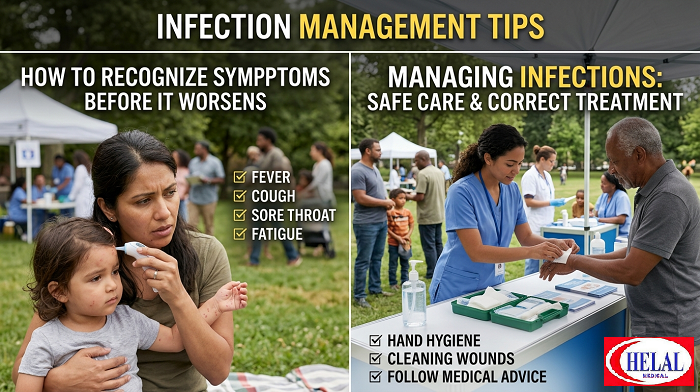
Infection Management Tips: Safe Care & Correct Treatment
Last Updated on 09/24/2026 by DrHelal, MD Medical Doctor with 50+ Years of Clinical Practice • [Read Full Author Bio & Credentials →]
Infection management go far beyond just swallowing pills; include knowing when to rest, how to ease discomfort safely, and following medical advice. These meant to protect both you and future generations.
Once you recognize the causes and warning signs of an infection, the next step is infection management. This means controlling symptoms, helping your body fight off germs, and preventing the illness from spreading or getting worse.
This article explains what infection management means. At the end of the article, you will learn about home care, when to use medical treatment and What to Use! Keep reading to learn simple tips to proper management of infection and avoid common mistakes.
What Does Infection Management Actually Mean?
It means preventing, detecting, treating, and stopping germ spread. This leads to protecting patients, staff, and communities from illness. At its simplest, infection management covers two main goals:
- Support your immune system
- Treat safely
Not every infection needs strong medication. In fact, most mild infections — like common colds, flu, or minor skin rashes — get better on their own with good home care.
Home Care: The Foundation of Recovery
For most mild to moderate infections, home care is the first step. Here are key infection management tips you can use for home care:
1. Rest and Sleep
Your body uses a lot of energy to fight germs. When you rest, all that energy goes toward your immune system instead of daily tasks. Avoid work, school, or heavy activity until fever is gone and strength returns.
2. Drink Plenty of Fluids
Fever, sweating, vomiting, and diarrhea cause fluid loss. Dehydration makes symptoms worse and slows recovery.
- Best choices:
Water, oral rehydration salts (ORS), clear soups, fruit juice diluted with water, coconut water. - Avoid:
Alcohol, too much coffee or strong tea — these can dry you out more.
3. Control Fever and Pain Safely
If fever or discomfort is making you feel very weak, you can use medicine to feel more comfortable — but always follow the rules:
- Paracetamol:
Safe for most people, including children and pregnant women, to lower fever and reduce body aches. - Note: Do not give aspirin to children under 18; it carries a risk of a rare but serious condition called Reye’s syndrome.
- Important tip:
Fever itself helps kill germs, so you only need to lower it if it causes discomfort or is very high.
4. Eat Light, Nutritious Meals
Loss of appetite is normal, but your body still needs fuel. Eat small portions of easy‑to‑digest foods:
- Rice, porridge, boiled potatoes, bread
- Steamed vegetables, boiled chicken or fish
- Yogurt, fruits rich in Vitamin C
Medical Treatment: When and What to Use
When home care is not enough, doctors may prescribe specific medicines. Knowing how they work helps you use them correctly.
1. Antibiotics: Use Only When Needed
Antibiotics kill or stop the growth of bacteria — but they do not work on viruses like colds, flu, dengue, or COVID‑19.
- ✅ Use for: Strep throat, urinary tract infections, typhoid, bacterial pneumonia, infected wounds.
- ❌ Do NOT use for: Colds, coughs, flu, most sore throats.
- Important rule: If prescribed, finish the full course — even if you feel better after 2 days. Stopping early lets surviving bacteria grow back stronger, leading to antibiotic resistance — a serious global problem where medicines no longer work.
2. Antivirals
These target viruses, but they work best when taken very early — usually within 24 to 48 hours of symptoms starting. Examples include medicines for influenza, COVID‑19, and herpes. They do not “cure” instantly, but they shorten illness and lower risk of complications.
3. Antifungal and Antiparasitic
- Antifungals:
Creams, ointments, or pills for ringworm, athlete’s foot, yeast infections. - Antiparasitic:
Used for infections like malaria, intestinal worms, or amoebiasis — always taken exactly as prescribed.
Common Mistakes to Avoid
Many people unknowingly make choices that slow recovery or create new risks. Watch out for these:
- Self‑medicating: Buying antibiotics without a prescription is dangerous and illegal in many places.
- Sharing medicine: What works for one person may be wrong or even harmful for another.
- Overusing fever medicine: Suppressing mild fever too often can slow your body’s natural defense.
- Ignoring worsening symptoms: If you do not improve after 2–3 days, or if red flags appear, see a doctor right away.
Management by Infection Type
| Type of Infection | Main Management Approach | Medicine Needed? |
|---|---|---|
| Viral (Cold, Flu, Dengue) | Rest, fluids, fever control, monitor closely | No antibiotics — only supportive care |
| Bacterial (Strep, Typhoid, UTI) | Rest, fluids, complete full treatment course | Antibiotics as prescribed only |
| Fungal (Ringworm, Athlete’s Foot) | Keep area clean and dry, good hygiene | Antifungal cream or pills |
| Parasitic (Worms, Malaria) | Sanitation, safe food/water | Specific antiparasitic drugs |
| Mild Wound Infection | Clean with soap/water, apply clean dressing | Antibiotics only if spreading or severe |
Summary
Good infection management tips start with supporting your body’s natural defenses through rest, fluids, and proper nutrition. Medicines play a role, but only when used correctly — antibiotics do not work on viruses, and overusing them causes resistance. By understanding what each treatment does and following professional advice, you recover faster, reduce complications, and help protect your community from harder‑to‑treat infections in the future.
Sources for More Information
- World Health Organization (WHO): Use of Antibiotics and Medicines
- Centers for Disease Control and Prevention (CDC): Managing Infectious Diseases at Home
- Department of Health Philippines: Safe Use of Medicines
Connect with Helal Medical:
If you suspect that you may have symptoms, Helal Medical can help, offering quick, private, and convenient testing options. You may contact us here: Facebook page, Get Free medical consultation!
This article provides general information. Always consult with a healthcare professional for personalized medical advice.
Read More About Infection:
Early Warning Signs of Infection: How to Recognize them
Early Warning Signs of Infection: How to Recognize them
Full Cycle of Infectious Diseases: Infection Control Cycle, From…
Swollen lymph Nodes – Helal Medical Manila
Swollen lymph Nodes – Helal Medical Manila
Discover more from Helal Medical Manila
Subscribe to get the latest posts sent to your email.


