
STDs in the Philippines: What You Need to Know for Better Sexual Health
Last Updated on 09/04/2026 by DrHelal, MD Medical Doctor with 50+ Years of Clinical Practice • [Read Full Author Bio & Credentials →]
Many people feel embarrassed or afraid to talk about sexually transmitted diseases (STDs), also called sexually transmitted infections (STIs). But avoiding the conversation only makes things worse.
In the Philippines, thousands of cases go undetected every year because people don’t know the facts, miss early signs, or delay getting help. STDs in the Philippines are common, but they are treatable, and mostly preventable when you have the right information.
This guide explains which infections are most widespread, how to spot them, where to get tested, and simple steps you can take to protect yourself and your partners. Keep reading—knowing your status and acting early is the most powerful way to stay healthy.
Most Common STDs in the Philippines
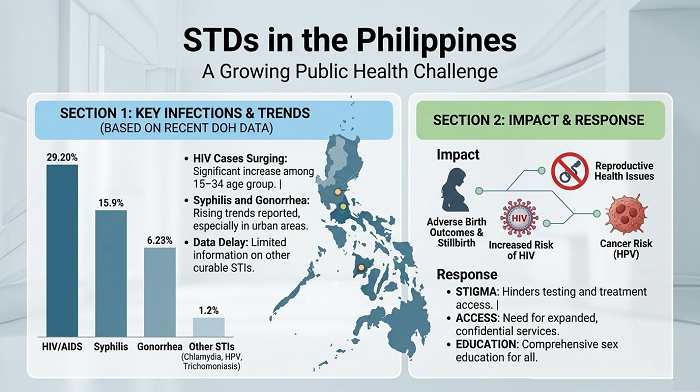
Studies show that trichomoniasis is the most frequently reported STI, followed by chlamydia, gonorrhea, syphilis, and HIV. Many infections have no obvious symptoms at first, which is why regular testing is so important.
Trichomoniasis
- Cause: A tiny parasite
- Symptoms: Itching, burning when urinating, unusual discharge (yellowish or frothy), or pain during sex. Often has no signs at all.
- Treatment: Cured easily with prescription antibiotics.
Chlamydia
- Cause: Bacteria
- Symptoms: Pain while urinating, discharge, or lower belly pain—but up to 70% of people have no symptoms. If untreated, it can cause infertility or pelvic inflammatory disease.
- Treatment: Antibiotics; both partners must be treated to stop reinfection.
Gonorrhea
- Cause: Bacteria
- Symptoms: Thick discharge, pain urinating, or swollen testicles. Can infect the throat or rectum with no signs. Antibiotic resistance is rising, so follow your doctor’s instructions closely.
- Treatment: Specific antibiotics prescribed by a doctor.
Syphilis
- Cause: Bacteria
- Symptoms: Starts with a painless sore, then a rash, fever, or swollen glands. Can lie dormant for years and damage organs if untreated.
- Treatment: Penicillin or other antibiotics—very effective in early stages.
HIV and AIDS
- Status: Cases grow steadily—about 55 new infections daily as of 2025. Most common among men who have sex with men, young adults 15–24, and sex workers.
- Symptoms: Early flu-like signs, then long-term weakening of the immune system.
- Management: No cure, but antiretroviral therapy (ART) keeps virus levels low and lets people live normal lives. PrEP and PEP help prevent infection.
Other Common Infections
- Genital Herpes: Painful blisters; managed but not cured with antiviral medicine.
- HPV: Causes warts and cervical cancer; prevented by vaccine.
- Hepatitis B: Affects the liver; vaccine-preventable.
Signs You Should Get Checked
Many STDs show no symptoms for months or years. See a doctor right away if you notice:
- Pain or burning when peeing
- Unusual discharge or bleeding
- Sores, warts, or blisters near genitals or mouth
- Itching, redness, or swelling
- Unexplained fever, fatigue, or swollen lymph nodes
Where to Get Tested & Treated in the Philippines
Testing is confidential and affordable or free at many places:
- Social Hygiene Clinics: Run by local government; low-cost or free testing and treatment.
- DOH Accredited Centers: Hospitals and private labs like The Medical City, Pulse Clinic.
- HIV Testing Hubs: Free anonymous HIV tests nationwide.
- Private Clinics: Offer same-day results and counseling.
What to expect: Urine, blood, or swab samples; quick counseling; results in 1–3 days; treatment given immediately if needed.
Prevention: Simple Steps That Work
You can lower your risk greatly by:
- Using condoms correctly every time for vaginal, anal, and oral sex.
- Getting tested regularly—every 3–6 months if you have new partners.
- Talking openly with partners about sexual health and testing history.
- Getting vaccinated: HPV and Hepatitis B shots protect you long-term.
- Limiting partners and choosing mutually monogamous relationships.
- Avoiding sharing needles or unsterile tools.
Quick Facts
| Infection | Type | Curable? | Most Common Symptom |
|---|---|---|---|
| Trichomoniasis | Parasite | Yes | Itching / unusual discharge |
| Chlamydia | Bacteria | Yes | Often none; pain peeing |
| Gonorrhea | Bacteria | Yes | Discharge / pain peeing |
| Syphilis | Bacteria | Yes | Painless sore / rash |
| HIV | Virus | No (manageable) | Often none early; flu-like |
| Herpes | Virus | No (manageable) | Blisters / sores |
| HPV | Virus | No (preventable) | Warts / often none |
| Hepatitis B | Virus | No (preventable) | Often none; liver effects |
Frequently Asked Questions
1. Can I get an STD even if I use condoms?
Condoms reduce risk greatly but do not cover all skin areas. Testing is still the only sure way to know your status.
2. Do I need my parents’ permission to get tested?
In the Philippines, you can seek sexual health services confidentially if you understand the procedure. Social Hygiene Clinics and DOH centers protect your privacy.
3. If I have no symptoms, does that mean I’m clear?
No. Most infections can stay hidden for months or years. Testing is the only way to be sure.
Summary
STDs in the Philippines are common, but silence and delay make them worse. Most are curable with simple medicine; viral infections can be managed well. The key is knowing the facts, getting tested regularly, talking honestly with partners, and using protection. You have every right to confidential, respectful care—don’t let fear stop you from protecting your health and the health of those you care about.
Trusted Sources
- Department of Health Philippines – HIV & STI Program
- World Health Organization Western Pacific – STI Guidelines
- HIV/AIDS Data Hub for Asia Pacific – STI Situation in the Philippines
Read More About STDs:
Comprehensive Classification of Sexually Transmitted Diseases (STDs)
Sexually Transmitted Diseases (STDs): Risks, Symptoms, and Prevention
Sexually transmitted Infections (STIs): A Comprehensive Guide
Discover more from Helal Medical Manila
Subscribe to get the latest posts sent to your email.


