
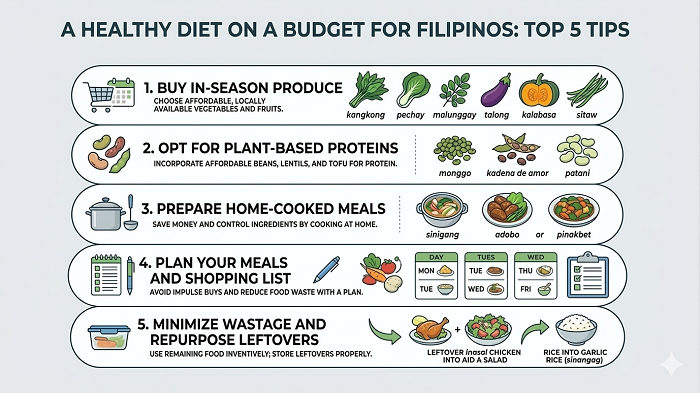
A Healthy Diet on a Budget for Filipinos: Top 5 Tips
Last Updated on 03/19/2026 by DrHelal
Top 5 tips for Filipinos to maintain a healthy diet on a budget. (Sagana sa Nutrisyon, Tipid sa Bulsa: Top 5 Tips for a Healthy Diet on a Budget for Filipinos.) – Read in Arabic
Many Filipinos believe that eating healthily requires expensive ingredients. But I will show you that you can enjoy a nutritious and delicious diet without breaking the bank. All Filipinos can achieve a healthy diet on a budget; the key is using the right strategies. Focus on local, affordable options.
What if I told you that you could transform your health and your wallet at the same time? That delicious and nutritious meals don’t have to be expensive? Stay with us as we reveal the top 5 secrets to eating well. You can do this without emptying your pocket. These tips are tailored specifically for the Filipino lifestyle.
In this article, I will share the top 5 tips for a healthy diet on a budget tailored for Filipinos. And also for those living in the Philippines. I’ll focus on practical steps that are easy to implement and sustainable in the long run.
Introduction: Why a Healthy Diet Doesn’t Have to Be Expensive
Eating a healthy diet is essential for overall well-being providing the nutrients needed for energy, growth, and disease prevention. Unfortunately, many people perceive healthy eating as costly, especially in a country like the Philippines, where economic disparities exist.
With smart planning, you can focus on affordable, locally sourced foods. This approach helps achieve a balanced and nutritious diet on a budget. You won’t have to sacrifice taste or satisfaction.
Tip #1: Embrace Seasonal and Local Produce
Buying fruits and vegetables that are in season is very effective for saving money on groceries. Because they are more abundant and therefore cheaper.
Benefits of Seasonal Eating
- Lower Prices because seasonal produce is more affordable.
- Fresher Taste: In-season fruits and vegetables are at their peak flavor.
- Buying local supports farmers and the community.
Practical Examples
- Mangoes: During the summer months they are plentiful and cheap.
- Bananas: A year-round staple that is always affordable.
- Kangkong (Water Spinach) and Malunggay (Moringa): Nutritious and inexpensive leafy greens.
Tip #2: Prioritize Whole Grains and Affordable Protein Sources
For budget-conscious Filipinos, prioritize whole grains like brown rice and oats for sustained energy. Affordable protein comes from eggs, legumes (beans, lentils), canned sardines, and tofu. These staples provide essential nutrients without breaking the bank, supporting overall health and well-being.
Whole Grains
- Brown Rice: More nutritious than white rice and often available at a reasonable price.
- Corn: Versatile and can be used in many dishes.
- Oatmeal: A budget-friendly and filling breakfast option.
Affordable Protein Sources
- Eggs: A versatile and inexpensive source of protein.
- Beans and Legumes: Munggo (mung beans), kidney beans, and lentils are packed with protein and fiber.
- Tofu: A plant-based protein option that is both affordable and versatile.
- Small Fish: Sardines and other small, locally caught fish are rich in omega-3 fatty acids and protein.
Tip #3: Plan Your Meals and Shop Smart
Meal planning is important for Filipinos to make healthy diet on a budget and to avoid impulse purchases.
Meal Planning Steps
- Create a Weekly Menu in advance.
- Make a Grocery List: Stick to your list to avoid impulse buys.
- Check for Sales and Discounts
- Buy in Bulk (When Practical): Some items, like rice and beans, are cheaper when bought in bulk.
Smart Shopping Tips
- Avoid Pre-packaged Foods, they are often more expensive.
- Shop at Local Markets (Palengke) where prices are often lower than in supermarkets.
- Compare Prices to find the best deals.
Tip #4: Cook at Home and Minimize Eating Out
Eating out regularly can quickly drain your budget. But cooking at home allows you to control ingredients and portion sizes.
Benefits of Home Cooking
- Cost Savings, it’s significantly cheaper than eating out.
- Healthier Choices as you control the ingredients and can make healthier choices.
- Portion Control: avoid overeating by controlling portion sizes.
Budget-Friendly Filipino Dishes
- Adobo: A classic dish that can be made with chicken or pork.
- Sinigang: A sour soup that can be made with various meats and vegetables.
- Ginisang Munggo: A nutritious and affordable mung bean stew.
- Vegetable Stir-fries: Use seasonal vegetables and affordable protein sources like tofu or eggs.
Tip #5: Grow Your Own Food (Even in a Small Space)
Even if you have limited space, you can grow some of your own vegetables and herbs. Personal i planted some easy-to-grow vegetables in my house garden. They include kangkong (water spinach), pechay, tomatoes, chili, and okra. These thrive in the tropical climate.
You can grow them in pots or small garden like mine. This provides me fresh produce right at home. I planted also moringa (malunggay), it is a nutritious and resilient option. Scroll down to watch my video!
Benefits of Home Gardening
- Fresh, Affordable Produce: Enjoy fresh, organic produce at a fraction of the cost.
- Reduces Grocery Bills: Save money on commonly used vegetables and herbs.
- Therapeutic and Rewarding: Gardening can be a relaxing and fulfilling hobby.
Easy-to-Grow Options
- Herbs: Basil, mint, and rosemary can be grown in pots.
- Leafy Greens: Kangkong, pechay (Chinese cabbage), and lettuce are relatively easy to grow.
- Tomatoes and Peppers: Can be grown in containers.
Vegetables that Grow Well in the Philippines and Their Health Benefits:
In the Philippines, kangkong, sitaw, and talong thrive, offering rich nutrients like vitamins A and C. And they offer fiber and antioxidants. These home-grown vegetables are delicious and packed with health benefits.
| Vegetable | Health Benefits |
|---|---|
| Kangkong | Rich in vitamins A & C, iron, fiber; supports eye health, immunity, digestion. |
| Sitaw | Good source of folate, vitamin C, fiber; promotes heart health, aids digestion. |
| Talong | Contains fiber, potassium, antioxidants; supports heart health, blood sugar control. |
| Okra | High in fiber, vitamins C & K, magnesium; aids digestion, manages blood sugar. |
| Ampalaya | Packed with vitamins A & C, iron, antioxidants; may help manage blood sugar. |
| Kamatis (Tomato) | Excellent source of vitamin C, lycopene; supports heart and skin health. |
Conclusion: Eating Healthy Is Possible on a Budget
Achieving a healthy diet on a budget for Filipinos is not only possible but also essential for long-term well-being. Embrace seasonal and local produce. Prioritize whole grains and affordable protein sources. Plan your meals and cook at home. Grow your own food. By doing this, you can enjoy nutritious and delicious meals without breaking the bank.
In this article, we have shared practical tips to help you achieve a healthy diet on a budget. Making informed choices and adopting these strategies can lead to significant savings and improved health outcomes. Remember, small changes can make a big difference.
Sources:
- Food and Nutrition Research Institute (FNRI) – Department of Science and Technology (DOST): This institute provides nutritional guidelines. It offers information specific to the Philippines. https://www.fnri.dost.gov.ph/
- World Health Organization (WHO) – Healthy Diet: https://www.who.int/news-room/fact-sheets/detail/healthy-diet
- United States Department of Agriculture (USDA) – ChooseMyPlate: Offers general guidance on healthy eating. https://www.choosemyplate.gov/
- Department of Health (DOH) Philippines: https://doh.gov.ph/ – Offers health guidelines and information on healthy lifestyles.
- Philippine Association of Nutrition (PAN): This is an organization of nutrition professionals. It provides resources and education on nutrition. PAN, Inc.
This article provides general information. Always consult with a registered dietitian or healthcare professional for personalized dietary advice.
If you suspect that you may have symptoms, Helal Medical can help, offering quick, private, and convenient testing options. You may contact us here: Facebook page
Read More about Plants in the Philippines:
- Plants in the Philippines Used as Food (As Is or After Processing)
- Top 10 Herbal Medicines in the Philippines: DOH Approved
- Traditional Filipino Medicine: Discover Its Healing Power
- https://helalmedical.com/a-healthy-diet-on-a-budget-top-5-tips/
This article provides general information. Always consult with a healthcare professional for personalized medical advice.
Discover more from Helal Medical Manila
Subscribe to get the latest posts sent to your email.


