
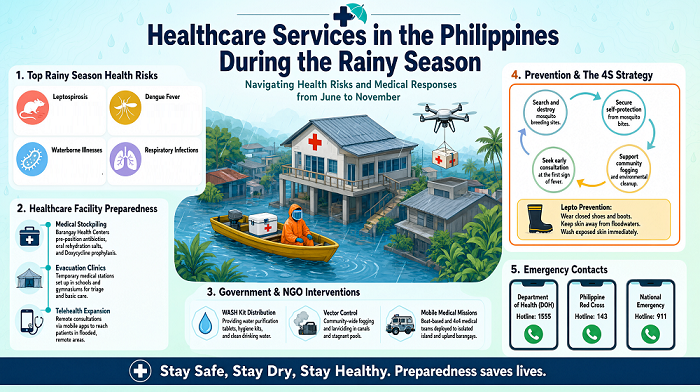
HEALTHCARE IN THE PHILIPPINES During the Rainy Season: What Every Family Should Know
Last Updated on 10/07/2026 by DrHelal, MD Medical Doctor with 50+ Years of Clinical Practice • [Read Full Author Bio & Credentials →]
Every year when the rains arrive, roads flood, public transport slows down, and clinics sometimes close their doors. When people get sick during the rainy season, reaching a doctor can become very difficult and dangerous. This reality makes understanding how to access HEALTHCARE Services IN THE PHILIPPINES one of the most important life skills any Filipino family can have.
As a doctor practicing at Helal Medical Manila, I hear almost every day from patients who waited too long because they did not know where to go, whom to call, or what benefits they can get. In this article, I will explore the healthcare services in the Philippines during rainy season, what government assistance covers, and practical steps you can take long before sickness strikes.
How Rainy Weather Affects Medical Access
Heavy rains and flooding create serious barriers that stop people from getting timely medical help. Flooded streets make travel dangerous or impossible, delaying care for hours or even days. When patients finally reach a facility, they often find it crowded with others facing the same situation. This pressure stretches limited supplies, medicines, and staff very thin. Facilities in flood-prone areas may temporarily close or reduce services, leaving families searching for help without knowing where else to turn. This delay allows simple sicknesses to become severe and life-threatening.
Even when facilities remain open, consistent medicine supply and laboratory services may be limited. Power outages can affect testing equipment, water contamination disrupts hygiene, and staff members themselves may struggle to report for duty. These challenges mean that HEALTHCARE Services IN THE PHILIPPINES can change drastically when storms arrive. Understanding which facilities stay operational and how to reach them safely before anyone falls ill can save precious time when every minute truly counts.
Understanding Your Rights and Health Benefits
The Universal Health Care Act ensures that every Filipino automatically receives basic health coverage through PhilHealth. This means you do not need to carry a physical card during declared disasters—your membership follows you, and facilities can verify your coverage using your name and number. Many people do not know this important fact, and they delay seeking care thinking they cannot prove membership during emergencies. Write your PhilHealth number on paper and keep it in your wallet and also save it securely on your phone so you always have access to it when you need help.
PhilHealth covers a wide range of services relevant during the rainy season, including hospitalization, laboratory tests, and treatment for many common infectious diseases. Specific benefit packages exist for conditions such as leptospirosis, dengue, and severe diarrhea that frequently surge during floods. Government facilities also offer special assistance programs such as Zero Balance Billing, which means eligible indigent patients should pay nothing out of pocket at DOH hospitals. Always ask the billing office what benefits apply to your situation so you receive every assistance you are entitled to by law.
Public Versus Private Care: Knowing Your Options
HEALTHCARE Services IN THE PHILIPPINES offered through both public government facilities and private clinics and hospitals. Public facilities offer services at very low cost or for free, but they can become extremely crowded during rainy periods. Private facilities such as Helal Medical generally offer shorter waiting times, more personalized attention, and consistent laboratory services even when weather conditions are difficult. Both systems accept PhilHealth, but coverage amounts and out-of-pocket expenses differ, so always confirm costs before receiving treatment.
Barangay health stations serve as your first line of help and remain your closest source of basic care even during storms. They can provide initial assessment, refer you to higher facilities when needed, and issue necessary certificates or referrals that help maximize your insurance benefits. Private diagnostic centers and clinics often maintain better water supply, backup power, and medicine inventory compared to larger hospitals during storms. Building a relationship with a trusted local clinic before sickness strikes gives you a reliable place to turn when weather makes everything unpredictable.
Smart Preparation Steps That Save Lives
You can greatly reduce rainy season health risks and improve access by preparing your household ahead of time. Keep a list of nearby facilities—both public and private—that remain reachable even when roads flood. Note alternative routes and estimated travel times so you do not waste precious minutes searching for directions during an emergency. Maintain a small emergency kit with basic medicines, clean water, soap, copies of identification, and your PhilHealth number stored in a waterproof bag.
Plan ahead for how you will reach care if flooding blocks your usual route. Identify which family member or neighbor can assist you, and keep enough cash or payment ready to cover basic services even when internet and digital payments fail. If you or someone in your home lives with a chronic condition requiring regular medicine or monitoring, speak with your doctor about securing an extra supply before the rainy season begins. Early consultation and preventive testing remain the most effective ways to avoid expensive emergency care later.
When to Go and How to Get the Right Help
Many people remain uncertain exactly when to seek care, and this confusion causes dangerous delays. You should seek medical consultation within twenty-four to forty-eight hours after wading through floodwater, even if you feel well. Fever lasting more than two days, difficulty breathing, persistent vomiting, or severe pain all signal that professional care cannot wait. Government health facilities maintain special referral systems and fast lanes for rainy season diseases to speed up diagnosis and treatment during surges.
When you arrive for care, tell medical staff clearly what symptoms you feel and whether you were exposed to rain or floodwater. This information helps them select the right tests and prescribe proper treatment quickly. Ask what laboratory tests they recommend and whether you can receive results the same day. At Helal Medical, we maintain reliable testing equipment, steady medicine supply, and a clean, dry environment specifically so our community always has a safe place to turn regardless of the weather outside.
Summary
HEALTHCARE Services IN THE PHILIPPINES faces real challenges every time heavy rains and floods arrive, but you can overcome many obstacles through simple advance preparation. Understand your PhilHealth benefits and keep your number accessible. Know which facilities remain accessible during storms and build a relationship with a trusted local clinic. Recognize early warning signs that mean care cannot wait, and seek help promptly rather than hoping symptoms improve on their own. Rainy season sicknesses respond very well to early treatment, and every delay increases risk. At Helal Medical, we remain open and ready to serve you throughout the year, rain or shine, because every Filipino deserves quality care when they need it most.
References
- Asian Development Bank. (2026). Philippines Universal Health Care Progress Report: Funding and Access Gaps Assessment. ADB. Retrieved from https://adb.org
- Department of Health. (2026). DOH Readies Facilities and Referral System for Rainy Season Surge. Philippine News Agency. Retrieved from https://pna.gov.ph
- Philippine Health Insurance Corporation. (2025). PhilHealth Benefit Packages and Emergency Coverage Guidelines During Disasters. PhilHealth. Retrieved from https://philhealth.gov.ph
- Universal Health Care Act. (2019). Republic Act No. 11223: Key Provisions on Automatic Enrollment and Benefit Coverage. Official Gazette Philippines. Retrieved from https://officialgazette.gov.ph
- World Health Organization. (2026). Health System Resilience During Flood and Rain Events in Western Pacific Region. WHO. Retrieved from https://who.int
Published by Dr. Helal, Helal Medical Manila — Unit 105 Vareb Mansion, 1679 Mabini Street, Malate, Manila.
Reliable consultation, consistent lab testing, and quality medicine — available rain or shine. Walk-ins welcome.
Discover more from Helal Medical Manila
Subscribe to get the latest posts sent to your email.


