
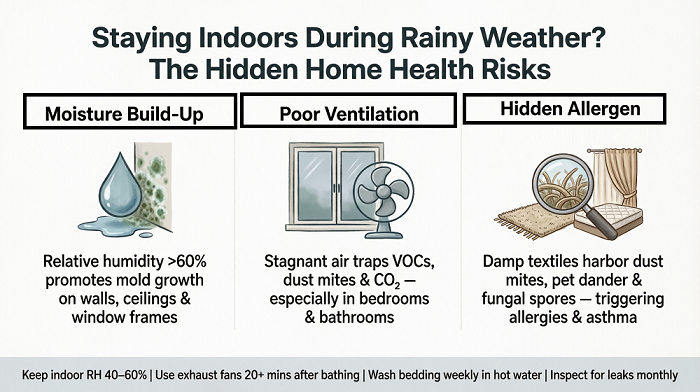
Staying Indoors During Rainy Weather? These Hidden Home Health Risks
Last Updated on 09/12/2026 by DrHelal, MD Medical Doctor with 50+ Years of Clinical Practice • [Read Full Author Bio & Credentials →]
When the rain falls heavily outside, most Filipinos stay indoors to be safe and dry. We close our windows and doors tightly to keep water out. But what many people do not know is that staying indoors during rainy weather can create new health risks that are as dangerous as the ones outside. Continue reading to know how!
As a doctor serving the Manila community, I see a clear pattern every rainy season: more patients come to my clinic complaining of cough, colds, stuffy nose, itchy eyes, and breathing difficulties. Not because of the rain outside, but because of the unhealthy conditions inside our own homes.
This article will explain these hidden risks and show you simple ways to keep your home healthy and safe all season long.
Hidden Home Health Risks
1. Mold and Dampness — The Silent Home Invader
When rain falls day after day, moisture finds its way into our homes through leaks, cracks, and damp walls. The air becomes heavy with humidity, often reaching 80 to 90 percent. This constant dampness allows mold to grow on walls, ceilings, corners, curtains, carpets, and wooden furniture. Mold looks like dark spots or fuzzy growth and releases tiny particles called spores into the air you breathe. You may smell a musty odor even before you see the mold itself. Many families ignore this smell, thinking it is just the smell of rain. But breathing mold spores day after day is very harmful to your lungs.
Mold exposure causes many different health problems. It irritates the nose, throat, and eyes, making them feel red, itchy, and watery. It triggers coughing and wheezing, especially in children and older people. For anyone already living with asthma or allergies, mold can cause serious attacks that make breathing very difficult. Long-term exposure weakens the immune system and makes the lungs more sensitive to other infections. You can reduce mold growth by wiping damp walls and surfaces with dry cloths every morning. Open closet doors and drawers to let air circulate. If possible, use an electric fan or a dehumidifier to remove moisture from the air. Fix roof leaks and seal cracks in walls so rain cannot enter.
Poor Ventilation — Trapping Germs and Dust Inside
When we close our homes to stay warm and dry, air stops moving. Viruses and bacteria that we breathe out stay trapped inside the same air. If one person in the home catches a cold or flu, the germs float in the enclosed space and easily infect everyone else. Dust mites — tiny living creatures that love warm, damp air — multiply rapidly in bedding, pillows, and curtains. Dust mites are one of the most common causes of year-round allergies and asthma in the Philippines. Their waste particles float in the air and cause stuffy nose, sneezing, coughing, and difficulty breathing that seems to never fully go away.
Many people believe that closing windows keeps sickness out, but the opposite is true. Fresh air clears away germs and replaces it with clean oxygen. You do not need to keep windows fully open during heavy rain. Instead, open them slightly for thirty minutes every morning and late afternoon, even if it is raining outside. This small amount of fresh air exchange removes trapped germs, dust, and moisture. It is one of the cheapest and most effective ways to protect your family’s health. Wash bed sheets, pillowcases, and curtains at least once a week in hot water to kill dust mites. Dry them under a roof or electric dryer so they do not stay damp and grow mold.
Less Sunlight Means Lower Vitamin D and Weaker Immunity
During the rainy season, the sun hides behind thick clouds for weeks at a time. Most people stay indoors and receive very little natural sunlight. Your body needs sunlight to produce Vitamin D. This vitamin is extremely important because it helps your body absorb calcium for strong bones and, more importantly, it strengthens your immune system. Studies show that when Vitamin D levels drop, people become much more likely to catch flu, colds, respiratory infections, and even some other serious illnesses. This is one major reason why flu cases always rise when the rainy season arrives.
Because you cannot get enough sun, you must get Vitamin D from food or supplements. Eat fatty fish such as bangus or tuna, egg yolks, and foods fortified with vitamins. If you have very limited sun exposure for a long time, ask your doctor about taking a Vitamin D supplement. At Helal Medical, we can check your Vitamin D levels with a simple blood test and suggest the right amount for you. Try to sit near windows where sunlight enters, even if only for a short time each day. Open curtains during daylight hours to let natural light inside. Sunlight also kills bacteria and mold spores naturally, so it helps clean your home while it strengthens your body.
Other Hidden Indoor Triggers to Watch For
Burning materials inside closed rooms creates another serious health risk. Many Filipinos use charcoal, wood, or kerosene stoves inside small kitchens with poor ventilation. They also dry wet clothes indoors by hanging them near heat or charcoal. This releases smoke, carbon monoxide, and moisture directly into the air you breathe. Over time, this smoke damages the lungs and causes chronic cough, bronchitis, and worsens asthma. It also mixes with damp air and creates exactly the conditions that mold loves.
Cleaning habits also matter. When it is raining, many people delay sweeping, mopping, and cleaning because floors get dirty again quickly. But leaving dust to collect allows mold spores, dust mites, and germs to build up to dangerous levels. Try to clean at least every other day. Use a dry cloth to wipe surfaces instead of spraying water everywhere, which adds more moisture to the air. If you must dry wet clothing indoors, hang it near an open window or an electric fan. Never dry wet clothes inside a closed bedroom or near where children sleep. Keeping the air as dry and clean as possible protects your breathing and your health.
Summary
Staying indoors during the rainy season is meant to keep you safe, but it can expose you to hidden health risks. Mold grows on damp walls and fabrics and causes serious breathing problems. Poor ventilation traps germs, mites, and smoke inside, spreading sickness. Lack of sunlight reduces your Vitamin D and weakens your natural defense against infection.
To be protected, keep your home as dry as possible, wipe damp surfaces, and air out your home regularly. Let sunlight enter when available, eat Vitamin D–rich foods, and keep floors and fabrics clean.
If anyone in your home develops persistent cough, difficulty breathing, or allergy, visit Helal Medical. We can help identify the cause and provide proper care.
References
- World Health Organization. (2023). Guidelines for Indoor Air Quality and Dampness and Mould. WHO Regional Office for Europe. Retrieved from https://who.int
- Department of Health. (2026). Respiratory Health Advisory During Cool and Humid Months. DOH Philippines. Retrieved from https://doh.gov.ph
- Centers for Disease Control and Prevention. (2024). Mold Prevention and Health Effects Guide. CDC. Retrieved from https://cdc.gov
- Philippine Dermatological Society. (2025). Allergens and Indoor Environment in Philippine Homes. Retrieved from https://pds.org.ph
- National Institutes of Health. (2025). Vitamin D and Immune Function: Fact Sheet. NIH. Retrieved from https://nih.gov
Published by Dr. Helal, Helal Medical Manila — Unit 105 Vareb Mansion, 1679 Mabini Street, Malate, Manila.
Respiratory consultations, allergy assessment, and Vitamin D testing available. Rain or shine, we are here to serve you.
🔗 Connect with Helal Medical:
If you suspect that you may have symptoms, Helal Medical can help, offering quick, private, and convenient testing options. You may contact us here: Facebook page, Get Free medical consultation!
This article provides general information. Always consult with a healthcare professional for personalized medical advice.
Read mor from helalmedical.com:
Dengue Fever During the Rainy Season: Protecting Your Family in the Philippines
Stay Safe from 5 com
mon Infections During Rainy Season in the Philippines
Health Risks During Floods in the Philippines: How to Stay Safe This Rainy Season
Leptospirosis Cases Rise During Floods in the Philippines: Symptoms and Prevention
Respiratory Virus Season in the Philippines: What Is the Best Way to Deal with it
Waterborne Diseases After Floods: Cholera, Typhoid, and Diarrhea in the Philippines
Mosquito-borne diseases Common Types
Discover more from Helal Medical Manila
Subscribe to get the latest posts sent to your email.


