
Smoking and Heart Attack Risk: What You Need to Know
Last Updated on 08/28/2026 by DrHelal, MD Medical Doctor with 50+ Years of Clinical Practice • [Read Full Author Bio & Credentials →]
Smoking is a dangerous habit. It affects many parts of the body. It significantly increases heart attack risk. Understanding smoking and heart attack risk is crucial. It empowers you to make informed choices. It helps protect your heart health.
Every cigarette you smoke is a ticking time bomb for your heart! Still, quitting smoking is the single best thing you can do to drastically reduce your risk. Keep reading to discover the shocking truth about smoking and heart attacks.
In this article, we will explore the link between smoking and heart attacks. We will discuss the mechanisms involved. We will also cover prevention strategies. The goal is to inform and motivate you.
What Happens During a Heart Attack?
This dangerous condition occurs when blood flow stops and deprives the heart muscle of oxygen. It is often caused by a blood clot that blocks a coronary artery. The heart muscle begins to die causing chest pain and severe discomfort.
Important Risk Factors
- Smoking is a major risk factor.
- Other Factors include High blood pressure, high cholesterol, diabetes and family history. Age and obesity also contribute.
The Link Between Smoking and Heart Attack Risk
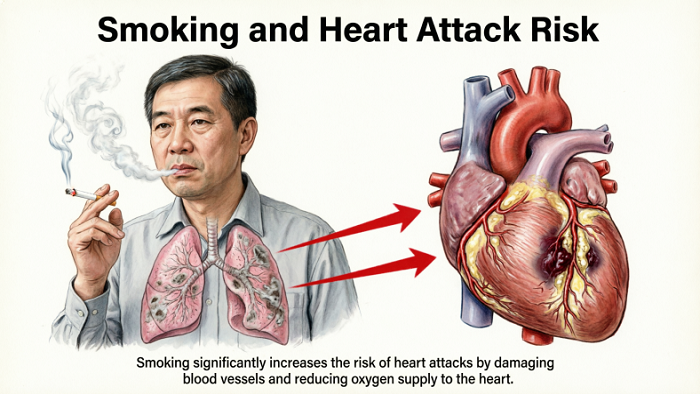
Smoking significantly increases heart attack risk as it damages blood vessels and the heart.
How Does Smoking Damage the Heart?
It messes up your heart in a bunch of ways! It damages blood vessels, making them narrow and clogged. This means your heart has to work harder, raising your blood pressure and heart rate. Plus, smoking makes your blood more likely to clot, which can lead to heart attacks and strokes.
- Nicotine raises blood pressure (a risk factor).
- Carbon monoxide reduces oxygen.
- Chemicals damage blood vessel lining that leads to plaque buildup.
The Role of Plaque
- Plaque narrows arteries reducing blood flow.
- Plaque can rupture and cause clots that block arteries and reduce blood flow to the heart.
Inflammation and Smoking
- Smoking causes inflammation. that damages blood vessels leading to plaque formation.
- This increases heart attack risk.
Specific Chemicals in Cigarettes
Cigarettes contain thousands of chemicals; many are harmful to the heart.
Nicotine
- It is addictive, raises blood pressure and increases heart rate.
- It constricts blood vessels.
Carbon Monoxide
- It reduces oxygen-carrying capacity and damages blood vessel walls.
- It increases heart attack risk.
Tar
- It contains carcinogens that damages the lungs and heart.
- It contributes to plaque formation.
The Impact of Secondhand Smoke
Secondhand smoke is also dangerous as it affects non-smokers.
Risks of Secondhand Smoke
- It increases heart attack risk.
- It damages blood vessels.
- It affects children and adults.
- Avoid exposure to secondhand smoke.
Quitting Smoking: A Life-Saving Decision
Quitting smoking is beneficial. It reduces heart attack risk significantly.
Benefits of Quitting
- Heart attack risk decreases rapidly.
- Blood pressure and heart rate improve.
- Lung function also improves.
- Overall health benefits are significant.
Strategies for Quitting
- Set a quit date and stick to it.
- Seek support from friends and family.
- Use nicotine replacement therapy.
- Consult a healthcare provider.
The Importance of a Healthy Lifestyle
A healthy lifestyle supports heart health.
Dietary Changes
- Eat fruits and vegetables.
- Choose whole grains.
- Limit processed foods.
- Reduce saturated and trans fats.
Regular Exercise
- Aim for at least 150 minutes weekly.
- Engage in aerobic and strength training.
- Exercise improves heart health.
Conclusion: Taking Control of Your Heart Health
Smoking and heart attack risk are strongly linked. Quitting smoking is crucial. It significantly reduces heart attack risk. Adopt a healthy lifestyle. Manage stress effectively. Protect your heart health today. Knowledge empowers you to make informed choices.
Trusted Sources:
- American Heart Association: https://www.heart.org/
- Centers for Disease Control and Prevention (CDC): https://www.cdc.gov/
- National Heart, Lung, and Blood Institute (NHLBI): https://www.nhlbi.nih.gov/
🔗 Connect with Helal Medical:
If you suspect that you may have symptoms, Helal Medical can help, offering quick, private, and convenient testing options. You may contact us here: Facebook page, Get Free medical consultation!
This article provides general information. Always consult with a healthcare professional for personalized medical advice.
Discover more from Helal Medical Manila
Subscribe to get the latest posts sent to your email.


